


Environment - Mar 27
The University of Manchester signs Memorandum of Understanding with United Utilities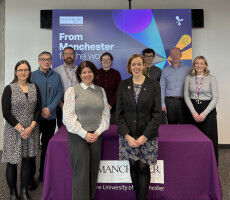
The University of Manchester signs Memorandum of Understanding with United Utilities
Agronomy & Food Science - Mar 27
Gather & Gather unveils fresh new Spring/Summer 2026 menu designed for the warmer seasons
Gather & Gather unveils fresh new Spring/Summer 2026 menu designed for the warmer seasons
Environment - Mar 26
University of Manchester hits major sustainability milestone, with Main Campus becoming 100% 'Zero Landfill'
University of Manchester hits major sustainability milestone, with Main Campus becoming 100% 'Zero Landfill'
Campus - MANCHESTER - Mar 26
Manchester students mentor local teenagers to build confidence in applying for university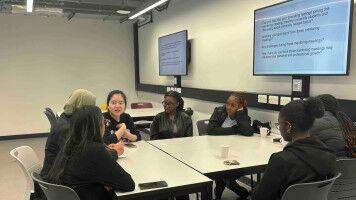
Manchester students mentor local teenagers to build confidence in applying for university

news
University College London
Results 2121 - 2140 of 2154.
Life Sciences - Health - 08.02.2010
Genetic disorder reveals the potential gambler in us all
The study, co-authored by Dr Benedetto De Martino (UCL Institute of Neurology), and published today in the journal Proceedings of the National Academy of Sciences , looked at a phenomenon known as 'loss aversion' in two patients with lesions to the amygdala, the region deep within the brain that is involved in emotions and decision-making.
Physics - Chemistry - 07.02.2010
Ingredients for life present on Saturnian moon, say UCL scientists
A team from the Mullard Space Science Laboratory working on the Cassini-Huygens mission have found negatively charged water ions in the ice plume of Enceladus. MSSL's Professor Andrew Coates, lead author of a paper on the latest discovery, said: 'While it's no surprise that there is water there, these short-lived ions are extra evidence for sub-surface water and where there's water, carbon and energy, some of the major ingredients for life are present.
Health - Psychology - 31.01.2010
Study investigates how people behave in pandemics
Dr Alison Bish and Professor Susan Michie (UCL Clinical, Educational and Health Psychology) investigated the results of a number of studies into how people behave during pandemics, such as the recent swine flu outbreak, to better understand protective behaviour and to improve interventions and communication in the future.
Life Sciences - 28.01.2010
UCL digital behaviour research in new BBC2 series
Professor David Nicholas (Head of UCL Information Studies) has led a team based in the department's research group CIBER in conducting experiments that test whether the structure of the World Wide Web ' created by Tim Berners-Lee 20 years ago ? is transforming the connections in our brains. The research shows that under-18s who have grown up with the web are better at multi-tasking, but appear to rate speed and convenience above content, depth and understanding.
Health - Agronomy & Food Science - 27.01.2010
Study shows weight loss breakthrough for overweight children
Professor Atul Singhal of the UCL Institute of Child Health led the study, published in the journal Obesity , which showed that participants in the MEND (Mind, Exercise, Nutrition? Do It!) programme lost weight, lowered their body mass index (BMI) and waist circumference, and improved their self esteem and physical activity levels.
History & Archeology - Law - 26.01.2010
Lost Roman law code discovered in London
Simon Corcoran and Benet Salway made the breakthrough after piecing together 17 fragments of previously incomprehensible parchment. The fragments were being studied at UCL as part of the Arts & Humanities Research Council-funded 'Projet Volterra' ? a ten-year study of Roman law in its full social, legal and political context.
Life Sciences - Health - 25.01.2010
UCL study: Emotions are a universal language
A new study, led by UCL's Professor Sophie Scott, suggests that all humans share basic emotions such as amusement, anger, fear and sadness ' and vocalise them in similar ways. The results of the study, published today in the Proceedings of the National Academy of Sciences , provide further evidence that such emotions form a set of basic, evolved functions that are shared by all humans.
Life Sciences - Health - 24.01.2010
Genetic testing no real help in predicting type 2 diabetes
New UCL research shows that genetic testing provides no real help in predicting the risk of developing type 2 diabetes, a major risk factor for heart disease. The findings question the benefit of genetic direct-to-public home screening tests currently available on the market, which claim to be able to predict the risk of diabetes.
Life Sciences - Health - 19.01.2010
Nano-motors facilitate communication between brain cells
MRC-funded scientists led by Dr Josef Kittler (UCL Neuroscience) have identified how nano-sized motors in nerve cells help to regulate the balance of communication in the brain. The findings may also help to explain why communication between nerve cells is disrupted in Huntington's disease, leading to altered electrical behaviour of nerve cells in this disease.
Chemistry - 14.01.2010
Professor wins Institution of Chemical Engineers medal
Professor Haroun Mahgerfeteh has won a prestigious medal for a paper on the feasibility of transporting captured carbon dioxide (CO2) along a pipeline. Professor Mahgerfeteh (UCL Chemical Engineering) won the 2009 Institution of Chemical Engineers Frank Lees Medal for the most meritorious publication on the topic of 'safety and loss prevention' in any IChemE publication, including journals, books, conference proceedings and web resources.
Physics - Earth Sciences - 03.01.2010
Spectacular Mars images reveal evidence of ancient lakes
Spectacular satellite images suggest that Mars was warm enough to sustain lakes 3 billion years ago, a period that was previously thought to be too cold and arid to sustain water on the surface, according to research published today in Geology . The research, by a team from Imperial College London and UCL, suggests that during the Hesperian Epoch, approximately 3 billion years ago, Mars had lakes made of melted ice, each around 20km wide, along parts of the equator.
Life Sciences - Economics - 21.12.2009
Seven European Research Council Advanced Grants for UCL
Michael Browne, Head of European Research and Development at UCL said: ?These grants are designed to allow exceptional established research leaders in any field of science, engineering and scholarship to pursue risk-taking, interdisciplinary and pioneering research. The Advanced Grant scheme, in particular, is highly competitive (with an overall success rate of seven percent) and highly prestigious.
Health - Chemistry - 15.12.2009
Oldest case of leprosy found in 1st century tomb
Analysis of human remains buried in the 1st century 'Tomb of the Shroud? in Jerusalem has revealed evidence of ancient leprosy and tuberculosis. The new research, involving UCL researchers, is published in the journal PLoS One today. This is the first time that a 1st century tomb from Jerusalem has been investigated by molecular methods.
Life Sciences - Health - 02.12.2009
Balancing protein intake, not cutting calories, may be key to long life
Getting the correct balance of proteins in our diet may be more important for healthy ageing than reducing calories, new research at UCL suggests. The new study may help explain why 'dietary restriction? (also known as calorie restriction) ' reducing food intake whilst maintaining sufficient quantities of vitamins, minerals and other nutrients ' appears to have health benefits.
Health - 08.11.2009
Scientists question memory theory
Press Release Links: The long-held theory that our brains use different mechanisms for forming long-term and short-term memories has been challenged by new research from UCL, published today in PNAS . Neuroscientists formed this theory based on observation of patients with amnesia, a condition that severely disrupts the ability to form long-lasting memories.
Health - Life Sciences - 05.11.2009
Genetic cause of inflammatory bowel disease
Links: UCL researchers were part of the team to discover that mutations in either of two related genes can cause a severe form of inflammatory bowel disease (IBD) in young children. Erik Glocker (UCL Infection & Immunity) said: 'This discovery is a milestone in research on inflammatory bowel disease, and will enable us to gain further insights into the physiology and immunity of the intestine.' Glocker found the first mutation in the protein IL10R2 identified in the study.
Health - 01.11.2009
Dietary patterns linked with depression
People who eat a diet laden with processed and high-fat foods may put themselves at greater risk of depression, according to UCL research published today. The research team, led by Tasnime Akbaraly (UCL Epidemiology and Public Health), also found that eating a 'whole food? diet with plenty of fresh vegetables, fruit and fish could help prevent the onset of depressive symptoms in middle age.
Health - Agronomy & Food Science - 06.10.2009
Mental disorders and increased risk of obesity: possible link
People with common mental disorders are at increased risk of becoming obese, according to new UCL research. Professor Mika Kivimäki of UCL Epidemiology & Public Health led research published today on the website of the British Medical Journal that shows that individuals with chronic or repeat episodes of common mental disorders, such as depression and anxiety, are particularly at risk of becoming obese.
Health - Life Sciences - 30.09.2009
Potential for drugs to treat age-related diseases
UCL scientists have extended the lifespan of mice by up to a fifth and cut the number of age-related diseases the animals suffer. The research which mimics the health benefits of reducing calorie intake and suggests that drug treatments for ageing and age-related diseases are feasible. In the 1930s scientists showed that reducing the calorie intake of laboratory rats while maintaining sufficient vitamins, minerals and other important nutrients in the animals can have health benefits.
Psychology - Economics - 27.09.2009
Subliminal messaging more effective when negative?
A team of UCL researchers say that subliminal messaging is most effective when the message being conveyed is negative. Subliminal images ' in other words, images shown so briefly that the viewer does not consciously 'see' them ' have long been the subject of controversy, particularly in the area of advertising.


Environment - Mar 27
The University of Manchester signs Memorandum of Understanding with United Utilities
The University of Manchester signs Memorandum of Understanding with United Utilities
Agronomy & Food Science - Mar 27
Gather & Gather unveils fresh new Spring/Summer 2026 menu designed for the warmer seasons
Gather & Gather unveils fresh new Spring/Summer 2026 menu designed for the warmer seasons
Environment - Mar 26
University of Manchester hits major sustainability milestone, with Main Campus becoming 100% 'Zero Landfill'
University of Manchester hits major sustainability milestone, with Main Campus becoming 100% 'Zero Landfill'
Campus - MANCHESTER - Mar 26
Manchester students mentor local teenagers to build confidence in applying for university
Manchester students mentor local teenagers to build confidence in applying for university