


Environment - Mar 27
The University of Manchester signs Memorandum of Understanding with United Utilities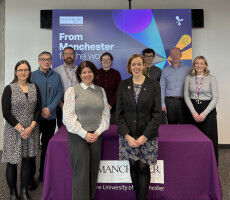
The University of Manchester signs Memorandum of Understanding with United Utilities
Agronomy & Food Science - Mar 27
Gather & Gather unveils fresh new Spring/Summer 2026 menu designed for the warmer seasons
Gather & Gather unveils fresh new Spring/Summer 2026 menu designed for the warmer seasons
Environment - Mar 26
University of Manchester hits major sustainability milestone, with Main Campus becoming 100% 'Zero Landfill'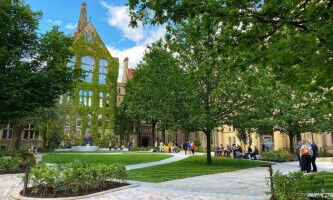
University of Manchester hits major sustainability milestone, with Main Campus becoming 100% 'Zero Landfill'
Campus - MANCHESTER - Mar 26
Manchester students mentor local teenagers to build confidence in applying for university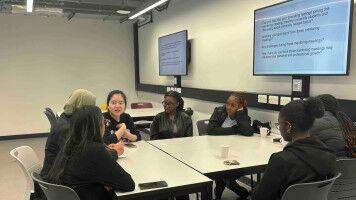
Manchester students mentor local teenagers to build confidence in applying for university

news
University College London
Results 2101 - 2120 of 2154.
Law - History & Archeology - 20.05.2010
Fighting for our right to debate
PhD student Jay Stone (UCL MRC Laboratory for Molecular Cell Biology) discusses the implications for science of the current inequities in British libel law. In science, healthy debate and discussion of each other's work is crucial. We all read papers and discuss what we think about them; whether we agree with their controls, their statistical analysis, whether we would have drawn the same conclusions.
- 18.05.2010

The publication seeks to demonstrate the contribution made by London universities and higher education colleges to their home town. To download the publication, or to find out more about UCL's London-related activities, use the links at the top of this article.
Health - 13.05.2010
Virtual reality illusions: the medical and scientific benefits
Is it possible to have the illusion that your body has changed radically, or that a different body is your body? Mel Slater, Professor of Virtual Environments at UCL Computer Science, describes the findings and scientific applications of research he has conducted into the phenomenon of 'body transfer' in virtual reality, published today in PLoS ONE .
Health - 12.05.2010
UCL study: Overtime ’bad for your heart’
Working overtime is bad for the heart according to the results from a long-running UCL-led study of more than 10,000 civil servants in London. The research, published online today in the European Heart Journal , found that, compared with people who did not work overtime, people who worked three or more hours longer than a normal, seven-hour day had a 60% higher risk of heart-related problems such as death due to heart disease, non-fatal heart attacks and angina.
Health - Chemistry - 12.05.2010
UCL team finds new ways to improve cervical cancer screening
The research, led by Dr Daniel Ndisang (UCL Institute of Child Health) and made possible by funding from the Association for International Research (AICR), could significantly reduce the death rate from the devastating disease. Cervical cancer accounts for about one in 10 female cancer deaths worldwide each year.
Health - Life Sciences - 26.04.2010
Scientists discover traitor human DNA helps viruses cause cancer
UCL scientists have discovered that stretches of human DNA act as a traitor to the body's defences by helping viruses infect people and trigger cancer-causing diseases. The research, which was undertaken at the UCL Cancer Institute and funded by Cancer Research UK, and published in Nature Cell Biology today, revealed that viruses can exploit the body's DNA ' dampening its antiviral immune response and allowing infection to take hold more easily.
Health - Life Sciences - 15.04.2010
UCL study reveals potential diagnosis for disruptive children
In a study published earlier this month in The British Journal of Psychiatry , researchers from the UCL Institute of Child Health (ICH) have demonstrated that up to one-third of children who are at risk of being excluded from school for disruptive behaviour could have undiagnosed social communication problems of an autistic type.
Physics - 14.04.2010
Scientists size up biggest comet on record
Scientists from UCL's Mullard Space Science Laboratory (MSSL) have identified a heavyweight contender for the crown of biggest comet on record. Dr Geraint Jones and his colleagues used data from the ESA/NASA Ulysses spacecraft to gauge the size of the region of space disturbed by the Comet McNaught.
Health - 08.04.2010
UCL trial: treating rare cancers differently
The merits of a new treatment method for advanced gall bladder and bile duct cancer, trialled by the Cancer Research UK & UCL Cancer Trials Centre, have been published today. Advanced gall bladder and bile duct cancer, for which patients currently can?t have operations, together affect fewer than 2,000 people per year in the UK, making trials harder to run.
Physics - Earth Sciences - 29.03.2010
UCL’s role in world’s largest scientific experiment
UCL's Professor John Butterworth, who led the UK development of one of the Large Hadron Collider (LHC) detectors, explains the significance of the record-breaking particle collisions achieved today. Protons collided at seven trillion volts ? the highest energies ever achieved by a man-made particle accelerator ? at CERN (the European Organisation for Nuclear Research), which houses the LHC, near Geneva.
Life Sciences - Health - 15.03.2010
Milk drinking: in our genes?
The ability to digest the milk sugar lactose ? also known as lactase persistence ? is a selectively advantageous and recent evolutionary genetic trait, which emerged about 7,500 years ago in Europe and probably later in other parts of the world. This means that, once weaned, people in most parts of the world (large parts of Africa, most of Asia, and Oceania) cannot digest milk for the rest of their life.
Earth Sciences - Physics - 07.03.2010
Dinosaurs went out with a bang, says study
The dinosaurs died out as a result of a huge asteroid strike rather than the eruption of a super volcano, according to a study published today in the journal Science . Dr Paul Bown (UCL Earth Sciences) was part of a panel of researchers who analysed more than two decades? worth of evidence to determine the cause of the Cretaceous?Tertiary (KT) mass extinction.
Health - Administration - 04.03.2010
Women’s support groups improve newborn survival rates
Women's community groups have had a dramatic effect on reducing neonatal mortality rates in some of the poorest areas on India, according to new UCL research. The study, published today in The Lancet , reports that the groups provide a cost-effective intervention with added benefits such as reducing significantly maternal depression and improving decision-making amongst the women.
Health - Psychology - 02.03.2010
Moderate drinking before trauma leads to more flashbacks
People who have drunk a moderate amount of alcohol before a traumatic event report more flashbacks than those who have had no alcohol, according to new UCL research. The results may give new insight into why some individuals develop post traumatic stress disorder (PTSD) after a traumatic event and others do not.
Health - Life Sciences - 25.02.2010
Surgery halves death risk for stroke patients versus stent treatment
People at high risk of having a stroke are half as likely to have a stroke or die following surgery to repair damage to an artery in the neck, rather than 'stenting' treatment, according to UCL research published in the Lancet today. These findings emerged from a major trial carried out at the UCL Institute of Neurology, which was funded by the Medical Research Council and The Stroke Association. 'Stenting' is a treatment that relieves pressure in the carotid artery using a wire mesh tube or 'stent', which is then fed through to the neck using a catheter in the groin.
Economics - Health - 22.02.2010
Was post-communist mass privatisation a serial killer?
Dr Christopher Gerry explains why and how a UCL team re-examined evidence for the controversial claim that rapid economic reforms in 1990s post-Communist Europe led to the deaths of thousands. The claim has been hotly debated in the pages of the Economist, New York Times, Wall Street Journal, Financial Times and elsewhere, ever since the 2009 claim, published in the Lancet, that rapid mass privatisation had resulted in large increases in mortality among working aged males.
History & Archeology - 18.02.2010
Professor David Nicholas on BBC2 Virtual Revolution
Professor David Nicholas, Head of UCL Information Studies, will reveal how use of the internet has affected our capacity to read and write at length, in The Virtual Revolution on 20 February. The four-part series has investigated the history of the internet, its trailblazers and how it has reshaped a variety of aspects of our lives.
Physics - Chemistry - 16.02.2010
Astronomers unveil atmospheres of far-away planets
The discovery and characterisation of a planet with an Earth-like atmosphere is a step closer thanks to a new observation technique, developed by astronomers at NASA and UCL, using small ground-based telescopes. Published today in Nature , astronomers have identified organic molecules in the atmosphere of a Jupiter-sized planet nearly 63 light years away.
Earth Sciences - Physics - 10.02.2010
Researchers reveal polycentric London
Professor Michael Batty (UCL Centre for Advanced Spatial Analysis) and Dr Soong Kang (UCL Management Science and Innovation) applied the techniques of statistical physics to their mountain of raw data. The pair joined forces with a computational social scientist and a physicist, both based in Paris, to explore patterns of commuting by tube into central London.
Environment - 09.02.2010
Data Soliloquies
Data Soliloquies rose from a fruitful collaboration between Martin John Callanan and Richard Hamblyn, during their terms as artist and writer in residence at the UCL Environment Institute. The result is a witty and insightful book about the theatricality of scientific data, exploring the profusion of graphs, charts, computer models and other forms of visual advocacy that are now inescapable fixtures of public science displays.


Environment - Mar 27
The University of Manchester signs Memorandum of Understanding with United Utilities
The University of Manchester signs Memorandum of Understanding with United Utilities
Agronomy & Food Science - Mar 27
Gather & Gather unveils fresh new Spring/Summer 2026 menu designed for the warmer seasons
Gather & Gather unveils fresh new Spring/Summer 2026 menu designed for the warmer seasons
Environment - Mar 26
University of Manchester hits major sustainability milestone, with Main Campus becoming 100% 'Zero Landfill'
University of Manchester hits major sustainability milestone, with Main Campus becoming 100% 'Zero Landfill'
Campus - MANCHESTER - Mar 26
Manchester students mentor local teenagers to build confidence in applying for university
Manchester students mentor local teenagers to build confidence in applying for university