


Environment - Mar 27
The University of Manchester signs Memorandum of Understanding with United Utilities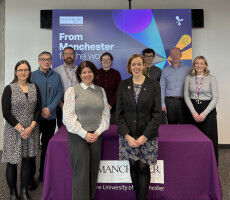
The University of Manchester signs Memorandum of Understanding with United Utilities
Agronomy & Food Science - Mar 27
Gather & Gather unveils fresh new Spring/Summer 2026 menu designed for the warmer seasons
Gather & Gather unveils fresh new Spring/Summer 2026 menu designed for the warmer seasons
Environment - Mar 26
University of Manchester hits major sustainability milestone, with Main Campus becoming 100% 'Zero Landfill'
University of Manchester hits major sustainability milestone, with Main Campus becoming 100% 'Zero Landfill'
Campus - MANCHESTER - Mar 26
Manchester students mentor local teenagers to build confidence in applying for university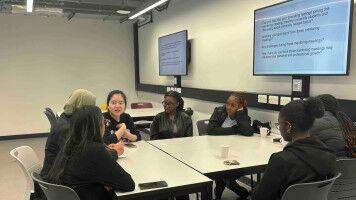
Manchester students mentor local teenagers to build confidence in applying for university

news
University College London
Results 2061 - 2080 of 2154.
Health - Life Sciences - 22.12.2010
Alzheimer’s changes detectable in healthy elderly
A team of UCL researchers, part-funded by the Alzheimer's Research Trust, has discovered that combining spinal fluid testing with MRI scans could provide an early indication of a person's risk of developing Alzheimer?s. The approach could allow scientists to test treatments or preventions far earlier in the disease, when experts believe they could be more effective.
Health - Life Sciences - 20.12.2010

Links: Wellcome Trust Professor Greg Towers Wellcome Trust Sanger Institute A virus previously thought to be associated with chronic fatigue syndrome is not the cause of the disease, a detailed study led by UCL scientists has shown. The research shows that cell samples used in previous research were contaminated with the virus identified as XMRV and that XMRV is present in the mouse genome.
Life Sciences - Health - 13.12.2010

Links: Journal of Neuroscience MRC Wellcome Trust Professor Masud Husain Cognitive tests and MRI scans have shown significant differences in the brains of fighter pilots when compared to a control group, according to a new study led by scientists from UCL. The study, published today in the Journal of Neuroscience , compares the cognitive performance of 11 front-line RAF (Royal Air Force) Tornado fighter pilots to a control group of a similar IQ with no previous experience of piloting aircraft.
Health - 13.12.2010
Screening can pick up early signs of womb cancer
In a paper published today in Lancet Oncology , scientists in the Gynaecological Cancer Research Centre at UCL have demonstrated that an ultrasound scan being used in screening trials for ovarian cancer can also pick up signs of endometrial cancer before any symptoms occur. This is the first large scale study of screening for endometrial (womb) cancer, which is increasing in incidence and is responsible for over 1,700 deaths per year in the UK.
Life Sciences - Health - 06.12.2010

Scientists have shown for the first time that exactly how we see our environment depends on the size of the visual part of our brain. We are all familiar with the idea that our thoughts and emotions differ from one person to another, but most people assume that how we perceive the visual world is usually very similar from person to person.
Physics - Chemistry - 03.12.2010
New theory on the origin of water on Earth
A new theory on the source of terrestrial water has been validated by an international team led by Professor Nora de Leeuw (UCL Chemistry) using computational research. Below Professor de Leeuw describes the implications of the breakthrough. ?The origin of water on our planet is not only of interest for our understanding of the evolution of our own planet and life thereon, but even more so for the increasing exploration of other planets within our solar system and the discovery of potential planetary systems in other galaxies.
Health - Life Sciences - 02.12.2010
New brain imaging tests to track Huntingdon s
A range of new clinical, functional, and neuroimaging tests developed by researchers at UCL make it possible to track the progression of Huntington's disease long before noticeable symptoms appear. The new tests provide useful biomarkers that could be used in future trials to detect the effectiveness of potential disease-modifying treatments within a short time period.
Health - Life Sciences - 29.11.2010

A hormone responsible for the onset of puberty can end up stuck in the wrong part of the body if the nerve pathways responsible for its transport to the brain fail to develop properly, according to new research led by UCL scientists.
Physics - Chemistry - 26.11.2010
Cassini reveals oxygen atmosphere of Saturn’s moon Rhea
A fragile atmosphere infused with oxygen and carbon-dioxide has been discovered at Saturn's moon Rhea by the Cassini-Huygens mission - the first time a spacecraft has captured direct evidence of an oxygen atmosphere at a world other than Earth. The NASA-led international mission made the discovery using combined data from Cassini's instruments, which includes a sensor designed and built at UCL's (University College London) Mullard Space Science Laboratory.
Health - Law - 22.10.2010
Geeks r us: UCL scientists join movement for libel reform
UCL scientists Dr Lewis Dartnell and Dr Petra Boynton explain their motivation for posing for Geek Calendar, a project in aid of libel reform that launches this week. "The Geek Calendar is a fantastic venture started by three expert science communicators: Dr Alice Bell (Imperial College London), Mun-Keat Looi and Louise Crane (Wellcome Trust).
Health - Economics - 22.10.2010
England’s over 50s spending more on basics?
The amount that people over 50 in England spend on life's basics ' food, fuel and clothing - has increased significantly in the last 4-5 years, with the poorest being the most affected, according to the latest results from the English Longitudinal Study of Aging (ELSA). A quarter of households experienced a 10 percentage point or more increase in the share of their income devoted to basics between 2004/5 and 2008/9, and spending on domestic fuel alone rose by over a third in real terms over this period.
Physics - 15.10.2010

Dramatic flares and bursts of energy - activity previously thought reserved for only the strongest magnetized pulsars - have been observed emanating from a weakly magnetised, slowly rotating pulsar. The international team of astrophysicists who made the discovery believe that the source of the pulsar's power may be hidden deep within its surface.
Health - Psychology - 06.10.2010
New research: alcohol and pregnancy
Light drinking during pregnancy does not harm a young child's behavioural or intellectual development, according to new research led by Dr Yvonne Kelly (UCL Epidemiology & Public Health) and published online today in the Journal of Epidemiology and Community Health. A previous study in 2008 by Dr Kelly and colleagues of 3 year olds drew similar conclusions, but the authors wanted to rule out possible delayed 'sleeper' effects in older children.
Health - Life Sciences - 01.10.2010
Genetic link with human male infertility identified
A genetic trait formerly linked to some cases of female infertility is also linked to some male infertility, according to new research from UCL Institute of Child Health scientists working with the Institut Pasteur in Paris. One in seven couples worldwide has difficulty conceiving a child, and male infertility is thought to account for nearly half of those cases.
Agronomy & Food Science - Health - 30.09.2010
New research: infant nutrition and obesity
Researchers at the UCL Institute of Child Health have demonstrated for the first time in humans that feeding babies enriched milk led to statistically significant increases in body fat at age 5-8 years. The new study is published today online in the American Journal of Clinical Nutrition . This key finding of the link between overnutrition in infancy and body fat was independent of confounding factors such as maternal Body Mass Index.
Life Sciences - Health - 24.09.2010
Acute pain is eased with touch of a hand
There may be a very good reason that people naturally clutch their hand after receiving an injury. A new report shows that self-touch offers significant relief for acute pain under experimental conditions. Researchers from UCL Institute of Cognitive Neuroscience suggest that the relief comes from a change in the brain's representation of the rest of the body.
Life Sciences - Health - 23.09.2010
City living helped humans evolve immunity to TB
New research has found that a genetic variant which reduces the chance of contracting diseases such as tuberculosis and leprosy is more prevalent in populations with long histories of urban living. The research, published in the journal Evolution, shows that in areas with a long history of urban settlements, today's inhabitants are more likely to possess the genetic variant which provides resistance to infection.
Life Sciences - Health - 15.09.2010
Scientists identify link between introspection and brain structure
Our ability to reflect on our own thoughts, emotions and behaviour is one of the key aspects of consciousness and what makes us human, but the biological basis of this process - known as 'introspection' - has until now been unknown. Now, researchers at the Institute of Cognitive Neuroscience and Wellcome Trust Centre for Neuroimaging at UCL (University College London) have identified an area of the brain that is larger in people who are good at introspection, suggesting that this area may play a key role in the process.
Physics - Chemistry - 02.09.2010

Astronomers at UCL, using the European Space Agency's Herschel Space Observatory, have observed water vapour being formed somewhere it was previously thought to be impossible: in the atmosphere of a red giant carbon star. The major building blocks of life on Earth are water and carbon-based molecules, both of which are synthesised in large quantities by stars like the Sun as they reach the end of their lives.
Health - Life Sciences - 02.09.2010
Sugar does not relieve newborn pain
Sugar given to newborn babies as a routine form of pain relief does not work, according to a new study led by UCL researchers and published today in The Lancet . Instead, sucrose changes the facial expressions of some babies giving the impression that pain is being relieved. The finding could lead to future changes in healthcare policy as oral sucrose is frequently given to relieve procedural pain in newborn babies who must undergo invasive procedures, such as taking blood from a vein or heel lances.


Environment - Mar 27
The University of Manchester signs Memorandum of Understanding with United Utilities
The University of Manchester signs Memorandum of Understanding with United Utilities
Agronomy & Food Science - Mar 27
Gather & Gather unveils fresh new Spring/Summer 2026 menu designed for the warmer seasons
Gather & Gather unveils fresh new Spring/Summer 2026 menu designed for the warmer seasons
Environment - Mar 26
University of Manchester hits major sustainability milestone, with Main Campus becoming 100% 'Zero Landfill'
University of Manchester hits major sustainability milestone, with Main Campus becoming 100% 'Zero Landfill'
Campus - MANCHESTER - Mar 26
Manchester students mentor local teenagers to build confidence in applying for university
Manchester students mentor local teenagers to build confidence in applying for university