


Environment - Mar 27
The University of Manchester signs Memorandum of Understanding with United Utilities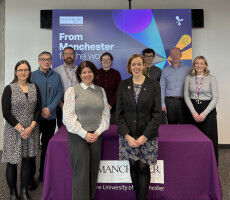
The University of Manchester signs Memorandum of Understanding with United Utilities
Agronomy & Food Science - Mar 27
Gather & Gather unveils fresh new Spring/Summer 2026 menu designed for the warmer seasons
Gather & Gather unveils fresh new Spring/Summer 2026 menu designed for the warmer seasons
Environment - Mar 26
University of Manchester hits major sustainability milestone, with Main Campus becoming 100% 'Zero Landfill'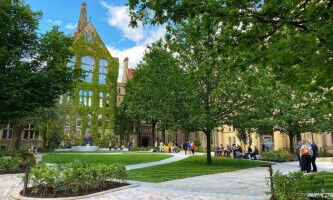
University of Manchester hits major sustainability milestone, with Main Campus becoming 100% 'Zero Landfill'
Campus - MANCHESTER - Mar 26
Manchester students mentor local teenagers to build confidence in applying for university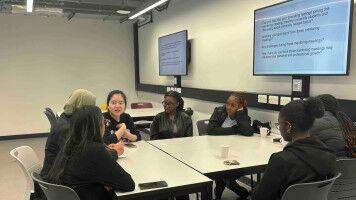
Manchester students mentor local teenagers to build confidence in applying for university

news
University College London
Results 1921 - 1940 of 2154.
Life Sciences - Social Sciences - 30.07.2013
Evolution of monogamy in humans the result of infanticide risk
The threat of infants being killed by unrelated males is the key driver of monogamy in humans and other primates. The study by academics from UCL, University of Manchester, University of Oxford and University of Auckland, is the first to reveal this evolutionary pathway for the emergence of pair living.
Chemistry - Life Sciences - 24.07.2013
Wave of blue fluorescence reveals pathway of death in worms
The final biological events in the life of a worm have been described by scientists at UCL, revealing how death spreads like a wave from cell to cell until the whole organism is dead. Watch video When individual cells die, it triggers a chemical chain reaction that leads to the breakdown of cell components and a build-up of molecular debris.
Health - Life Sciences - 22.07.2013
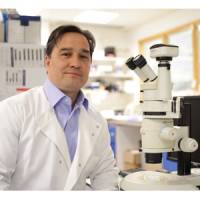
UCL scientists have carried out the first successful transplant of light-sensitive photoreceptor cells extracted from a synthetic retina, grown 'in a dish' from embryonic stem cells. When transplanted into night-blind mice these cells appeared to develop normally, integrating into the existing retina and forming the nerve connections needed to transmit visual information to the brain.
Health - Life Sciences - 19.07.2013
Researchers at UCL and University College London Hospital NHS Foundation Trust are involved in a landmark study to unlock the secrets of lung cancer, tracking in real time how lung tumours develop and evolve as patients receive treatment. This is one of the largest ever studies of lung cancer patients globally and over nine years it will examine exactly how lung cancers mutate, adapt and become resistant to treatments.
Health - Life Sciences - 18.07.2013
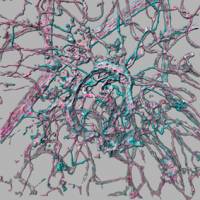
The discovery of a protein that encourages blood vessel growth, and especially 'bad' blood vessels - the kind that characterise diseases as diverse as cancer, age-related macular degeneration and rheumatoid arthritis - has been reported in the journal Nature . The team at the UCL Institute of Ophthalmology discovered the new protein, called LRG1, by screening for mouse genes that are over-expressed in abnormal retinal blood vessels in diseased eyes.
Agronomy & Food Science - Life Sciences - 15.07.2013
How ’obesity gene’ triggers weight gain
An international team of researchers has discovered why people with a variation of the FTO gene that affects one in six of the population are 70 per cent more likely to become obese. A new study led by scientists at UCL, the Medical Research Council (MRC) and King's College London Institute of Psychiatry shows that people with the obesity-risk FTO variant have higher circulating levels of the 'hunger hormone', ghrelin, in their blood.
Health - 12.07.2013
’Risky’ stroke prevention procedure may be safe in some patients
A major study published today in the Lancet Neurology , funded by the Medical Research Council (MRC) and the Stroke Association, found that stenting in the carotid artery (in the neck) is as safe as carotid artery surgery at reducing stroke risk in some patients. The research, which was part of the International Carotid Stenting Study (ICSS), reveals that stenting is equally as safe as surgery in patients who show few signs of changes to brain tissue (known as white matter lesions) in a brain scan.
Environment - 11.07.2013

A solar tsunami observed by NASA's Solar Dynamics Observatory (SDO) and the Japanese Hinode spacecraft has been used to provide the first accurate estimates of the Sun's magnetic field. Solar tsunamis are produced by enormous explosions in the Sun's atmosphere called coronal mass ejections (CMEs). As the CME travels out into space, the tsunami travels across the Sun at speeds of up to 1000 kilometres per second.
Health - 11.07.2013
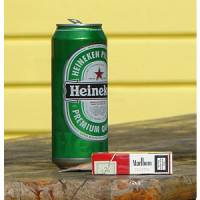
The combination of smoking and heavy drinking speeds up cognitive decline, according to a new study by researchers in UCL Epidemiology & Public Health. The research, published in the British Journal of Psychiatry , found that smokers who drank alcohol heavily had a 36% faster cognitive decline compared to non-smoking moderate drinkers.
Chemistry - Physics - 08.07.2013
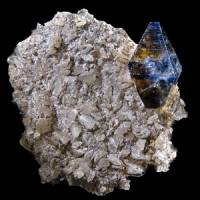
A breakthrough in our understanding of the properties of titania (titanium dioxide) - the basis of self-cleaning window technology - has been made by scientists at UCL, uncovering a decades old misunderstanding that has clouded our knowledge of how mixed phase titania catalysts operate. By carrying out cutting-edge computational simulations alongside precise experimental measurements of physical samples of the mineral, scientists at UCL found that the widely accepted explanation for how mixed phase titania catalysts operate was misguided.
Health - 07.07.2013
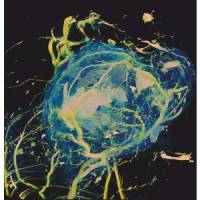
A new technique for detecting cancer by imaging the consumption of sugar with magnetic resonance imaging (MRI) has been unveiled by UCL scientists. The breakthrough could provide a safer and simpler alternative to standard radioactive techniques and enable radiologists to image tumours in greater detail.
Life Sciences - Health - 02.07.2013
Irreversible tissue loss seen within 40 days of spinal cord injury
The rate and extent of damage to the spinal cord and brain following spinal cord injury have long been a mystery. Now, a joint research effort by UCL, the University of Zurich and University Hospital Balgrist has found evidence that patients already have irreversible tissue loss in the spinal cord within 40 days of injury.
Health - Life Sciences - 19.06.2013

Epidemiology and gene sequencing technologies have been used by researchers in the UK, the Kingdom of Saudi Arabia, the US and Canada to show that the novel Middle East Respiratory Syndrome (MERS) coronavirus can spread between people in healthcare settings. The work is published in the New England Journal of Medicine today .
Health - Life Sciences - 17.06.2013

A mechanism that cells use to group together and move around the body - called 'chase and run' - has been described for the first time by scientists at UCL. Published , the new study focuses on the process that occurs when cancer cells interact with healthy cells in order to migrate around the body during metastasis.
Health - Life Sciences - 11.06.2013
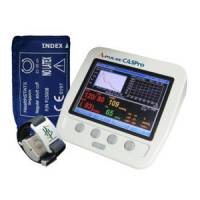
Scientists at UCL have developed new technology which reveals that blood pressure measured close to the heart is much higher during sleep than previously thought. Night time blood pressure is a strong predictor of both heart disease and stroke, with previous studies establishing that blood pressure measured over the arm falls at night during sleep.
Health - 24.05.2013
Hormone levels may provide key to understanding psychological disorders in women
Women at a particular stage in their monthly menstrual cycle may be more vulnerable to some of the psychological side-effects associated with stressful experiences, according to a study from UCL. The results suggest a monthly window of opportunity that could potentially be targeted in efforts to prevent common mental health problems developing in women.
Life Sciences - Physics - 17.05.2013

With just a few days of non-harmful brain stimulation and brain training, scientists have improved people's ability to manipulate numbers for up to six months. In new research, scientists at the University of Oxford and UCL suggest that applying non-invasive stimulation, called transcranial random noise stimulation (TRNS), to the brain can improve its function.
Health - 16.05.2013
Post-mortem MRI: a viable alternative to an autopsy
Using magnetic resonance imaging (MRI) and blood tests to establish the cause of death in fetuses and newborn babies is virtually as accurate as a standard autopsy, according to a paper published in The Lancet . The study, led by Dr Sudhin Thayyil and Professor Andrew Taylor of UCL and Great Ormond Street Hospital, found that full-body MRI scans combined with non-invasive investigations were as effective as a standard autopsy in detecting major abnormalities that led to a young child's death.
Law - 15.05.2013

Almost a quarter of jurors (23 per cent) are unclear about the rules surrounding internet use during a trial, according to preliminary research led by Professor Cheryl Thomas (UCL Laws).
Life Sciences - Psychology - 10.05.2013
Brain system for emotional self-control
Different brain areas are activated when we choose for ourselves to suppress an emotion, compared to situations where we are instructed to inhibit an emotion, according a new study from the UCL Institute of Cognitive Neuroscience and Ghent University. In this study, published in Brain Structure and Function , the researchers scanned the brains of healthy participants and found that key brain systems were activated when choosing for oneself to suppress an emotion.


Environment - Mar 27
The University of Manchester signs Memorandum of Understanding with United Utilities
The University of Manchester signs Memorandum of Understanding with United Utilities
Agronomy & Food Science - Mar 27
Gather & Gather unveils fresh new Spring/Summer 2026 menu designed for the warmer seasons
Gather & Gather unveils fresh new Spring/Summer 2026 menu designed for the warmer seasons
Environment - Mar 26
University of Manchester hits major sustainability milestone, with Main Campus becoming 100% 'Zero Landfill'
University of Manchester hits major sustainability milestone, with Main Campus becoming 100% 'Zero Landfill'
Campus - MANCHESTER - Mar 26
Manchester students mentor local teenagers to build confidence in applying for university
Manchester students mentor local teenagers to build confidence in applying for university