


Environment - Mar 27
The University of Manchester signs Memorandum of Understanding with United Utilities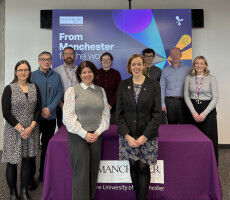
The University of Manchester signs Memorandum of Understanding with United Utilities
Agronomy & Food Science - Mar 27
Gather & Gather unveils fresh new Spring/Summer 2026 menu designed for the warmer seasons
Gather & Gather unveils fresh new Spring/Summer 2026 menu designed for the warmer seasons
Environment - Mar 26
University of Manchester hits major sustainability milestone, with Main Campus becoming 100% 'Zero Landfill'
University of Manchester hits major sustainability milestone, with Main Campus becoming 100% 'Zero Landfill'
Campus - MANCHESTER - Mar 26
Manchester students mentor local teenagers to build confidence in applying for university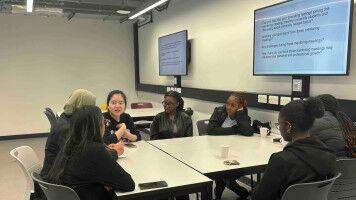
Manchester students mentor local teenagers to build confidence in applying for university

news
University College London
Results 1861 - 1880 of 2154.
Physics - Mechanical Engineering - 09.04.2014

An international team of researchers including a group from the London Centre for Nanotechnology (LCN) at UCL have uncovered vital information regarding the "quantum melting" of the magnetic structure of Thallium Copper Trichloride (TlCuCl 3 ), reports Nature Physics. The findings of team from the UK, Switzerland, France and China establish for the first time that thermal and quantum routes to melting behave largely independently of one another.
Health - Social Sciences - 01.04.2014
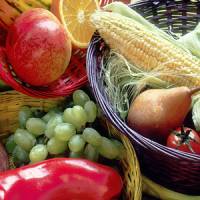
Eating seven or more portions of fruit and vegetables a day reduces your risk of death at any point in time by 42% compared to eating less than one portion, reports a new UCL study. Researchers used the Health Survey for England to study the eating habits of 65,226 people representative of the English population between 2001 and 2013, and found that the more fruit and vegetables they ate, the less likely they were to die at any age.
Life Sciences - Health - 27.03.2014
Cell-saving drugs could reduce brain damage after stroke
Long-term brain damage caused by stroke could be reduced by saving cells called pericytes that control blood flow in capillaries, reports a new UCL-led study. Until now, many scientists believed that blood flow within the brain was solely controlled by changes in the diameter of arterioles, blood vessels that branch out from arteries into smaller capillaries.
Health - Agronomy & Food Science - 25.03.2014

Young children who sleep less eat more, which can lead to obesity and related health problems later in life, reports a new study by UCL researchers. The study found that 16 month-old children who slept for less than 10 hours each day consumed on average 105kcal more per day than children who slept for more than 13 hours.
Health - 24.03.2014
Scientists develop world’s first light-activated antimicrobial surface that also works in the dark
Researchers at UCL have developed a new antibacterial material which has potential for cutting hospital acquired infections. The combination of two simple dyes with nanoscopic particles of gold is deadly to bacteria when activated by light - even under modest indoor lighting. And in a first for this type of substance, it also shows impressive antibacterial properties in total darkness.
Health - Life Sciences - 19.03.2014

A high dose of the cholesterol-lowering drug simvastatin significantly reduces brain shrinkage in people with secondary progressive multiple sclerosis (SPMS), found researchers supported by the Biomedical Research Centre at UCL and UCLH, with colleagues from Imperial College London, the London School of Hygiene and Tropical Medicine, and Brighton and Sussex Medical School.
Life Sciences - 17.03.2014

Too much visual information causes a phenomenon known as 'load induced blindness', with an effect akin to dimming the lights, reports a new UCL study.The new findings could be used to identify high-risk situations in all walks of life and look at ways to mitigate times of highest risk. These techniques could be used to understand everyday problems such as why you might bump into a lamppost on a busy street or even to assess the demanding information loads faced by pilots and surgeons.
Life Sciences - Mechanical Engineering - 14.03.2014

Your brain's ability to instantly link what you see with what you do is down to a dedicated information 'highway', suggests new UCL-led research. For the first time, researchers from UCL and Cambridge University have found evidence of a specialised mechanism for spatial self-awareness that combines visual cues with body motion.
Physics - 12.03.2014
First thin films of spin ice reveal cold secrets
Thin films of spin ice have been shown to demonstrate surprising properties which could help in the development of applications of magnetricity, the magnetic equivalent of electricity. Published today in Nature , a team of researchers based at the London Centre for Nanotechnology (LCN), in collaboration with scientists from Oxford and Cambridge, found that, against expectations, the Third Law of Thermodynamics could be restored in thin films of the magnetic material spin ice.
Life Sciences - History & Archeology - 11.03.2014

Ancient DNA from archaeological skeletons shows that Europeans had darker skin, hair, and eye pigmentation 5,000 years ago. Anthropologists at Johannes Gutenberg University Mainz (JGU) and geneticists at UCL, working in collaboration with archaeologists from Berlin and Kiev, have analyzed ancient DNA from skeletons and found that selection has had a significant effect on the human genome even in the past 5,000 years, resulting in sustained changes to the appearance of people.
Health - Administration - 06.03.2014

Drugs used to treat blindness-causing disorders could be successfully administered by eye drops rather than unpleasant and expensive eye injections, according to new research led by UCL scientists that could be a breakthrough for the millions worldwide suffering from age-related macular degeneration (AMD) and other eye disorders.
Art & Design - 03.03.2014

World-class orchestras can be accurately identified by silent video footage of performances, but not through sound recordings, a UCL study has found. Both professional musicians and musical novices are better at identifying top-ranked orchestras from non-ranked orchestras when shown silent video footage, suggesting that such judgements are driven at least in part by visual cues about group dynamics and leadership.
Health - Life Sciences - 03.03.2014
Detecting levels of antibiotics in blood paves the way to individualized treatment
A new methodology for rapidly measuring the level of antibiotic drug molecules in human blood serum has been developed, paving the way to applications within drug development and personalised medicine. The study, published today in Nature Nanotechnology , describes the exploitation of a sensor for measuring the concentration of effective antibiotics in blood, giving an indication of their efficiency against disease causing pathogens, for instance multidrug resistant hospital "superbugs".
Environment - Life Sciences - 26.02.2014
Climate change causes high, but predictable, extinction risks
Judging the effects of climate change on extinction may be easier than previously thought, according to a paper published today . Although widely used assessments of threatened species, such as the IUCN Red List, were not developed with the effects of climate change in mind, a study of 36 amphibian and reptile species endemic to the US has concluded that climate change may not be fundamentally different from other extinction threats in terms of identifying species in danger of extinction.
Agronomy & Food Science - Health - 17.02.2014

A heartier appetite is linked to more rapid infant growth and to genetic predisposition to obesity, according to two papers published in JAMA Pediatrics today. The studies investigated how weight gain is linked to two key aspects of appetite, namely lower satiety responsiveness (a reduced urge to eat in response to internal 'fullness' signals) and higher food responsiveness (an increased urge to eat in response to the sight or smell of nice food).
Life Sciences - Health - 14.02.2014
Interactive map of human genetic history revealed
A global map detailing the genetic histories of 95 different populations across the world, showing likely genetic impacts of European colonialism, the Arab slave trade, the Mongol Empire and European traders near the Silk Road mixing with people in China, has been revealed for the first time. The interactive map , produced by researchers from Oxford University and UCL, details the histories of genetic mixing between each of the 95 populations across Europe, Africa, Asia and South America spanning the last four millennia.
Life Sciences - Physics - 06.02.2014

Fish that have symmetric brains show defects in processing information about sights and smells, according to the results of a new study into how asymmetry in the brain affects processing of sensory information. It's widely believed that the left and right sides of the brain have slightly different roles in cognition and in regulating behaviour.
Life Sciences - 31.01.2014

The internal circadian clock of a Drosophila (fruit fly) can be synchronised using vibrations, according to research published today in the journal Science . The study suggests that an animal's own movements can influence its clock. The circadian clock, which underlies the daily rhythms characterising most of our bodily functions, including the sleep cycle, is mainly set by diurnal changes in light and temperature.
Health - 23.01.2014
Heart attack survival far lower in UK than Sweden
The chance of surviving a heart attack is far lower in the UK than Sweden, according to a major new study published in The Lancet . The startling findings suggest that more than 11,000 lives could have been saved over the past 7 years had UK patients experienced the same care as their Swedish counterparts.
Physics - Chemistry - 09.01.2014
Quantum mechanics explains efficiency of photosynthesis
Light-gathering macromolecules in plant cells transfer energy by taking advantage of molecular vibrations whose physical descriptions have no equivalents in classical physics, according to the first unambiguous theoretical evidence of quantum effects in photosynthesis published today . The majority of light-gathering macromolecules are composed of chromophores (responsible for the colour of molecules) attached to proteins, which carry out the first step of photosynthesis, capturing sunlight and transferring the associated energy highly efficiently.


Environment - Mar 27
The University of Manchester signs Memorandum of Understanding with United Utilities
The University of Manchester signs Memorandum of Understanding with United Utilities
Agronomy & Food Science - Mar 27
Gather & Gather unveils fresh new Spring/Summer 2026 menu designed for the warmer seasons
Gather & Gather unveils fresh new Spring/Summer 2026 menu designed for the warmer seasons
Environment - Mar 26
University of Manchester hits major sustainability milestone, with Main Campus becoming 100% 'Zero Landfill'
University of Manchester hits major sustainability milestone, with Main Campus becoming 100% 'Zero Landfill'
Campus - MANCHESTER - Mar 26
Manchester students mentor local teenagers to build confidence in applying for university
Manchester students mentor local teenagers to build confidence in applying for university