


Environment - Mar 27
The University of Manchester signs Memorandum of Understanding with United Utilities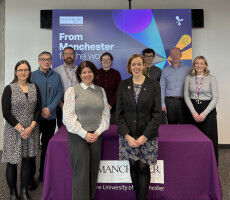
The University of Manchester signs Memorandum of Understanding with United Utilities
Agronomy & Food Science - Mar 27
Gather & Gather unveils fresh new Spring/Summer 2026 menu designed for the warmer seasons
Gather & Gather unveils fresh new Spring/Summer 2026 menu designed for the warmer seasons
Environment - Mar 26
University of Manchester hits major sustainability milestone, with Main Campus becoming 100% 'Zero Landfill'
University of Manchester hits major sustainability milestone, with Main Campus becoming 100% 'Zero Landfill'
Campus - MANCHESTER - Mar 26
Manchester students mentor local teenagers to build confidence in applying for university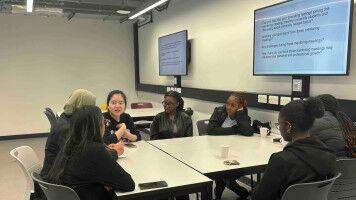
Manchester students mentor local teenagers to build confidence in applying for university

news
University College London
Results 1841 - 1860 of 2154.
Health - 11.07.2014
Drink less for a healthier heart
A reduction in alcohol consumption, even for light-to-moderate drinkers, could be linked to improved cardiovascular health, including a reduced risk of coronary heart disease, lower body mass index and blood pressure, according to new research published in the BMJ . These latest findings challenge the results of previous observational studies which found that the consumption of light-to-moderate amounts of alcohol (12-25 units per week) may have a protective effect on cardiovascular health.
Life Sciences - 11.07.2014
’World’s slowest Doppler effect’ found in embryo development
Long-term time-lapse microscopy has elicited surprise findings about the rhythm of body segment formation during embryo development. The scientists discovered that the development of vertebrate embryos (animals with backbones, including humans) is partly determined by a genetic Doppler effect. The study was led by researchers at UCL, the Medical Research Council's National Institute for Medical Research (NIMR) and Max Planck Institutes in Germany.
Life Sciences - 08.07.2014
Same genes drive maths and reading ability
Around half of the genes that influence how well a child can read also play a role in their mathematics ability, say scientists from UCL, the University of Oxford and King's College London who led a study into the genetic basis of cognitive traits. While mathematics and reading ability are known to run in families, the complex system of genes affecting these traits is largely unknown.
Health - Life Sciences - 07.07.2014
Blocking cells’ movement to stop the spread of cancer
Insights into how cells move through the body could lead to innovative techniques to stop cancer cells from spreading and causing secondary tumours, according to new UCL research. Scientists discovered that cells can change into an invasive, liquid-like state to readily navigate the narrow channels in our body.
Life Sciences - Environment - 27.06.2014
Reef built by animals 550 million years ago discovered
Newly found fossils show animals built living reefs twenty million years earlier than previously thought. The animals - called Cloudina - were the first in the world to have a hard shell and are believed to have built the reefs to protect themselves from predators, or to get a competitive advantage in acquiring food or living space.
Chemistry - Life Sciences - 20.06.2014
Limb regeneration: do salamanders hold the key?
The secret of how salamanders successfully regrow body parts is being unravelled by UCL researchers in a bid to apply it to humans. For the first time, researchers have found that the 'ERK pathway' must be constantly active for salamander cells to be reprogrammed, and hence able to contribute to the regeneration of different body parts.
Astronomy & Space - Physics - 17.06.2014
Hunt for extraterrestrial life gets massive methane boost
A powerful new model to detect life on planets outside of our solar system, more accurately than ever before, has been developed by UCL researchers. The new model focuses on methane, the simplest organic molecule, widely acknowledged to be a sign of potential life. Researchers from UCL and the University of New South Wales have developed a new spectrum for 'hot' methane which can be used to detect the molecule at temperatures above that of Earth, up to 1,500K/1220°C - something which was not possible before.
Health - Life Sciences - 16.06.2014
Immune system implicated in dementia development
The immune system and body's response to damaged cells play a key role in the development of frontotemporal dementia (FTD), finds new UCL-led research. These findings will enable researchers to develop new treatments that target the body's response to damaged cells. FTD is the second most common form of young-onset dementia after Alzheimer's disease.
Health - 12.06.2014
Leukaemia drug found to stimulate immunity against many cancer types
A class of drug currently being used to treat leukaemia has the unexpected side-effect of boosting immune responses against many different cancers, reports a new study led by scientists at UCL and the Babraham Institute, Cambridge. The drugs, called p110? inhibitors, have shown such remarkable efficacy against certain leukaemias in recent clinical trials that patients on the placebo were switched to the real drug.
Life Sciences - Health - 09.06.2014
New research explains how we use the GPS inside our brain to navigate
The way we navigate from A to B is controlled by two brain regions which track the distance to our destination, according to new UCL research published in Current Biology, funded by the Wellcome Trust. The study found that at the beginning of a journey, one region of the brain calculates the straight line to the destination (as the crow flies), but during travel a different area of the brain computes the precise distance along the path to get there.
Health - Life Sciences - 09.06.2014
New test predicts the risk of non-hereditary breast cancer
A simple blood test is currently in development that could help predict the likelihood of a woman developing breast cancer, even in the absence of a high-risk BRCA1 gene mutation, according to new UCL research. The research, published in Genome Medicine, identifies an epigenetic signature in the blood of women predisposed for breast cancer owing to an inherited genetic mutation of the BRCA1 gene.
Health - Life Sciences - 06.06.2014

"Where does it hurt?" is the first question asked to any person in pain. A new UCL study defines for the first time how our ability to identify where it hurts, called "spatial acuity", varies across the body, being most sensitive at the forehead and fingertips. Using lasers to cause pain to 26 healthy volunteers without any touch, the researchers produced the first systematic map of how acuity for pain is distributed across the body.
History & Archeology - 28.05.2014
Cod bones reveal 13th Century origin of global fish trade
London's international fish trade can be traced back 800 years to the medieval period, according to new research published today in the journal Antiquity . The research, led by archaeologists from UCL, Cambridge and UCLan, provides new insight into the medieval fish trade and the globalisation of London's food supply.
Health - Chemistry - 27.05.2014

Leukaemia drugs could help to improve treatments for blindness caused by abnormal blood vessel growth in the eye, finds new UCL research. The study, published in the Journal of Experimental Medicine, raises the possibility that medication prescribed for leukaemia could also be used to improve vision in patients with age-related macular degeneration, diabetic retinopathy and other diseases caused by abnormal growth of blood vessels in the eye.
Health - 15.05.2014
Watching stressful movies triggers changes to your heartbeat
Watching films with stressful scenes can trigger changes to the heart's beating pattern, reports a new study published in the journal Circulation, Arrhythmia and Electrophysiology . Although the changes were small, and not likely to be risky for normal healthy individuals, the team from UCL, King's College London and Guy's and St. Thomas' Hospital found that watching an emotionally charged film clip caused a disturbance to the normal heartbeat and a significant increase in blood pressure.
Mathematics - Health - 02.05.2014
Statistical analysis unveils the hidden patterns in Eurovision voting
Voting for the Eurovision Song Contest has been scrutinised by statistics experts at UCL and Imperial College London, who have found that musical talent is unlikely to be the only element that wins scores - but that the contest is not 'stitched up' at the UK's expense. The analysis of voting patterns over the past two decades suggests that widespread support for certain countries' acts is, however, not driven by prejudice, as the media periodically suggests, but by positive loyalties based on culture, geography, history and migration.
Health - Life Sciences - 01.05.2014

A form of vitamin B3 has shown early promise against Friedreich's ataxia, a debilitating degenerative disease with no treatment or cure, in the first human trial of the treatment involving UCL researchers. Friedriech's ataxia is thought to be caused by a lack of frataxin, a protein important in regulating iron levels within cells.
Administration - 29.04.2014
Unique online experiments find success really does breed success
Success really does breed success - up to a point - researchers from UCL and Stony Brook University have found, following a series of unique on-line experiments. For decades, it has been observed that similar people experience divergent success trajectories, with some repeatedly succeeding and others repeatedly failing.
Life Sciences - Health - 24.04.2014
Genetics explain why some boys and girls are bigger than others
The influence of genetic factors on differences between children's Body Mass Index (BMI) increases from 43% at age 4 to 82% at age 10, reports a new study by researchers at UCL and King's College London. The research, published in the journal Obesity, combined twin and genomic analyses in 2556 pairs of twins from the Twins Early Development Study.
Life Sciences - Physics - 23.04.2014
First brain imaging studies of African infants raise hope of insight into cognitive effects of nutrition
Brain activity of babies in developing countries could be monitored from birth to reveal the first signs of cognitive dysfunction, using a new technique piloted by a London-based university collaboration. The cognitive function of infants can be visualised and tracked more quickly, more accurately and more cheaply using the method, called functional near infra-red spectroscopy (fNIRS), compared to the behavioural assessments Western regions have relied upon for decades.


Environment - Mar 27
The University of Manchester signs Memorandum of Understanding with United Utilities
The University of Manchester signs Memorandum of Understanding with United Utilities
Agronomy & Food Science - Mar 27
Gather & Gather unveils fresh new Spring/Summer 2026 menu designed for the warmer seasons
Gather & Gather unveils fresh new Spring/Summer 2026 menu designed for the warmer seasons
Environment - Mar 26
University of Manchester hits major sustainability milestone, with Main Campus becoming 100% 'Zero Landfill'
University of Manchester hits major sustainability milestone, with Main Campus becoming 100% 'Zero Landfill'
Campus - MANCHESTER - Mar 26
Manchester students mentor local teenagers to build confidence in applying for university
Manchester students mentor local teenagers to build confidence in applying for university