


Health - Today
Simple screening blood test could help identify undiagnosed heart failure in people living with diabetes
Simple screening blood test could help identify undiagnosed heart failure in people living with diabetes
Economics - Today
University of Glasgow and Lloyds Banking Group announce groundbreaking agentic AI research programme
University of Glasgow and Lloyds Banking Group announce groundbreaking agentic AI research programme
Environment - Mar 27
The University of Manchester signs Memorandum of Understanding with United Utilities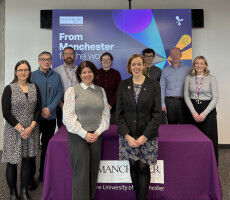
The University of Manchester signs Memorandum of Understanding with United Utilities
Agronomy & Food Science - Mar 27
Gather & Gather unveils fresh new Spring/Summer 2026 menu designed for the warmer seasons
Gather & Gather unveils fresh new Spring/Summer 2026 menu designed for the warmer seasons
Environment - Mar 26
University of Manchester hits major sustainability milestone, with Main Campus becoming 100% 'Zero Landfill'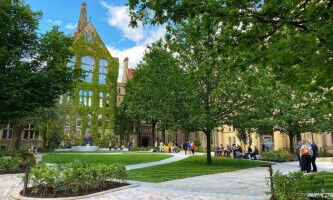
University of Manchester hits major sustainability milestone, with Main Campus becoming 100% 'Zero Landfill'
Campus - MANCHESTER - Mar 26
Manchester students mentor local teenagers to build confidence in applying for university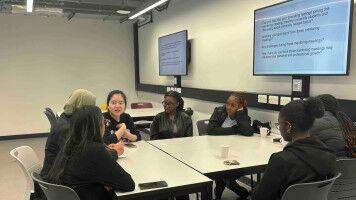
Manchester students mentor local teenagers to build confidence in applying for university
news
University College London
Results 1801 - 1820 of 2154.
Health - 05.02.2015
New biomarkers to spot pancreatic cancer early
Pancreatic cancer could be diagnosed up to two years earlier by screening for two tumour markers found in blood, according to research published in Clinical Cancer Research. The study, conducted by researchers from UCL, UCL Hospital Foundation Trust and the University of Liverpool, suggests that these biomarkers could be used as an early screening tool for those at high risk of pancreatic cancer.
Electroengineering - 03.02.2015
New technique doubles the distance of optical fibre communications
A new way to process fibre optic signals has been demonstrated by UCL researchers, which could double the distance at which data travels error-free through transoceanic sub-marine cables. The new method has the potential to reduce the costs of long-distance optical fibre as signals wouldn't need to be electronically boosted on their journey, which is important when the cables are buried underground or at the bottom of the ocean.
Life Sciences - Psychology - 21.01.2015
Having a romantic partner present can make pain feel worse
The support of a romantic partner is often advised for painful medical procedures, but new research from UCL, King's College London and the University of Hertfordshire finds that this can actually make the pain feel worse. The study, published in the journal Social Cognitive and Affective Neuroscience, found that the pain felt by 39 women given 'pinprick' laser pulses on their fingers was not reduced by the presence of their partner.
Health - Life Sciences - 20.01.2015
Major cause of blindness linked to calcium deposits in the eye
Microscopic spheres of calcium phosphate have been linked to the development of age-related macular degeneration (AMD), a major cause of blindness, by UCL-led research. AMD affects 1 in 5 people over 75, causing their vision to slowly deteriorate, but the cause of the most common form of the disease remains a mystery.
Life Sciences - Health - 23.12.2014
Using light to understand the brain
UCL researchers have developed an innovative way to understand how the brain works by using flashes of light, allowing them to both 'read' and 'write' brain signals. The new technique, described , combines two cutting-edge technologies for reading and writing electrical activity in the brain. First, genetically encoded activity sensors enable neuroscientists to engineer nerve cells to visibly light up when they are active.
Physics - Astronomy & Space - 19.12.2014
Origin of polar auroras revealed
Researchers from UCL, University of Southampton and Cambridge University together with ESA and NASA have uncovered the origin of a colourful display in the night sky called 'theta aurora', explaining for the first time how auroras at high-latitudes form. Auroras are the most visible manifestation of the sun's effect on Earth, but many aspects of these spectacular displays are still poorly understood.
Agronomy & Food Science - Health - 15.12.2014
Poor diet links obese mothers and stunted children
Malnutrition is a major cause of stunted growth in children, but new UCL research on mothers and children in Egypt suggests that the problem is not just about quantity of food but also quality. Obesity and malnutrition are often thought of as problems at opposite ends of the nutrition spectrum, but the study found that 6.7% of Egyptian mothers were obese and had stunted children.
Health - Administration - 04.12.2014
£14M to develop HIV self-testing in southern Africa
A partnership involving UCL has been awarded £14M to accelerate access to simple self-tests in African countries. Self-testing for HIV using rapid diagnostic kits is becoming increasingly widely used, allowing high-risk people to test their own HIV status in private. Self-testing is now recommended in the USA and Europe, was recently introduced in Kenya, and is being evaluated for introduction in several other African countries.
Life Sciences - Mathematics - 03.12.2014
UCL professors use probabilities to persuade doubters skeleton is King Richard III
Two UCL professors led a key part of the new analysis of 'Skeleton 1'; which was discovered in a Leicester car park in 2012 on the site of the Grey Friars friary, the last known resting place of King Richard III. They used probability calculations to combine several different lines of evidence, producing an overall weight-of-evidence for the skeleton being that of King Richard III.
Health - Social Sciences - 02.12.2014
Influential UK birth cohort studies to be brought together for first time
One outcome of the IOE and UCL merger coming into effect today will be that all five of the UK's national birth cohort studies will be housed at the same institution for the first time, forming the largest concentration of birth cohort expertise in the world. Cohort studies are a type of longitudinal research that follow the same group of people throughout their lives, charting health and social changes and untangling the reasons behind them.
Health - 01.12.2014
Family history screening misses people at high risk of cancer
UCL research into the BRCA gene mutation in the the Jewish population show that only assessing family history misses half of the people with the mutation. Women carrying a BRCA 1 or 2 gene mutation have approximately a 15%-45% chance of getting ovarian cancer and a 45-65% chance of getting breast cancer.
Health - Life Sciences - 28.11.2014
Secret of tetanus toxicity offers new way to treat motor neuron disease
The way that tetanus neurotoxin enters nerve cells has been discovered by UCL scientists, who showed that this process can be blocked, offering a potential therapeutic intervention for tetanus. This newly-discovered pathway could be exploited to deliver therapies to the nervous system, opening up a whole new way to treat neurological disorders such as motor neuron disease and peripheral neuropathies.
Social Sciences - Life Sciences - 25.11.2014
Scientific methods shed new light on evolution of kinship patterns
New biological methods used to trace the evolutionary history of kinship patterns shed new light on how societies developed as farming spread across the globe during the Neolithic, according to new research by a UCL-led international team. Kinship is the web of social relationships that underlie human society, with lines of descent determining how wealth, land and position are inherited across the generations.
Physics - Life Sciences - 24.11.2014
Our bodies keep unwelcome visitors out of cell nuclei
The structure of pores found in cell nuclei has been uncovered by a UCL-led team of scientists, revealing how they selectively block certain molecules from entering, protecting genetic material and normal cell functions. The discovery could lead to the development of new drugs against viruses that target the cell nucleus and new ways of delivering gene therapies, say the scientists behind the study.
Health - 19.11.2014
New i-sense collaboration to improve monitoring of UK flu hotspots
An exciting new project to help monitor the spread of flu in the UK more accurately and earlier than ever before has been funded by i-sense, an £11m EPSRC-funded collaboration led by UCL. Flusurvey is the UK's biggest crowd-sourced study of influenza and through a new collaboration with i-sense, will combine innovative mobile and big data technologies with an online participatory flu monitoring platform flusurvey.org.uk to map trends as soon as seasonal flu takes hold.
Philosophy - Economics - 18.11.2014
Most people would rather harm themselves than others for profit
A UCL-led experiment on 80 pairs of adults found that people were willing to sacrifice on average twice as much money to spare a stranger pain than to spare themselves, despite the decision being secret. The study, conducted by researchers from UCL and Oxford University and funded by the Wellcome Trust, was the first to experimentally compare how much pain people were willing to anonymously inflict on themselves or strangers in exchange for money.
Health - Administration - 18.11.2014
One in ten British men say they have paid for sex
11% of men in Britain report ever paying for sex and 3.6% report paying for sex in the past five years, finds a UCL-led study funded by the Wellcome Trust and Medical Research Council. The study of 6,108 men, published in the journal Sexually Transmitted Infections, found that single men aged 25-34, in managerial or professional occupations and those who reported high numbers of sexual partners, were the most likely to say that they had paid for sex.
Astronomy & Space - 13.11.2014
Mars has macroweather too
But weather forecasting on the Red Planet is likely to be even trickier than on Earth Mars has the same three-part pattern of atmospheric conditions as Earth, finds a new study by researchers at UCL and McGill University. This includes weather, which changes day-to-day due to constant fluctuations in the atmosphere; climate, which varies over decades and a third regime called macroweather, which describes the relatively stable regime between weather and climate.
Health - Life Sciences - 06.11.2014
Cause of organ damage after heart attack and stroke found
Succinate, a molecule made when the body breaks down sugars and fats, can cause long-term damage to organs following a heart attack, stroke or transplant according to new research involving UCL scientists. The team behind the study hopes that new therapies will be developed to protect organs from damage following the discovery.
Administration - 05.11.2014
’London: the Information Capital’ showcases UCL data and mapping research
A new book bursting with London maps and infographics, published last week, is the result of a year of intense work by Dr James Cheshire (UCL Geography) and designer Oliver Uberti. 'London: the Information Capital' seeks to paint a contemporary portrait of the city through its abundance of open data and highlights a range of UCL research from departments including the UCL Centre for Advanced Spatial Analysis (CASA) and UCL Security and Crime Science.


Health - Today
Simple screening blood test could help identify undiagnosed heart failure in people living with diabetes
Simple screening blood test could help identify undiagnosed heart failure in people living with diabetes
Economics - Today
University of Glasgow and Lloyds Banking Group announce groundbreaking agentic AI research programme
University of Glasgow and Lloyds Banking Group announce groundbreaking agentic AI research programme
Environment - Mar 27
The University of Manchester signs Memorandum of Understanding with United Utilities
The University of Manchester signs Memorandum of Understanding with United Utilities
Agronomy & Food Science - Mar 27
Gather & Gather unveils fresh new Spring/Summer 2026 menu designed for the warmer seasons
Gather & Gather unveils fresh new Spring/Summer 2026 menu designed for the warmer seasons
Environment - Mar 26
University of Manchester hits major sustainability milestone, with Main Campus becoming 100% 'Zero Landfill'
University of Manchester hits major sustainability milestone, with Main Campus becoming 100% 'Zero Landfill'
Campus - MANCHESTER - Mar 26
Manchester students mentor local teenagers to build confidence in applying for university
Manchester students mentor local teenagers to build confidence in applying for university