


Health - Today
Simple screening blood test could help identify undiagnosed heart failure in people living with diabetes
Simple screening blood test could help identify undiagnosed heart failure in people living with diabetes
Economics - Today
University of Glasgow and Lloyds Banking Group announce groundbreaking agentic AI research programme
University of Glasgow and Lloyds Banking Group announce groundbreaking agentic AI research programme
Environment - Mar 27
The University of Manchester signs Memorandum of Understanding with United Utilities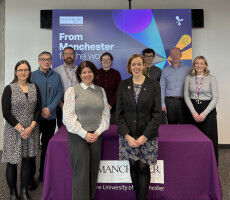
The University of Manchester signs Memorandum of Understanding with United Utilities
Agronomy & Food Science - Mar 27
Gather & Gather unveils fresh new Spring/Summer 2026 menu designed for the warmer seasons
Gather & Gather unveils fresh new Spring/Summer 2026 menu designed for the warmer seasons
Environment - Mar 26
University of Manchester hits major sustainability milestone, with Main Campus becoming 100% 'Zero Landfill'
University of Manchester hits major sustainability milestone, with Main Campus becoming 100% 'Zero Landfill'
Campus - MANCHESTER - Mar 26
Manchester students mentor local teenagers to build confidence in applying for university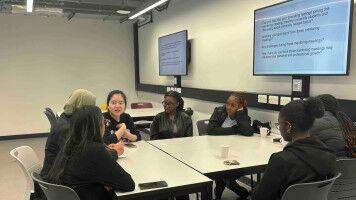
Manchester students mentor local teenagers to build confidence in applying for university
news
University College London
Results 1781 - 1800 of 2154.
Health - Life Sciences - 21.05.2015
Working with Saracens to monitor concussion in rugby
A team of UCL researchers have joined the ongoing Saracens study for the 2015/16 season, which combines impact sensors with blood samples to determine the effects of concussion on rugby players. In January, following an approach from James Drake of The Drake Foundation to set up a research project to study the effects of concussion, Saracens players began wearing impact sensors produced by X2 Bio-systems in Seattle which measure the force and direction of impact to the head.
Life Sciences - Health - 19.05.2015
Missing molecule prevents puberty
A molecule important in blood vessel formation and brain wiring is also essential for the onset of puberty, finds new research led by UCL and the University of Milan. The researchers found a genetic fault that prevented this molecule, called SEMA3E, from being working correctly in two brothers with Kallman Syndrome, an inherited condition that prevents people from undergoing puberty or being able to smell.
Social Sciences - 15.05.2015
Unique social structure of hunter-gatherers explained
Sex equality in residential decision-making explains the unique social structure of hunter-gatherers, a new UCL study reveals. Previous research has noted the low level of relatedness in hunter-gatherer bands. This is surprising because humans depend on close kin to raise offspring, so generally exhibit a strong preference for living close to parents, siblings and grandparents.
Health - Life Sciences - 14.05.2015
Smoking induces early signs of cancer in cheek swabs
DNA damage caused by smoking can be detected in cheek swabs, finds research published today in JAMA Oncology. The study provides evidence that smoking induces a general cancer program that is also present in cancers which aren't usually associated with it - including breast and gynaecological cancers.
Health - Life Sciences - 13.05.2015
New test could identify resistant tuberculosis faster in London
Tuberculosis (TB) disease rates in some parts of London are as high as in Sub-Saharan Africa, and drug-resistant strains are becoming increasingly common. These require specific treatments, and if doctors know that a bug is resistant they can start therapy earlier, often leading to better outcomes. Whole genome sequencing reveals the complete genetic (DNA) sequence of an Mtb sample, in many cases pinpointing drug resistance mutations so that appropriate treatments can be given.
Health - Life Sciences - 05.05.2015
New screening technique could pick up twice as many ovarian cancer cases
A new screening method can detect twice as many women with ovarian cancer as conventional strategies, according to the latest results from the largest trial of its kind led by UCL. The method uses a statistical calculation to interpret changing levels in women's blood of a protein called CA125, which is linked to ovarian cancer.
Life Sciences - Earth Sciences - 23.04.2015
Connecting places causes mental maps to merge
Realising how places connect geographically causes local maps in the brain to join, forming one big map which helps with planning future journeys, finds a new UCL study. Changes like this can occur when people vary their route to work during a tube strike, for example. Commuters may be familiar with the location of two underground stations but only realise how one is linked to the other by walking between them.
Life Sciences - History & Archeology - 20.04.2015
Mummified bodies from 18th century Europe found to have multiple tuberculosis infections
Bodies found in a 200 year-old Hungarian crypt have revealed the secrets of how tuberculosis (TB) took hold in 18th century Europe, according to a research team involving UCL scientists. A new study published in Nature details how samples taken from naturally mummified bodies found in an 18th century crypt in the Dominican church of Vác in Hungary have yielded 14 TB genomes, suggesting that mixed infections were common when TB was at peak prevalence in Europe.
Psychology - Health - 20.04.2015
Emotional problems in schoolgirls rose dramatically over past 5 years
Emotional problems in girls aged 11-13 in England increased by 55% between 2009 and 2014, finds new research from UCL and the Anna Freud Centre. On average, this means that a mixed classroom of 30 children today is likely to contain one more girl with emotional difficulties than a comparable class 5 years ago.
Health - 13.04.2015
Human immune system can control re-awakened HIV, suggesting ’kick and kill’ cure is possible
The human immune system can handle large bursts of HIV activity and so it should be possible to cure HIV with a 'kick and kill' strategy, finds new research led by UCL, the University of Oxford and the University of North Carolina at Chapel Hill. The 'kick and kill' strategy aims to cure HIV by stimulating the immune system with a vaccine, then re-awakening dormant HIV hiding in white blood cells with a chemical 'kick' so that the boosted immune system can identify and kill them.
Health - Life Sciences - 08.04.2015
Body’s defences hijacked to make cancers more aggressive
UCL scientists have discovered that a vital self-destruct switch in cells is hijacked - making some pancreatic and non small cell lung cancers more aggressive, according to research published in Cancer Cell . The team, from the Cancer Research UK Centre at the UCL Cancer Institute, found that mutations in the KRAS gene interferes with protective self-destruct switches, known as TRAIL receptors, which usually help to kill potentially cancerous cells.
Health - Life Sciences - 27.03.2015
New role uncovered for ’oldest’ tumour suppressor gene
Scientists have revealed a brand new function for one of the first cancer genes ever discovered - the retinoblastoma gene - in a finding that could open up exciting new approaches to treatment. The retinoblastoma gene is so called because mutations to it cause a rare children's eye cancer of the same name, and is known to play a central role in stopping healthy cells from dividing uncontrollably.
Life Sciences - History & Archeology - 24.03.2015
Complex genetic ancestry of Americans uncovered
By comparing the genes of current-day North and South Americans with African and European populations, a new study has found the genetic fingerprints of the slave trade and colonisation that shaped migrations to the Americas hundreds of years ago. The team, from Oxford University, UCL and the Universita' del Sacro Cuore of Rome, analysed more than 4,000 previously collected DNA samples from 64 different populations, covering multiple locations in Europe, Africa and the Americas.
Agronomy & Food Science - Health - 24.03.2015
Weight discrimination has major impact on quality of life
Weight discrimination is linked to significantly lower quality of life, and accounts for approximately 40% of the negative psychological effects associated with obesity, finds new UCL research funded by Cancer Research UK. The study, which analysed data from 5,056 UK adults, found that those who felt discriminated against on the basis of their weight had a 70% increase in symptoms of depression, a 14% drop in quality of life and 12% lower life satisfaction relative to those who did not perceive weight discrimination.
Life Sciences - Health - 19.03.2015
Structure of genetic messenger molecules reveals key role in diseases
Messenger RNAs (mRNA) are linear molecules that contain instructions for producing the proteins that keep living cells functioning. A new study by UCL researchers has shown how the three-dimensional structures of mRNAs determine their stability and efficiency inside cells. This new knowledge could help to explain how seemingly minor mutations that alter mRNA structure might cause things to go wrong in neurodegenerative diseases like Alzheimer's.
Life Sciences - Health - 19.03.2015
The first fine-scale genetic map of the British Isles
Many people in the UK feel a strong sense of regional identity, and it now appears that there may be a scientific basis to this feeling, according to a landmark new study into the genetic makeup of the British Isles. An international team, led by researchers from the University of Oxford, UCL and the Murdoch Childrens Research Institute in Australia, used DNA samples collected from more than 2,000 people to create the first fine-scale genetic map of any country in the world.
Health - 06.03.2015
How drinking behaviour changes through the years
In the UK, frequent drinking becomes more common in middle to old age, especially amongst men, according to UCL research published in the open access journal, BMC Medicine. Doctors are seeing a growing number of cases of alcohol misuse among the elderly and this finding supports concerns that older people might be abusing alcohol.
Life Sciences - 05.03.2015
Computer reconstruction of human fossil sheds light on our origins
The fossil of Homo habilis , or 'handy man', has undergone state-of-the-art computer reconstruction, revealing new information about its jaw shape which indicates the species has older evolutionary roots than previously thought and shows that three different Homo species existed between 2.1 and 1.6 million years ago, according to UCL researchers who led the study.
Health - 25.02.2015
Pre-Exposure Prophylaxis is highly protective against HIV infection
Researchers from the Medical Research Council Clinical Trials Unit (MRC CTU) at UCL and Public Health England have presented results at a conference in Seattle, Washington, indicating that pre-exposure prophylaxis (PrEP) is highly protective against HIV for gay and other men who have sex with men in England.
Health - Economics - 16.02.2015
UCL to coordinate £16m project to crack difficult disease areas
UCL has successfully coordinated a £16 million bid to work with the Medical Research Council (MRC), GSK and four other universities to improve scientists' understanding of inflammatory and fibrotic diseases that present a serious burden to patients. The Experimental Medicine Initiative to Explore New Therapies (EMINENT) network will bring together teams of researchers from UCL, the Universities of Cambridge, Glasgow, Newcastle and Imperial College London, with GSK researchers to study the fundamental biological mechanisms responsible for a range of inflammatory and fibrotic diseases.


Health - Today
Simple screening blood test could help identify undiagnosed heart failure in people living with diabetes
Simple screening blood test could help identify undiagnosed heart failure in people living with diabetes
Economics - Today
University of Glasgow and Lloyds Banking Group announce groundbreaking agentic AI research programme
University of Glasgow and Lloyds Banking Group announce groundbreaking agentic AI research programme
Environment - Mar 27
The University of Manchester signs Memorandum of Understanding with United Utilities
The University of Manchester signs Memorandum of Understanding with United Utilities
Agronomy & Food Science - Mar 27
Gather & Gather unveils fresh new Spring/Summer 2026 menu designed for the warmer seasons
Gather & Gather unveils fresh new Spring/Summer 2026 menu designed for the warmer seasons
Environment - Mar 26
University of Manchester hits major sustainability milestone, with Main Campus becoming 100% 'Zero Landfill'
University of Manchester hits major sustainability milestone, with Main Campus becoming 100% 'Zero Landfill'
Campus - MANCHESTER - Mar 26
Manchester students mentor local teenagers to build confidence in applying for university
Manchester students mentor local teenagers to build confidence in applying for university