


Health - Today
Simple screening blood test could help identify undiagnosed heart failure in people living with diabetes
Simple screening blood test could help identify undiagnosed heart failure in people living with diabetes
Economics - Today
University of Glasgow and Lloyds Banking Group announce groundbreaking agentic AI research programme
University of Glasgow and Lloyds Banking Group announce groundbreaking agentic AI research programme
Environment - Mar 27
The University of Manchester signs Memorandum of Understanding with United Utilities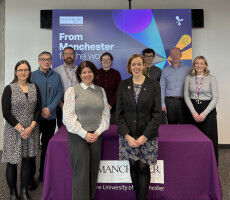
The University of Manchester signs Memorandum of Understanding with United Utilities
Agronomy & Food Science - Mar 27
Gather & Gather unveils fresh new Spring/Summer 2026 menu designed for the warmer seasons
Gather & Gather unveils fresh new Spring/Summer 2026 menu designed for the warmer seasons
Environment - Mar 26
University of Manchester hits major sustainability milestone, with Main Campus becoming 100% 'Zero Landfill'
University of Manchester hits major sustainability milestone, with Main Campus becoming 100% 'Zero Landfill'
Campus - MANCHESTER - Mar 26
Manchester students mentor local teenagers to build confidence in applying for university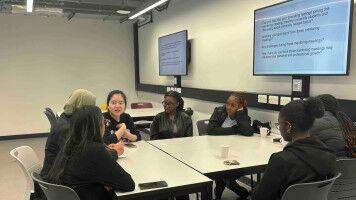
Manchester students mentor local teenagers to build confidence in applying for university
news
University College London
Results 1761 - 1780 of 2154.
Health - Life Sciences - 05.11.2015
’Dickensian’ lung disease rates on the rise in UK pensioners
The number of people diagnosed with bronchiectasis, a lung condition thought to be a 'disease of the past', has risen considerably in the past decade and now affects more than 1% of UK pensioners, finds a new study by UCL, University College London Hospitals (UCLH) NHS Foundation Trust, Imperial College London and the London School of Hygiene and Tropical Medicine.
Health - 27.10.2015
Withdrawing dementia drug doubles risk of nursing home placement
Withdrawing a commonly-prescribed Alzheimer's disease drug from people in the advanced stages of the disease doubles their risk of being placed in a nursing home within a year, according to UCL research published today in The Lancet Neurology . Researchers funded by the Medical Research Council and Alzheimer's Society followed 295 people with moderate to severe Alzheimer's disease to monitor the effects of continuing or discontinuing the drug donepezil - which is typically withdrawn in the later stages of the disease because of a lack of perceived benefit by clinicians.
Health - 22.10.2015
New trial to find out whether aspirin fights cancer
A new trial launches today, which aims to answer once and for all whether or not a daily dose of aspirin can help prevent some cancers from coming back. Some previous studies have suggested it might, but the evidence has not been conclusive. Doctors need clear proof that it is a safe and effective treatment before prescribing it for their patients.
Health - Life Sciences - 14.10.2015
UCL and Takeda announce a new research partnership to identify novel therapeutic targets for neurodegenerative diseases
UCL and Takeda Pharmaceutical Company Limited today announced a new research collaboration to identify and validate novel target genes for the treatment of neurodegenerative disease. This collaboration will focus on mechanistic approaches for the identification of genes or signalling pathways that modify neurodegenerative disease processes affecting neuronal health (for example motor neurone disease (MND or ALS), Huntington's disease and Parkinson's disease).
Life Sciences - History & Archeology - 13.10.2015
Feeding Stonehenge: what was on the menu for Stonehenge’s builders, 2500 BC
Archaeologists from a consortium of universities including UCL have found out what people ate while building Stonehenge, by analysing the food residues preserved in their pots as well as the animal bones and other food waste from the large settlement of Durrington Walls near Stonehenge. Pork and beef were the prime foods, barbecued and boiled.
Life Sciences - Social Sciences - 08.10.2015
Our brain’s response to others’ good news depends on empathy
The way our brain responds to others' good fortune is linked to how empathetic people report themselves to be, according to new UCL-led research. The study, published today in the Journal of Neuroscience and funded by the Medical Research Council, shows that a part of the brain called the anterior cingulate cortex (ACC) seems particularly attuned to other people's good news, but how it responds varies substantially depending on our levels of empathy.
Religions - Health - 30.09.2015
Islamist insurgency strongly influences where polio occurs
Islamist insurgency has had a strong effect on where polio cases occur since 2011, potentially as a reaction to the use of counterinsurgency strategies, according to new research led by UCL. In research published today in the open access journal Globalization and Health, lead author Dr Jonathan Kennedy (UCL Political Science) and colleagues from the London School of Hygiene & Tropical Medicine and Cambridge University (Professor Lawrence King) analysed cross-national data for the period 2003-14.
Social Sciences - Sport - 10.09.2015
NFL fans and ESPN reporters overly optimistic about team prospects
US fans of the National Football League (NFL) and sports reporters assigned to specific teams have unrealistic expectations about how well their team will perform, finds new research from UCL and Oxford University. The study, published in PLOS ONE, also reveals which teams are most liked and disliked, as well as which teams have the most optimistic fans.
Health - Life Sciences - 10.09.2015
Possible evidence for human transmission of Alzheimer’s pathology
Amyloid beta pathology in the grey matter and blood vessel walls characteristic of Alzheimer's disease (AD) and the related cerebral amyloid angiopathy (CAA) is observed in the brains of deceased patients who acquired Creutzfeldt-Jakob disease (CJD) following treatment with prion-contaminated human growth hormone.
Pedagogy - Psychology - 04.09.2015
Children of more caring, less controlling parents live happier lives
A UCL-led lifelong study of people in England, Scotland and Wales has found that those who perceived their parents as more caring and less psychologically controlling during their childhood were likely to be happier and more satisfied throughout their lives. Care from both mother and father were found to be equally important predictors of participants' mental wellbeing through to middle age, although paternal care had a greater association with wellbeing in later life (age 60-64).
Health - 02.09.2015
Antipsychotics inappropriately prescribed to people with intellectual disabilities
Large numbers of people with intellectual disabilities are being inappropriately prescribed antipsychotic drugs, finds a new UCL study. Intellectual disability is a lifelong condition that begins before the age of 18 and is characterised by limitations in intellectual functioning (generally indicated by an IQ under 70) and difficulties with one or more life skills.
Computer Science - Economics - 05.08.2015
Artificial intelligence improves fine wine price prediction
The price fluctuation of fine wines can now be predicted more accurately using a novel artificial intelligence approach developed by researchers at UCL. The method could be used to help fine wine investors make more informed decisions about their portfolios and encourage non-wine investors to start looking at wine in this manner and hence increase the net trade of wine.
Health - 29.07.2015
Switching off street lights at night does not increase car crashes and crime
Reduced street lighting in England and Wales is not associated with road traffic collisions or crime, according to research by UCL and the London School of Hygiene & Tropical Medicine. The study, published in the Journal of Epidemiology and Community Health , suggests that local authorities can safely reduce street lighting at night, saving energy costs and reducing carbon emissions.
Health - Life Sciences - 14.07.2015
Landmark 69-year study to provide window into dementia
A landmark study that has been following a group of people since their birth in the same week in March 1946 is now turning its focus to the risk factors and early signs of dementia.
Life Sciences - 03.07.2015
Old world monkey had tiny, complex brain
The brain of a 15 million year old monkey has been visualized for the first time by a team led by Professor Fred Spoor (UCL Cell & Developmental Biology). The 3D computer model shows that the brain is much smaller and has more folds than expected, supporting the idea that brain complexity can evolve before brain size in the primate family tree.
Health - Life Sciences - 25.06.2015
Cancer drug makes fruit flies live longer
Adult fruit flies given a cancer drug live 12% longer than average, according to a UCL-led study researching healthy ageing. The drug targets a specific cellular process that occurs in animals, including humans, delaying the onset of age-related deaths by slowing the ageing process. The study, published today in Cell and funded by the Max Planck Society and Wellcome Trust, shows for the first time that a small molecule drug, which limits the effects of a protein called Ras, can delay the ageing process in animals.
Health - Life Sciences - 16.06.2015
’Core’ immune cells reduce symptoms and spread of flu
A four-year study of 1,414 unvaccinated people across England found that 43% of them had immune cells that protected them from symptoms of both seasonal and pandemic influenza, and reduced their chances of shedding the virus by two thirds.
Physics - Environment - 15.06.2015
New calculations to improve carbon dioxide monitoring from space
How light of different colours is absorbed by carbon dioxide (CO2) can now be accurately predicted using new calculations developed by a UCL-led team of scientists. This will help climate scientists studying Earth's greenhouse gas emissions to better interpret data collected from satellites and ground stations measuring CO2.
Health - Life Sciences - 03.06.2015
New treatment for polycystic kidney disease
A new technique for treating polycystic kidney disease has been identified by researchers based at the UCL Institute of Child Health. Published in the Journal of the American Society of Nephrology, the treatment, which involves targeting tiny blood and lymphatic vessels inside the kidneys, is shown to improve renal function and slow progression of disease in mice.
Health - 27.05.2015
Starting HIV treatment early improves patient outcomes
A major international randomised clinical trial has found that HIV-infected individuals have a considerably lower risk of developing AIDS or other serious illnesses if they start taking antiretroviral drugs sooner, when their CD4+ T-cell count-a key measure of immune system health-is higher, instead of waiting until the CD4+ cell count drops to lower levels.


Health - Today
Simple screening blood test could help identify undiagnosed heart failure in people living with diabetes
Simple screening blood test could help identify undiagnosed heart failure in people living with diabetes
Economics - Today
University of Glasgow and Lloyds Banking Group announce groundbreaking agentic AI research programme
University of Glasgow and Lloyds Banking Group announce groundbreaking agentic AI research programme
Environment - Mar 27
The University of Manchester signs Memorandum of Understanding with United Utilities
The University of Manchester signs Memorandum of Understanding with United Utilities
Agronomy & Food Science - Mar 27
Gather & Gather unveils fresh new Spring/Summer 2026 menu designed for the warmer seasons
Gather & Gather unveils fresh new Spring/Summer 2026 menu designed for the warmer seasons
Environment - Mar 26
University of Manchester hits major sustainability milestone, with Main Campus becoming 100% 'Zero Landfill'
University of Manchester hits major sustainability milestone, with Main Campus becoming 100% 'Zero Landfill'
Campus - MANCHESTER - Mar 26
Manchester students mentor local teenagers to build confidence in applying for university
Manchester students mentor local teenagers to build confidence in applying for university