


Environment - Mar 27
The University of Manchester signs Memorandum of Understanding with United Utilities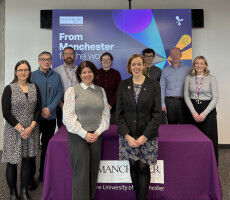
The University of Manchester signs Memorandum of Understanding with United Utilities
Agronomy & Food Science - Mar 27
Gather & Gather unveils fresh new Spring/Summer 2026 menu designed for the warmer seasons
Gather & Gather unveils fresh new Spring/Summer 2026 menu designed for the warmer seasons
Environment - Mar 26
University of Manchester hits major sustainability milestone, with Main Campus becoming 100% 'Zero Landfill'
University of Manchester hits major sustainability milestone, with Main Campus becoming 100% 'Zero Landfill'
Campus - MANCHESTER - Mar 26
Manchester students mentor local teenagers to build confidence in applying for university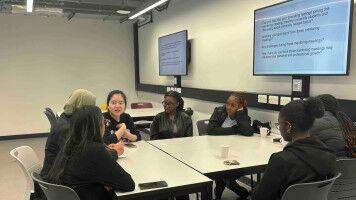
Manchester students mentor local teenagers to build confidence in applying for university

news
University College London
Results 1721 - 1740 of 2154.
Health - Mathematics - 29.03.2016
Uncertainty can cause more stress than inevitable pain
Knowing that there is a small chance of getting a painful electric shock can lead to significantly more stress than knowing that you will definitely be shocked, finds a new UCL study funded by the Medical Research Council (MRC). The study found that situations in which subjects had a 50% chance of receiving a shock were the most stressful while 0% and 100% chances were the least stressful.
Health - Life Sciences - 24.03.2016
New drug shows promise against muscle wasting disease
A new drug to treat the muscle wasting disease inclusion body myositis (IBM) reverses key symptoms in mice and is safe and well-tolerated in patients, finds a new study led by the Medical Research Council (MRC) Centre for Neuromuscular Diseases at UCL and the University of Kansas Medical Center. The study found that the new drug Arimoclomol reversed the disease's effects at the cellular level and improved muscle strength in mice.
Astronomy & Space - Physics - 23.03.2016
Solar storms trigger Jupiter’s ’Northern Lights’
Solar storms trigger Jupiter's intense 'Northern Lights' by generating a new X-ray aurora that is eight times brighter than normal and hundreds of times more energetic than Earth's aurora borealis, finds new UCL-led research using NASA's Chandra X-Ray Observatory. It is the first time that Jupiter's X-ray aurora has been studied when a giant storm from the Sun has arrived at the planet.
Psychology - Health - 16.03.2016
Risk of schizophrenia and other psychoses three times higher in refugees
A study of 1.3 million people in Sweden found that the risk of being diagnosed with schizophrenia or other psychoses was three times higher in refugees than in the Swedish-born population. The research team, from the Karolinska Institutet and UCL, found that more than one in a thousand refugees were diagnosed with schizophrenia or other psychoses every year.
Life Sciences - Health - 10.03.2016
Grid cells’ role in human imagination revealed
Evidence of grid cell activity has been seen in healthy volunteers asked to imagine moving through an environment in new UCL research funded by the Medical Research Council and the Wellcome Trust. The study, published in Current Biology, used fMRI scans to detect brain activity consistent with grid cell activity in the entorhinal cortex, an important 'hub' for navigation and memory.
Religions - Social Sciences - 10.03.2016
American devotion to religion is waning, according to new study
Religion in the United States is declining and mirroring patterns found across the western world, according to new research from UCL and Duke University in the United States. The study published in the American Journal of Sociology shows a drop in the number of Americans who claim religious affiliations, attend church regularly and believe in God.
Health - 09.03.2016
Gradual increase in antidepressant use among children and adolescents
A new study from a group of international researchers including Dr Irene Petersen and Dr Linda Wijlaars (UCL Department of Primary Care and Population Health and Institute of Child Health) found that there has been a gradual increase in antidepressant use among children and adolescents in Denmark, Germany, the Netherlands, the United Kingdom and the United States between 2005 and 2012.
Health - 09.03.2016
Why the body’s immune cells cause so much damage
The reason why the body's immune cells cause so much damage and can't regulate themselves in patients with lupus has been revealed in a UCL study published in the journal Immunity, a finding which could lead to more effective ways of treating lupus. Using blood samples from 88 healthy people and 217 lupus patients, the team found that immune cells, which regulate the immune response and reduce inflammation, are instead being turned into autoantibody-producing B cells that cause inflammation.
Environment - Health - 09.03.2016
Understanding the dynamics of crowd behaviour
Crowds of tiny particles disperse as their environment becomes more disordered, according to scientists from UCL, Bilkent University and Université Pierre et Marie Curie. The new mechanism is counterintuitive and might help describe crowd behaviour in natural, real-world systems where many factors impact on individuals' responses to either gather or disperse.
Life Sciences - 01.03.2016
First gene for grey hair found
The first gene identified for greying hair has been discovered by an international UCL-led study, confirming greying has a genetic component and is not just environmental. , the study analysed a population of over 6,000 people with varied ancestry across Latin America to identify new genes associated with hair colour, greying, density and shape, i.e. straight or curly.
Environment - Administration - 01.03.2016
Climate change adaptation spending in cities protects "wealth not people"
Developed cities are spending significantly more than developing cities on measures to adapt to the impacts of climate change - with spending seemingly linked to wealth rather than number of vulnerable people - finds UCL research. The paper, published today , analysed the amount that ten megacities (cities with a population greater than three million, or GDP ranking amongst the top 25 of cities, or both) across the globe spent on climate adaptation measures, such as better drainage systems, coastal defences and more resilient infrastructure.
Administration - 18.02.2016
Following orders makes us feel less responsible for our actions
Coercive instructions make people feel less responsible for the outcomes of their actions, as opposed to merely saying that they are less responsible, researchers from UCL and the Université Libre de Bruxelles in Belgium have found. Society holds individuals responsible for their own actions. However, individuals sometimes claim reduced responsibility because they were "only obeying orders".
Astronomy & Space - Physics - 16.02.2016
First detection of gases in super-Earth atmosphere
The first successful detection of gases in the atmosphere of a super-Earth reveals the presence of hydrogen and helium, but no water vapour, according to UCL researchers. The exotic exoplanet, 55 Cancri e, is over eight times the mass of Earth and has previously been dubbed the 'diamond planet' because models based on its mass and radius have led some astronomers to speculate that its interior is carbon-rich.
Health - 15.02.2016
Virtual reality therapy could help people with depression
An immersive virtual reality therapy could help people with depression to be less critical and more compassionate towards themselves, reducing depressive symptoms, finds a new study from UCL and ICREA-University of Barcelona. The therapy, previously tested by healthy volunteers, was used by 15 depression patients aged 23-61.
Life Sciences - Health - 11.02.2016
Blocking stress protein relieves chronic pain in mice
A group of drugs being developed to treat mood disorders could also relieve chronic pain, finds new UCL research funded by the Medical Research Council. The study reveals how a protein that shapes the body's response to stress also drives chronic pain and so offers new targets for future pain treatments.
Physics - Health - 08.02.2016
Understanding the physics of pancakes to save sight
Understanding the textures and patterns of pancakes is helping UCL scientists improve surgical methods for treating glaucoma. The appearance of pancakes depends on how water escapes the batter mix during the cooking process and this varies with the thickness of the batter, according to new UCL research.
Health - 29.01.2016
Resistance to key HIV drug ’concerningly common’
HIV drug resistance to tenofovir, an antiretroviral drug vital to most modern HIV treatment and prevention strategies, is surprisingly and worryingly common according to a large study led by UCL and funded by the Wellcome Trust. The research, co-authored by researchers at Stanford University and the London School of Hygiene and Tropical Medicine and published in the Lancet Infectious Diseases journal, studied 1,926 HIV patients across the world with uncontrolled HIV despite being prescribed antiretrovirals.
Life Sciences - Health - 28.01.2016
Estrogens alleviate hyperactivity in zebrafish with autism gene
Research led by UCL, Yale and University of California, San Francisco has shown that the hormone estrogen alleviates the sleep disruption experienced by zebrafish genetically designed to help understand the biology of autism spectrum disorder (ASD). The scientists set out to investigate the function of genes linked to autism and seizures in humans by using zebrafish as a model system.
Health - 28.01.2016
Antidepressants during pregnancy do not pose risk to unborn child
Women who take antidepressants during pregnancy do not appear to be at greater risk of giving birth to children with congenital heart defects compared to women who are not exposed to the drugs , according to new research from UCL. The study, which analysed data from over 200,000 pairs of women and children in the UK between 1990 and 2011, showed that other characteristics , including diabetes, a body mass index of more than 30 and a history of alcohol and drug use did pose a greater risk of having a baby with congenital heart problems.
Health - Life Sciences - 26.01.2016
Epilepsy drug could protect nerves from damage in MS
An epilepsy drug could lead to a new treatment that protects nerve damage in MS patients, according to research published in the Lancet Neurology. Researchers, led by Dr Raj Kapoor from the UCL Institute of Neurology, found the anti-convulsant drug phenytoin protected neural tissue in patients with optic neuritis.


Environment - Mar 27
The University of Manchester signs Memorandum of Understanding with United Utilities
The University of Manchester signs Memorandum of Understanding with United Utilities
Agronomy & Food Science - Mar 27
Gather & Gather unveils fresh new Spring/Summer 2026 menu designed for the warmer seasons
Gather & Gather unveils fresh new Spring/Summer 2026 menu designed for the warmer seasons
Environment - Mar 26
University of Manchester hits major sustainability milestone, with Main Campus becoming 100% 'Zero Landfill'
University of Manchester hits major sustainability milestone, with Main Campus becoming 100% 'Zero Landfill'
Campus - MANCHESTER - Mar 26
Manchester students mentor local teenagers to build confidence in applying for university
Manchester students mentor local teenagers to build confidence in applying for university