


Environment - Mar 27
The University of Manchester signs Memorandum of Understanding with United Utilities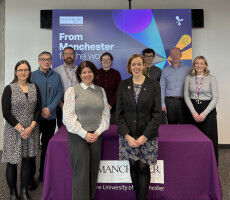
The University of Manchester signs Memorandum of Understanding with United Utilities
Agronomy & Food Science - Mar 27
Gather & Gather unveils fresh new Spring/Summer 2026 menu designed for the warmer seasons
Gather & Gather unveils fresh new Spring/Summer 2026 menu designed for the warmer seasons
Environment - Mar 26
University of Manchester hits major sustainability milestone, with Main Campus becoming 100% 'Zero Landfill'
University of Manchester hits major sustainability milestone, with Main Campus becoming 100% 'Zero Landfill'
Campus - MANCHESTER - Mar 26
Manchester students mentor local teenagers to build confidence in applying for university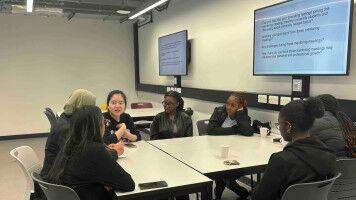
Manchester students mentor local teenagers to build confidence in applying for university

news
University College London
Results 1701 - 1720 of 2154.
Astronomy & Space - Physics - 20.06.2016
Strong ’electric wind’ strips planets of oceans and atmospheres
Venus has an 'electric wind' strong enough to remove the components of water from its upper atmosphere, which may have played a significant role in stripping the planet of its oceans, according to a new study by NASA and UCL researchers. "It's amazing and shocking," said Dr Glyn Collinson, previously at UCL Mullard Space Science Laboratory and now a scientist at NASA's Goddard Space Flight Center.
Health - 14.06.2016
Heart drug could reduce diabetes related blindness
Researchers at UCL and Queen's University Belfast have discovered that a drug originally developed to treat cardiovascular disease has the potential to reduce diabetes related blindness. According to recent WHO global estimates, 422 million people have diabetes. One of the most common complications of this disease is vision loss.
Health - Life Sciences - 10.06.2016
Cancer drugs could target autoimmune diseases
Drugs currently being trialled in cancer patients have been used to successfully target an autoimmune condition in mice at UCL and King's College London. The study, published in Cell Reports, involved giving cancer drugs to mice and inducing uveitis, an incurable autoimmune eye condition responsible for 1 in every 10 cases of visual impairment in the UK*.
Life Sciences - Health - 03.06.2016
Declining dopamine may explain why older people take fewer risks
Older people are less willing to take risks for potential rewards and this may be due to declining levels of dopamine in the brain, finds a new UCL study of over 25,000 people funded by Wellcome. The study, published in Current Biology , found that older people were less likely to choose risky gambles to win more points in a smartphone app called The Great Brain Experiment.
Life Sciences - Health - 02.06.2016
Brain structure that tracks negative events backfires in depression
A region of the brain that responds to bad experiences has the opposite reaction to expectations of aversive events in people with depression compared to healthy adults, finds a new UCL study funded by the Medical Research Council. The study, published in Molecular Psychiatry, found that the habenula, a pea-sized region of the brain, functions abnormally in depression.
Health - Life Sciences - 24.05.2016
Research revealing early changes at epigenetic level points to possible new prevention strategies for ovarian cancer
The discovery of early changes in the cells of the Fallopian tubes of women carrying the BRCA genetic mutation could open the way for new preventative strategies for ovarian cancer, reducing the need for invasive surgery, according to research published today in science journal Nature. The research, undertaken by the Department of Women's Cancer at UCL led by Professor Martin Widschwendter and funded by The Eve Appeal, sought to understand why women with the BRCA1/2 mutations develop ovarian cancers and what happens in the cells where the cancers originate to trigger them.
Life Sciences - Environment - 19.05.2016
Genes for nose shape found
Genes that drive the shape of human noses have been identified by a UCL-led study. The four genes mainly affect the width and 'pointiness' of noses which vary greatly between different populations. The new information adds to our understanding of how the human face evolved and may help contribute to forensic DNA technologies that build visual profiles based on an individual's genetic makeup.
Health - Life Sciences - 17.05.2016
Bacterial immunization prevents PTSD-like symptoms in mice
Injecting mice with a UCL-discovered bacterium can reduce stress and inflammation, preventing them from developing PTSD-like conditions, finds a new international study led by the University of Colorado Boulder. The research, published in Proceedings of the National Academy of Sciences, found that mice injected with the bacterium were more resilient to stress, showing less fear and anxiety in stressful situations.
Health - Psychology - 17.05.2016
Two children in every class experience language disorders
Approximately two children in each Year 1 class will experience a clinically significant language disorder that impacts learning, according to a UCL-led study on language impairment at school entry age. The study, published in the Journal of Child Psychology and Psychiatry , found that children with unexplained language disorders have higher social, emotional and behavioural problems, with 88% failing to achieve early curriculum targets.
Health - 10.05.2016
Study points to failures in heart attack care in England and Wales
Around 33,000 deaths could have been avoided if heart attack aftercare guidelines outlining when to give treatment were followed, according to a study funded by the British Heart Foundation (BHF) looking at the frequency of missed opportunities to treat people after a heart attack.
Health - 09.05.2016
UCL Drug Discovery Institute launch
The Alzheimer's Research UK UCL Drug Discovery Institute was launched at an event last Wednesday 4 May as part of the Alzheimer's Research UK Drug Discovery Alliance. Part of a network of three Institutes, the UCL Drug Discovery Institute will work with its counterparts at the Universities of Oxford and Cambridge to support the translation of cutting-edge academic science towards new treatments for dementia.
Life Sciences - 05.05.2016
Time course of memory relocation revealed
The time-dependent role of the hippocampus in memory storage has been revealed through new research led by UCL and the Massachusetts Institute of Technology (MIT). The paper, published in PLOS ONE , investigated the dynamic nature of memory storage in the brain - studying the role of the hippocampus in the storage of contextual memories in rodents.
Health - Economics - 03.05.2016
Is hair the root to understanding our stress levels?
Women with lower incomes have higher concentrations of the stress hormone cortisol in their hair, according to a new study from UCL. The study also found that women whose income has gone up over the last 4 years have lower cortisol levels than those whose income went down, suggesting an association between long-term financial strain and stress hormones.
Life Sciences - Health - 26.04.2016
Meaning of brain scans for ’pain’ called into question
Patterns of brain activity thought to show pain responses have been called into question after researchers from UCL and the University of Reading saw such patterns in rare patients born without a sense of pain. The study, published in JAMA Neurology and funded by the Medical Research Council and European Commission, was designed to test the 'pain matrix'.
Astronomy & Space - 26.04.2016
Mars’ surface revealed in unprecedented detail
The surface of Mars - including the location of Beagle-2 - has been shown in unprecedented detail by UCL scientists using a revolutionary image stacking and matching technique. Exciting pictures of the Beagle-2 lander, the ancient lakebeds discovered by NASA's Curiosity rover, NASA's MER-A rover tracks and Home Plate's rocks have been released by the UCL researchers who stacked and matched images taken from orbit, to reveal objects at a resolution up to five times greater than previously achieved.
Life Sciences - Health - 18.04.2016
Brain caught ’filing’ memories during rest
Memories formed in one part of the brain are replayed and transferred to a different area of the brain during rest, according to a new UCL study in rats. The finding suggests that replay of previous experiences during rest is important for memory consolidation, a process whereby the brain stabilises and preserves memories for quick recall in the future.
Life Sciences - Health - 15.04.2016
Rescuing human light-sensors in childhood blindness
Scientists at the UCL Institute of Ophthalmology have identified the mechanism behind a common inherited cause of severe sight loss in young children. The results also point to a potential new treatment that may be possible to deliver by simple injection to the eye. Leber congenital amaurosis (LCA) is the name for a group of disorders that make up 5% of all inherited retinal dystrophies.
Environment - 14.04.2016
Biggest library of bat sounds compiled
The biggest library of bat sounds has been compiled to identify bats from their calls in Mexico - a country which harbours many of the Earth's species and has one of the highest rates of extinction and habitat loss. An international team led by scientists from UCL, University of Cambridge and the Zoological Society of London (ZSL), developed the reference call library and a new way of classifying calls to accurately and quickly identify and differentiate between bat species.
Health - Life Sciences - 07.04.2016
Fruit flies live longer on lithium
Fruit flies live 16% longer than average when given low doses of the mood stabiliser lithium, according to a UCL-led study. How lithium stabilises mood is poorly understood but when the scientists investigated how it prolongs the lives of flies, they discovered a new drug target that could slow ageing - a molecule called glycogen synthase kinase-3 (GSK-3).
Health - Life Sciences - 31.03.2016
Cancer drug could treat blood vessel deformities
A drug currently being trialled in cancer patients could also be used to treat an often incurable condition that can cause painful blood vessel overgrowths inside the skin, finds new research in mice led by UCL, Memorial Sloan Kettering (MSK) Cancer Center in New York and the Bellvitge Biomedical Research Institute (IDIBELL) in Barcelona.


Environment - Mar 27
The University of Manchester signs Memorandum of Understanding with United Utilities
The University of Manchester signs Memorandum of Understanding with United Utilities
Agronomy & Food Science - Mar 27
Gather & Gather unveils fresh new Spring/Summer 2026 menu designed for the warmer seasons
Gather & Gather unveils fresh new Spring/Summer 2026 menu designed for the warmer seasons
Environment - Mar 26
University of Manchester hits major sustainability milestone, with Main Campus becoming 100% 'Zero Landfill'
University of Manchester hits major sustainability milestone, with Main Campus becoming 100% 'Zero Landfill'
Campus - MANCHESTER - Mar 26
Manchester students mentor local teenagers to build confidence in applying for university
Manchester students mentor local teenagers to build confidence in applying for university