


Environment - Mar 27
The University of Manchester signs Memorandum of Understanding with United Utilities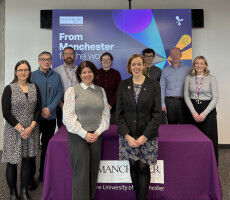
The University of Manchester signs Memorandum of Understanding with United Utilities
Agronomy & Food Science - Mar 27
Gather & Gather unveils fresh new Spring/Summer 2026 menu designed for the warmer seasons
Gather & Gather unveils fresh new Spring/Summer 2026 menu designed for the warmer seasons
Environment - Mar 26
University of Manchester hits major sustainability milestone, with Main Campus becoming 100% 'Zero Landfill'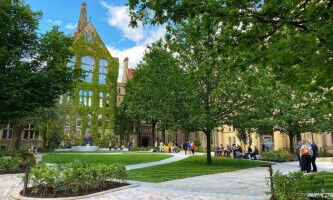
University of Manchester hits major sustainability milestone, with Main Campus becoming 100% 'Zero Landfill'
Campus - MANCHESTER - Mar 26
Manchester students mentor local teenagers to build confidence in applying for university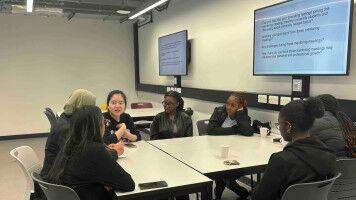
Manchester students mentor local teenagers to build confidence in applying for university

news
University College London
Results 1681 - 1700 of 2154.
Law - Computer Science - 24.10.2016
AI predicts outcomes of human rights trials
The judicial decisions of the European Court of Human Rights (ECtHR) have been predicted to 79% accuracy using an artificial intelligence (AI) method developed by researchers at UCL, the University of Sheffield and the University of Pennsylvania. The method is the first to predict the outcomes of a major international court by automatically analysing case text using a machine learning algorithm.
Health - 18.10.2016
‘Some is good, more is better’: Regular exercise can cut your diabetes risk
Walking briskly or cycling for the recommended 150 minutes a week can reduce a person's risk of developing type 2 diabetes by up to 26%, according to new research by UCL. People who carry out an hour of moderate to vigorous exercise every day can reduce their risk of getting type 2 diabetes by 40%. The study also revealed that any amount of physical activity can reduce the risk of developing the disease.
Life Sciences - Pedagogy - 14.10.2016
Toddlers’ food fussiness is heavily influenced by genes
Toddlers' fussy eating habits are mainly the result of genetic influences rather than the result of poor parenting, according to new research led by scientists at UCL. The research, published in the Journal of Child Psychology and Psychiatry , investigated to what extent genes and environmental factors can explain why some children tend to refuse to try new foods or are very selective about what foods they eat.
Life Sciences - 13.10.2016
We sense ’stiffness’
Every day, people use their hands effortlessly to assess an object's stiffness, like the ripeness of a piece of fruit. For the first time an international team of scientists led by UCL, have discovered the area in the brain where stiffness perception is formed. The findings, published in the Journal of Neuroscience , could aid rehabilitation in patients with sensory impairments.
Physics - Astronomy & Space - 08.10.2016
Narrowing the window on sterile neutrinos
A major international collaboration between the MINOS experiment, which involves UCL scientists, and the Daya Bay experiment has today announced results which shed new light on one of the most pressing questions in particle physics - do sterile neutrinos exist? Sterile neutrinos are a suggested fourth neutrino alongside the well-known electron, muon and tau neutrinos.
Life Sciences - Earth Sciences - 23.09.2016
Study provides strongest evidence oxygen levels were key to early animal evolution
It has long puzzled scientists why, after 3 billion years of nothing more complex than algae, complex animals suddenly started to appear on Earth. Now, a team of researchers has put forward some of the strongest evidence yet to support the hypothesis that high levels of oxygen in the oceans were crucial for the emergence of skeletal animals 550 million years ago.
Astronomy & Space - Physics - 22.09.2016
Cosmology safe as universe has no sense of direction
The universe is expanding uniformly according to research led by UCL which reports that space isn't stretching in a preferred direction or spinning. The new study, published today in Physical Review Letters , studied the cosmic microwave background (CMB) which is the remnant radiation from the Big Bang.
Health - Administration - 14.09.2016
E-cigarettes may have helped 18,000 people quit smoking in 2015
E-cigarettes may have helped about 18,000 people in England to give up smoking in 2015, according to new research by UCL which was published in the British Medical Journal . Researchers at the UCL Health Behaviour Research Centre analysed data from the Smoking Toolkit study - which provides the latest information on smoking and smoking cessation in England - and data on the percentage of the smokers who set a quit date with Stop Smoking Services.
Life Sciences - Health - 12.09.2016
Ionising radiation damages DNA and causes cancer
For the first time, a team including UCL researchers has identified in human cancers two characteristic patterns of DNA damage caused by ionising radiation. These fingerprint patterns may now enable doctors to identify which tumours have been caused by radiation, and investigate if they should be treated differently.
Health - Life Sciences - 02.09.2016
Cannabis reduces short-term motivation to work for money
Smoking the equivalent of a single 'spliff' of cannabis makes people less willing to work for money while 'high', finds a new UCL study. The research, published in Psychopharmacology, is the first to reliably demonstrate the short-term effects of cannabis on motivation in humans. The researchers also tested motivation in people who were addicted to cannabis but not high during the test, and found that their motivation levels were no different to volunteers in the control group.
Life Sciences - Health - 01.09.2016
Key mechanism behind brain connectivity and memory revealed
Memory loss in mice has been successfully reversed following the discovery of new information about a key mechanism underlying the loss of nerve connectivity in the brain, say UCL researchers. Published today in Current Biology , The team found Wnt proteins play a key role in the maintenance of nerve connectivity in the adult brain and could become targets for new treatments that prevent and restore brain function in neurodegenerative diseases.
Life Sciences - Health - 30.08.2016
Refining the genetic causes of schizophrenia
An international study involving UCL has made advances in understanding the ways in which genetic risk factors alter gene function in schizophrenia. The study, published today in Genome Biology and funded by the Medical Research Council , combined genetic sequence information with measures of gene regulation in schizophrenia patients and matched controls.
Earth Sciences - Astronomy & Space - 30.08.2016
Quality not quantity greatest threat to key groundwater source
The greatest threat to sustainable groundwater in the Indo-Gangetic Basin is contamination and not depletion, according to a study co-authored by UCL researchers and published this week . Using groundwater measurements from across the region, the study reveals that over 60% of accessible groundwater is no longer safe to drink or usable for irrigation due to high concentrations of arsenic or salinity.
Astronomy & Space - Environment - 24.08.2016
Fossilised rivers suggest warm, wet ancient Mars
Extensive systems of fossilised riverbeds have been discovered on an ancient region of the Martian surface, supporting the idea that the now cold and dry Red Planet had a warm and wet climate about four billion years ago, according to UCL-led research. The study, published in Geology and funded by the Science & Technology Facilities Council and the UK Space Agency, identified over 17,000km of former river channels on a northern plain called Arabia Terra, providing further evidence of water once flowing on Mars.
Computer Science - Electroengineering - 22.08.2016
People favour expressive, communicative robots over efficient, effective ones
Making an assistive robot partner expressive and communicative is likely to make it more satisfying to work with and lead to users trusting it more, even if it makes mistakes, a new UCL-led study suggests. But the research also shows that giving robots human-like traits could have a flip side - users may even lie to the robot in order to avoid hurting its feelings.
Health - Life Sciences - 18.08.2016
Eye test may detect Parkinson’s before symptoms appear
A new low-cost and non-invasive eye test could detect Parkinson's disease before symptoms including tremors and muscle stiffness develop, according to new research in rats led by scientists at UCL. Researchers at the UCL Institute of Ophthalmology have discovered a new method of observing changes in the retina which can be seen in Parkinson's before changes in the brain occur and the first symptoms become evident.
Life Sciences - 11.08.2016
What makes mice freeze or flee
Mice are likely to freeze at the sight of small slow-moving shapes and flee from fast approaching ones, finds new UCL research. This provides the first evidence that mice make instinctive behavioural choices based on vision alone, and could help inform future studies of behaviour and brain function in mice.
Health - Life Sciences - 11.08.2016
New imaging platform tracks cancer progression
A new rapid fluorescent 3-D imaging system developed by UCL and Imperial College London scientists offers a non-invasive approach to accurately monitor tumour development in adult zebrafish. Animal testing is an essential step in developing new drugs for diseases; however, the process usually involves invasive procedures with animals that must be euthanized.
Health - 07.07.2016
Family upbringing has no impact on people’s food preferences
The effects of family upbringing on people's food preferences disappear as they start to make their own meal choices, to the point where they have no detectable impact by late adolescence, according to research carried out among a large group of older teenage twins by UCL and King's College London. Understanding the factors behind food preferences has important implications for politicians and clinicians.
Astronomy & Space - Physics - 07.07.2016
Accelerating research into dark energy
A quick method for making accurate, virtual universes to help understand the effects of dark matter and dark energy has been developed by UCL and CEFCA scientists. Making up 95% of our universe, these substances have profound effects on the birth and lives of galaxies and stars and yet almost nothing is known about their physical nature.


Environment - Mar 27
The University of Manchester signs Memorandum of Understanding with United Utilities
The University of Manchester signs Memorandum of Understanding with United Utilities
Agronomy & Food Science - Mar 27
Gather & Gather unveils fresh new Spring/Summer 2026 menu designed for the warmer seasons
Gather & Gather unveils fresh new Spring/Summer 2026 menu designed for the warmer seasons
Environment - Mar 26
University of Manchester hits major sustainability milestone, with Main Campus becoming 100% 'Zero Landfill'
University of Manchester hits major sustainability milestone, with Main Campus becoming 100% 'Zero Landfill'
Campus - MANCHESTER - Mar 26
Manchester students mentor local teenagers to build confidence in applying for university
Manchester students mentor local teenagers to build confidence in applying for university