


Environment - Mar 27
The University of Manchester signs Memorandum of Understanding with United Utilities
The University of Manchester signs Memorandum of Understanding with United Utilities
Agronomy & Food Science - Mar 27
Gather & Gather unveils fresh new Spring/Summer 2026 menu designed for the warmer seasons
Gather & Gather unveils fresh new Spring/Summer 2026 menu designed for the warmer seasons
Environment - Mar 26
University of Manchester hits major sustainability milestone, with Main Campus becoming 100% 'Zero Landfill'
University of Manchester hits major sustainability milestone, with Main Campus becoming 100% 'Zero Landfill'
Campus - MANCHESTER - Mar 26
Manchester students mentor local teenagers to build confidence in applying for university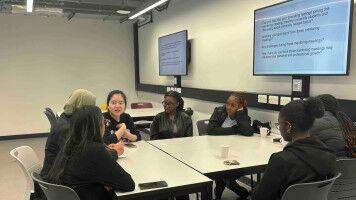
Manchester students mentor local teenagers to build confidence in applying for university

news
University College London
Results 1621 - 1640 of 2154.
Health - Life Sciences - 08.06.2017
Blood test can predict onset and track progression of Huntingtonâ? s disease
The first blood test that can predict the onset and progression of Huntingtonâ??s disease has been identified by a UCL-led study. The researchers say their findings, published in Lancet Neurology , should help test new treatments for the genetic brain disorder, which is fatal and currently incurable.
Health - Life Sciences - 07.06.2017
Further evidence statins could help control multiple sclerosis
A dose of the drug simvastatin results in cognitive improvement in people with secondary progressive multiple sclerosis (SPMS), according to research published in the Lancet Neurology . Researchers, led by Dr Jeremy Chataway (UCL Institute of Neurology), previously reported the effect of a high dosage of simvastatin, a type of statin widely used to reduce cholesterol and already known to be safe, on brain atrophy (shrinkage) in SPMS in 2014.
Agronomy & Food Science - Health - 02.06.2017
Children with bedroom TVs at significantly higher risk of being overweight
A UCL-led study of over 12,000 young children in the UK has revealed that 11-year-olds who had TVs in their bedroomâ'at ageâ'7 had a significantly higher body mass (BMI) and fat mass (FMI) and were more likely to be overweight compared to children who did not have a bedroom TV. Girls who had a TV in their bedroom at age 7 were at an approximately 30% higher risk of being overweight at age 11 compared to children who did not have a TV in their bedroom, and for boys the risk was increased by about 20%.
Life Sciences - 01.06.2017
How our brains integrate online reviews into our own product preferences
UCL researchers have identified how the human brain integrates social information when a person decides how much they like something, by studying how user reviews on Amazon influence how people rate the products. The study, published in the Journal of Neuroscience and funded by Wellcome, found that people take into account not only a product's average rating, but also the number of reviews, as their brains factor in the reliability of social information.
Health - 31.05.2017
Adding tobacco to cannabis doesn’t affect the high, but impacts memory and heart
Adding tobacco to a cannabis joint doesn't improve the experience of being stoned, but it does reduce the memory impairment inherent to cannabis use, finds a new UCL study published in Psychological Medicine . The study is the first to look at how cannabis and tobacco interact when mixed together in joints, which is how the majority of cannabis users in Europe consume the drug.
Health - Mechanical Engineering - 31.05.2017
Motor neuron disease discovery offers new insights into potential treatment targets
Scientists have discovered how certain forms of motor neuron disease begin and progress at cellular and molecular levels, revealing potential new ways to slow down or even stop this process. The team are already working closely with pharmaceutical companies to use this knowledge to develop new treatments for motor neuron disease and other neurodegenerative conditions.
Life Sciences - 26.05.2017
People match confidence levels to make decisions in groups
When trying to make a decision with another person, people tend to match their confidence levels, which can backfire if one person has more expertise than the other, finds a new study led by UCL and University of Oxford researchers. The study, published in Nature Human Behaviour , shows that the degree of stated confidence in one's opinion is infectious when working in a team, which can blur the boundary between well-informed and poorly-informed opinion, sometimes to the detriment of group decision making.
Chemistry - Life Sciences - 23.05.2017
Himalayan powerhouses: how Sherpas have evolved superhuman energy efficiency
Sherpas have evolved to become superhuman mountain climbers, extremely efficient at producing the energy to power their bodies even when oxygen is scarce, suggests a new study led by University of Cambridge and UCL researchers, published today in the Proceedings of National Academy of Sciences (PNAS) .
Chemistry - Life Sciences - 19.05.2017
How RNA formed at the origins of life
A single process for how a group of molecules called nucleotides were made on the early Earth, before life began, has been suggested by a UCL-led team of researchers. Nucleotides are essential to all life on Earth as they form the building blocks of DNA or RNA, and understanding how they were first made is a long-standing challenge that must be resolved to elucidate the origins of life.
Social Sciences - 19.05.2017
Grammar schools fail to help middle-income families
Selective education harms the university prospects of bright pupils who just miss out on a place at a grammar school, according to new research from the UCL Institute of Education (IOE), University of Bristol and University of Warwick. Primary school children in areas with a selective education system who perform well in Key Stage 2 assessments but do not manage to get into a grammar school are 3 percentage points less likely to attend university and 8 percentage points less likely to attend a high quality university compared to similar peers in non-selective areas.
Health - 15.05.2017
BMI not the only reliable indicator of heart disease
Waist-to-hip ratio may be a stronger indicator of some cardiovascular illnesses than the commonly-used measure BMI, according to a new UCL-led study. Previous research has concentrated on the relationship between BMI and risk of cardiovascular illnesses. However, the large collaborative study, published today in Circulation, finds waist-to-hip ratio may be a stronger predictor of health issues such as coronary heart disease and stroke.
Health - Life Sciences - 09.05.2017
Trial to investigate if statins could become multiple sclerosis treatment
A UCL researcher is leading a phase 3 trial involving more than 1,000 people with multiple sclerosis (MS) to investigate whether simvastatin could become a treatment for the condition. The trial will test simvastatin, a cheap cholesterol lowering drug, in people with the secondary progressive form of MS.
Health - Life Sciences - 04.05.2017
Type 2 diabetes genetic mapping identifies new ‘loci’
Scientists are closer to understanding the genetic causes of type 2 diabetes by identifying 111 new chromosome locations ('loci') on the human genome that indicate susceptibility to the disease, according to a UCL-led study in collaboration with Imperial College London. Type 2 diabetes is the world's most widespread and devastating metabolic disorder and previously only 76 loci were known and studied.
Art & Design - 03.05.2017
Greater capacity to detect sound gives autistic people an advantage
People on the autistic spectrum can take in more sounds at any given moment compared to non-autistic people, according to new research from UCL. Researchers from the Centre for Research in Autism and Education (CRAE) at the UCL Institute of Education (IOE) used two behavioural experiments to examine whether an increased capacity for processing sounds in autism could underlie both difficulties and enhanced auditory abilities that are found in the condition.
Life Sciences - 02.05.2017
Ill-gotten gains are worth less in the brain
The brain responds less to money gained from immoral actions than money earned decently, reveals a new UCL-led study. The research, published and funded by Wellcome, helps explain why most people are reluctant to seek illicit gains by identifying a neural process that dampens the appeal of profiting at other people's expense.
Health - Life Sciences - 27.04.2017
Tracking unstable chromosomes helps predict lung cancer’s return
Scientists have found that unstable chromosomes within lung tumours increase the risk of cancer returning after surgery, and have used this new knowledge to detect relapse long before standard testing. These are the first findings from the Cancer Research UK-funded TRACERx lung cancer study, led by UCL researchers and published in the New England Journal of Medicine and Nature .
Health - Life Sciences - 27.04.2017
New eye test detects earliest signs of glaucoma
A simple eye test could help solve the biggest global cause of irreversible blindness, glaucoma. In clinical trials, the pioneering diagnostic - developed by researchers at UCL and the Western Eye Hospital - allowed doctors to see individual nerve cell death in the back of the eye. Glaucoma affects 60 million people in the world, with 1 in 10 suffering total sight loss in both eyes.
Life Sciences - 25.04.2017
Revolutionary method reveals impact of short circuits on battery safety
How lithium-ion (Li-ion) batteries behave under short-circuit conditions can now be examined using a new approach developed by a UCL-led team to help improve reliability and safety. The use of high energy density Li-ion batteries is ubiquitous - from powering portable electronics to providing grid-scale storage - but defects can lead to overheating and explosions.
Health - 12.04.2017
Life skills are important for wellbeing in later life
Life skills, such as persistence, conscientiousness and control, are as important to wealth and wellbeing in later life as they are when people are much younger, according to new research led by UCL. Five life skills - emotional stability, determination, control, optimism and conscientiousness - play a key role in promoting educational and occupational success in early life but little has been known about their importance in later life.
Sport - Economics - 10.04.2017
Collaborating AI learns to play StarCraft
Multiple artificial intelligence (AI) agents have learned to work together to play StarCraft, a science fiction combat video game, by using two-way communication according to a team from UCL and Alibaba Group. Previously, single AI agents learned to play Go and card games, beating the most accomplished human players, but in this study, multiple AI agents have learned to collaborate to defeat multiple enemies in a real-time strategy game.


Environment - Mar 27
The University of Manchester signs Memorandum of Understanding with United Utilities
The University of Manchester signs Memorandum of Understanding with United Utilities
Agronomy & Food Science - Mar 27
Gather & Gather unveils fresh new Spring/Summer 2026 menu designed for the warmer seasons
Gather & Gather unveils fresh new Spring/Summer 2026 menu designed for the warmer seasons
Environment - Mar 26
University of Manchester hits major sustainability milestone, with Main Campus becoming 100% 'Zero Landfill'
University of Manchester hits major sustainability milestone, with Main Campus becoming 100% 'Zero Landfill'
Campus - MANCHESTER - Mar 26
Manchester students mentor local teenagers to build confidence in applying for university
Manchester students mentor local teenagers to build confidence in applying for university