


Environment - Mar 27
The University of Manchester signs Memorandum of Understanding with United Utilities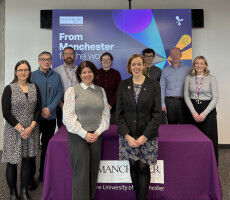
The University of Manchester signs Memorandum of Understanding with United Utilities
Agronomy & Food Science - Mar 27
Gather & Gather unveils fresh new Spring/Summer 2026 menu designed for the warmer seasons
Gather & Gather unveils fresh new Spring/Summer 2026 menu designed for the warmer seasons
Environment - Mar 26
University of Manchester hits major sustainability milestone, with Main Campus becoming 100% 'Zero Landfill'
University of Manchester hits major sustainability milestone, with Main Campus becoming 100% 'Zero Landfill'
Campus - MANCHESTER - Mar 26
Manchester students mentor local teenagers to build confidence in applying for university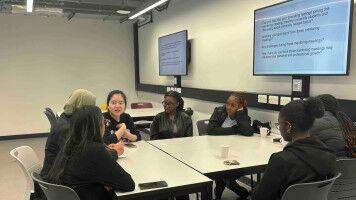
Manchester students mentor local teenagers to build confidence in applying for university

news
University College London
Results 1601 - 1620 of 2154.
Life Sciences - 09.08.2017
Fossil skull sheds light on ape ancestry
A remarkably complete fossil skull discovered in Kenya reveals what the common ancestor of all living apes and humans may have looked like, according to a new study involving UCL research. The find, announced today in Nature , belongs to an infant that lived about 13 million years ago. It's a significant discovery that will help researchers uncover whether the common ancestor of living apes and humans originated in Africa and what these early ancestors looked like.
Health - Life Sciences - 04.08.2017
Diabetes drug shows potential as disease-modifying therapy for Parkinson’s disease
A drug commonly used to treat diabetes may have disease-modifying potential to treat Parkinson's disease, a new UCL-led study suggests, paving the way for further research to define its efficacy and safety. The study, published in The Lancet and funded by The Michael J. Fox Foundation for Parkinson's Research (MJFF), found that people with Parkinson's who injected themselves each week with exenatide for one year performed better in movement (motor) tests than those who injected a placebo.
Astronomy & Space - Physics - 03.08.2017
Accurately measuring the dark universe
The theory that dark matter and dark energy make up most of the cosmos has been confirmed by extremely accurate measurements from the Dark Energy Survey (DES) collaboration involving UCL scientists. The findings verify that only 4% of the universe is made of ordinary matter, 26% is in the form of mysterious dark matter and space is filled with an unseen dark energy, which is causing the accelerating expansion of the universe and makes up 70%.
Health - 02.08.2017
Clinicians’ intuitions about when terminally ill patients will die are often inaccurate
A simple method, routinely used by clinicians to help identify patients who may be approaching their last year of life, is frequently inaccurate, according to a new study led by UCL researchers and funded by Marie Curie. The "Surprise Question" was developed as a way to recognise those patients who might benefit from palliative care.
Life Sciences - 31.07.2017
People with autism are less surprised by the unexpected
Adults with autism may overestimate the volatility of the world around them, finds a new UCL study published . The researchers found that adults with autism were less surprised by unexpected images in a simple learning task than adults without autism, and those who were the least surprised had the most pronounced symptoms.
Health - 27.07.2017
High sugar intake linked with poorer long-term mental healthÂ
Men with high sugar intakes from sweet food and beverages have an increased likelihood of common mental disorders (such as anxiety and depression) after 5 years compared to those with low intake, according to UCL research. The study also showed that having a mood disorder did not make people more inclined to eat foods with a high sugar content.
Chemistry - Astronomy & Space - 26.07.2017
Has Cassini found a universal driver for prebiotic chemistry at Titan?
An important type of molecule that helps produce complex organic material has been detected within Titan's hazy upper atmosphere by a UCL-led team as part of the international Cassini-Huygens mission. In the study, published in Astrophysical Journal Letters , scientists identified negatively charged molecules called 'carbon chain anions' in the atmosphere of Titan, Saturn's largest moon.
Philosophy - 18.07.2017
Hearing a sound can alter perception of finger size
Hearing an ascending sound while pulling their own finger can make a person think their finger is longer than it is, finds a new study led by UCL and the Institute of Philosophy, School of Advanced Study, University of London. The study, published in Scientific Reports and funded by the Economic and Social Research Council (ESRC) and the Arts and Humanities Research Council (AHRC), provides the first evidence that an artificial sound, unrelated to the sound of body movements, can alter how a person perceives their own body when the sound is arbitrarily paired with a bodily action.
History & Archeology - Life Sciences - 14.07.2017
Synchrotron light used to show human domestication of seeds from 2000BC
The UK's synchrotron facility, Diamond Light Source, has been used by scientists at UCL to document for the first time the rate of evolution of seed coat thinning, a major marker of crop domestication from archaeological remains. Writing in the journal Scientific Reports , the authors present evidence for seed coat thinning between 2,000 BC and 1,200 BC in the legume horsegram (Macrotyloma uniflorum), a bean commonly eaten in southern India.
Health - Life Sciences - 10.07.2017
Low iron levels may increase risk of heart disease
People with low iron levels may be at greater risk of heart disease, according to a new study involving UCL scientists. Researchers analysing genetic data have uncovered a potential protective effect of iron in coronary artery disease, suggesting that having a higher iron status reduces a person's risk of coronary artery disease (CAD), a type of cardiovascular disease (CVD) where clogged arteries reduce the amount of blood reaching the heart.
Life Sciences - 05.07.2017
Gaze direction affects sensitivity to sounds
Listening to something while looking in a different direction can slow down reaction times while the brain works harder to suppress distractions, finds a new UCL study. In a study published in Scientific Reports , UCL researchers found that a misalignment between the direction of the eyes and the focus of auditory attention leads to slower reactions and increased listening effort.
Health - Psychology - 05.07.2017
Being on a zero-hours contract is bad for your health, new study reveals
Young adults who are employed on zero-hours contracts are less likely to be in good health, and are at higher risk of poor mental health than workers with stable jobs. Researchers from the Centre for Longitudinal Studies at UCL Institute of Education (IOE) analysed data on more than 7,700 people living in England who were born in 1989-90 and are being followed by a study called Next Steps.
Health - Administration - 04.07.2017
End of life support is lacking for homeless people
A UCL-led study found that homeless people who are terminally ill are falling between cracks in services, and not able to access the same level of support as others. Researchers from the UCL Marie Curie Palliative Care Research Department, Pathway, St Mungo's and Coordinate My Care worked with homeless people and care professionals and found that many homeless people who may be approaching the end of their lives are living in homeless hostels.
Health - 03.07.2017
New HIV self-testing kit aims to increase diagnosis rates
A new study from UCL, London School of Hygiene & Tropical Medicine, and Public Health England seeks to discover whether providing free HIV self-tests to men, transgender men and transgender women who have sex with men could reduce the number of people who have undiagnosed HIV. Funded by the National Institute for Health Research (NIHR), SELPHI is an internet-based study where respondents will be asked to register their details through an online survey that is being promoted through apps such a Grindr and Hornet, social media sites and the gay press.
Career - 28.06.2017
Artists and architects think differently compared to other people
Architects, painters and sculptors conceive of spaces in different ways from other people and from each other, finds a new study by UCL and Bangor University researchers. When asked to talk about images of places, painters are more likely to describe the depicted space as a two-dimensional image, while architects are more likely to focus on paths and the boundaries of the space.
Architecture & Buildings - 28.06.2017
High-rise buildings much more energy-intensive than low-rise
Office and residential buildings use more energy per square metre, the taller they are, according to new research from UCL. Researchers at UCL's Energy Institute have found that electricity use, per square metre of floor area, is nearly two and a half times greater in high-rise office buildings of 20 or more storeys than in low-rise buildings of 6 storeys or less.
Health - Life Sciences - 26.06.2017
Sex differences important for medical research
The sex of animals frequently has an effect in biomedical research and therefore should be considered in scientific studies, according to UCL scientists. In the largest study of its kind, researchers from 10 centres that form the International Mouse Phenotyping Consortium (IMPC) found that differences between male and female mice had significant effects that could impact research results in many biomedical studies.
Psychology - Career - 22.06.2017
Authenticity key to landing a new job
At job interviews, relax and be yourself - if you're good, being yourself may be the best way to secure a job offer, according to a new study involving UCL researchers. Published today in the Journal of Applied Psychology , the study by UCL, Bocconi University, Hong Kong Polytechnic University, and London Business School, found that high-quality candidates who strive to present themselves accurately during the interview process significantly increase the likelihood of receiving a job offer.
Health - Life Sciences - 20.06.2017
Genetic modifier for Huntington’s disease progression identified
A team led by UCL and Cardiff University researchers has developed a novel measure of disease progression for Huntington's disease, which enabled them to identify a genetic modifier associated with how rapidly the disease progresses. 'We've identified a gene that could be a target for treating Huntington's disease.
Life Sciences - 16.06.2017
Egocentric hearing: Study clarifies how we can tell where a sound is coming from
A new UCL and University of Nottingham study has found that most neurons in the brainâ?'s auditory cortex detect where a sound is coming from relative to the head, but some are tuned to a sound sourceâ''s actual position in the world. The study, published in PLOS Biology , looked at whether head movements change the responses of neurons that track sound location.


Environment - Mar 27
The University of Manchester signs Memorandum of Understanding with United Utilities
The University of Manchester signs Memorandum of Understanding with United Utilities
Agronomy & Food Science - Mar 27
Gather & Gather unveils fresh new Spring/Summer 2026 menu designed for the warmer seasons
Gather & Gather unveils fresh new Spring/Summer 2026 menu designed for the warmer seasons
Environment - Mar 26
University of Manchester hits major sustainability milestone, with Main Campus becoming 100% 'Zero Landfill'
University of Manchester hits major sustainability milestone, with Main Campus becoming 100% 'Zero Landfill'
Campus - MANCHESTER - Mar 26
Manchester students mentor local teenagers to build confidence in applying for university
Manchester students mentor local teenagers to build confidence in applying for university