


Environment - Mar 27
The University of Manchester signs Memorandum of Understanding with United Utilities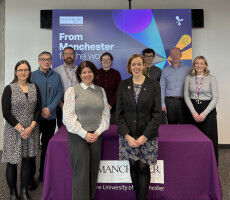
The University of Manchester signs Memorandum of Understanding with United Utilities
Agronomy & Food Science - Mar 27
Gather & Gather unveils fresh new Spring/Summer 2026 menu designed for the warmer seasons
Gather & Gather unveils fresh new Spring/Summer 2026 menu designed for the warmer seasons
Environment - Mar 26
University of Manchester hits major sustainability milestone, with Main Campus becoming 100% 'Zero Landfill'
University of Manchester hits major sustainability milestone, with Main Campus becoming 100% 'Zero Landfill'
Campus - MANCHESTER - Mar 26
Manchester students mentor local teenagers to build confidence in applying for university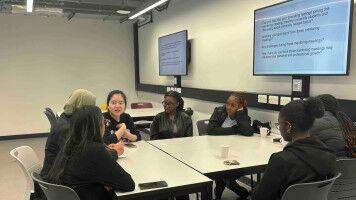
Manchester students mentor local teenagers to build confidence in applying for university

news
University College London
Results 1501 - 1520 of 2154.
Life Sciences - Health - 11.05.2018
Genome sequencing reveals origin of killer fungus behind the ’amphibian plague’
A deadly fungus responsible for the devastation of amphibian populations around the world has spread from East Asia, according to new research led by scientists at UCL, Imperial College London and Zoological Society of London. The fungus Batrachochytrium dendrobatidis (Bd), has long been recognised as one the main causes of the decline and extinction of species of frogs, toads, newts and other amphibians across several continents.
Health - Life Sciences - 11.05.2018
Did leprosy originate in Europe?
The largest study to-date on the DNA of ancient leprosy has revealed more strains of the debilitating disease were present in Medieval Europe, than previously thought. Leprosy is one of the oldest recorded and most stigmatized diseases in human history, and these latest findings suggest an older estimated date for the disease - making it a few thousand years old.
Life Sciences - 09.05.2018
Microbes are savvy when contributing to the common good
Microbes vary their contribution to a community to maximise the return on their investment according to a new study led by UCL and the University of Bath. Scientists made the discovery while investigating one of the fundamental questions in biology - why individuals have evolved to cooperate rather than simply exploiting the contributions of their rivals.
Health - Life Sciences - 09.05.2018
Artificial muscles promise to speed up testing of treatments for muscle diseases
Artificial muscles grown from human stem cells could pave the way forward for treating muscle diseases, according to new research led by UCL. The study, published in Cell Reports , found that 3D artificial muscles can be generated from both healthy and diseased stem cells of patients with different types of severe muscle disorders called muscular dystrophies.
Health - Economics - 04.05.2018
Why child mortality is 1.5 times higher in England than Sweden
Premature births, low birth weight and birth anomalies explain why England has a higher death rate than Sweden among children under 5 years old, according to a new study led by UCL. The study, published today in The Lancet , compared more than 3.9 million English births and 1 million Swedish births to understand factors driving higher rates of child mortality in England.
Health - Life Sciences - 01.05.2018
Mid-life anxiety may be linked to later life dementia
People with moderate to severe mid-life anxiety may face a greater risk of dementia in later life, suggests an analysis of the available published evidence led by UCL and University of Southampton researchers and published in BMJ Open . But as yet, it's not clear whether treatment for anxiety could curb dementia risk, say the researchers.
Astronomy & Space - 25.04.2018
Gaia’s 3D census of over one billion stars in our Milky Way
The positions and distances of over one billion stars in our Milky Way Galaxy have been released by the European Space Agency Gaia mission involving UCL researchers, creating the first 3D census of our home galaxy and opening a new window on the Universe. The data release allows astronomers to map the true 3D structure of our galaxy with unprecedented precision by providing information about 600 times more stars than previously available.
Health - 25.04.2018
Hospitals often missing dementia despite prior diagnosis
Hospitals in the UK are increasingly likely to recognise that a patient has dementia after they've been admitted for a different reason, finds a new UCL-led study, but it is still only recognised in under two-thirds of people. This is the first study to identify an improvement in dementia diagnosis in hospitals over time, and also found inequity between ethnic groups for the first time.
Politics - 24.04.2018
Climate change not the key driver of human conflict and displacement in East Africa
Over the last 50 years climate change has not been the key driver of the human displacement or conflict in East Africa, rather it is politics and poverty, according to new research by UCL. Human displacement refers to the total number of forcibly displaced people, and includes internally displaced people - the largest group represented - and refugees, those forced to across international borders. "Terms such as climate migrants and climate wars have increasingly been used to describe displacement and conflict, however these terms imply that climate change is the main cause.
Health - 19.04.2018
Changing how blood pressure is measured will save lives
Traditional methods of testing for high-blood pressure are no longer adequate and risk missing vital health signs, which can lead to premature death, a study co-led by UCL has found. The research, the largest ever cohort study of its kind, published in the New England Journal for Medicine, assessed 63,000 doctors' patients, who had their blood pressure tested using traditional 'in clinic' methods, such as an automated or hand operated devices.
Life Sciences - Health - 17.04.2018
How does dietary restriction extend lifespan in flies?
Lifespan in flies is extended by limiting the activity of a group of proteins called GATA transcription factors (TFs), giving clues to how a moderate reduction in food intake protects against multiple ageing-related diseases, according to a new UCL-led study. The beneficial effect of reducing the action of a GATA TF is comparable to the prolonged lifespan achieved through dietary restriction; which is defined as a reduction of particular or total nutrient intake without causing malnutrition.
Health - Life Sciences - 13.04.2018
Discovery explains how the chickenpox and shingles virus remains dormant
A research team led by UCL and Erasmus University has found a missing piece to the puzzle of why the virus that causes chickenpox and shingles can remain dormant for decades in human cells. Described in a recent paper , researchers discovered there is an RNA transcript in the varicella zoster virus (VZV), that continues to remain active after a person has recovered from chickenpox.
Environment - Earth Sciences - 12.04.2018
Atlantic circulation that helps warm UK is at its weakest for over 1500 years
North Atlantic circulation is weaker today than it has been for over a thousand years, and leading climate change models could be overestimating its stability, according to a team of scientists led by UCL and Woods Hole Oceanographic Institution, US. In the first comprehensive study of ocean-based records scientists have observed a marked weakening of Atlantic circulation over the past 150 years.
Health - Education - 12.04.2018
Does age at menopause affect memory?
Entering menopause at a later age may be associated with a small benefit to your memory years later, according to a new study led by UCL researchers. The paper, published today in Neurology and funded by the Medical Research Council (MRC) suggests a possible link between entering the menopause late and memory retention.
Health - Life Sciences - 12.04.2018
’Killer’ kidney cancers identified by studying their evolution
Kidney cancer follows multiple distinct evolutionary paths, finds new research by a team involving UCL. The research will enable the scientists to detect whether a tumour will be aggressive and reveals that the first seeds of kidney cancer are sown as early as childhood.
Physics - Chemistry - 06.04.2018
Unlocking the secrets of ice
The complex properties of water and ice are not well understood but a team from UCL and the ISIS Neutron and Muon Source have revealed new information about a phase of ice called 'ice II'. Given that water makes up 60% of our bodies and is one of the most abundant molecules in the universe, it's no wonder that water is known as the "matrix of life".
Environment - Astronomy & Space - 06.04.2018
Antarctica retreating across the sea floor
Antarctica's great ice sheet is losing ground as it is eroded by warm ocean water circulating beneath its floating edge, a new UCL and University of Leeds study has found. Research by the UK Centre for Polar Observation and Modelling (CPOM) has produced the first complete map of how the ice sheet's submarine edge, or "grounding line", is shifting.
Health - Life Sciences - 05.04.2018
Prostate cancer screening using MRI for earlier diagnosis
MRI scans could be used to detect prostate cancer more accurately, according to researchers at UCL, King's College London and Imperial College London who are launching a new clinical study. The current prostate-specific antigen (PSA) blood test is considered too unreliable for population screening, and the researchers will test for the first time if MRI scans could be used to screen men to pick up cancers earlier and more reliably, and help save lives.
Life Sciences - Health - 29.03.2018
Potential genetic link in sudden infant death syndrome
Rare genetic mutations associated with impairment of the breathing muscles are more common in children who have died from sudden infant death syndrome, according to a new study led by UCL researchers. The study, published in The Lancet , suggests a possible genetic element of the disorder, which is also known as 'cot death'.
Health - Administration - 28.03.2018
New study aims to transform treatment for children with arthritis and uveitis
UCL academics will lead a five-year study of childhood arthritis and its linked eye inflammation called uveitis, with the aim of better understanding how to treat the complex condition. The CLUSTER consortium has been awarded £5 million from the UK's Medical Research Council (MRC) with partnership funding from Arthritis Research UK.


Environment - Mar 27
The University of Manchester signs Memorandum of Understanding with United Utilities
The University of Manchester signs Memorandum of Understanding with United Utilities
Agronomy & Food Science - Mar 27
Gather & Gather unveils fresh new Spring/Summer 2026 menu designed for the warmer seasons
Gather & Gather unveils fresh new Spring/Summer 2026 menu designed for the warmer seasons
Environment - Mar 26
University of Manchester hits major sustainability milestone, with Main Campus becoming 100% 'Zero Landfill'
University of Manchester hits major sustainability milestone, with Main Campus becoming 100% 'Zero Landfill'
Campus - MANCHESTER - Mar 26
Manchester students mentor local teenagers to build confidence in applying for university
Manchester students mentor local teenagers to build confidence in applying for university