


Environment - Mar 27
The University of Manchester signs Memorandum of Understanding with United Utilities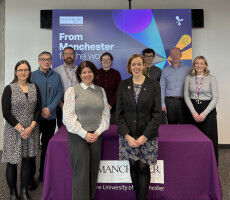
The University of Manchester signs Memorandum of Understanding with United Utilities
Agronomy & Food Science - Mar 27
Gather & Gather unveils fresh new Spring/Summer 2026 menu designed for the warmer seasons
Gather & Gather unveils fresh new Spring/Summer 2026 menu designed for the warmer seasons
Environment - Mar 26
University of Manchester hits major sustainability milestone, with Main Campus becoming 100% 'Zero Landfill'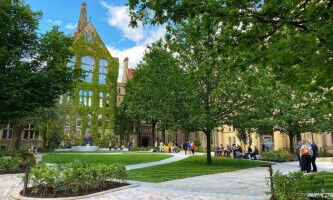
University of Manchester hits major sustainability milestone, with Main Campus becoming 100% 'Zero Landfill'
Campus - MANCHESTER - Mar 26
Manchester students mentor local teenagers to build confidence in applying for university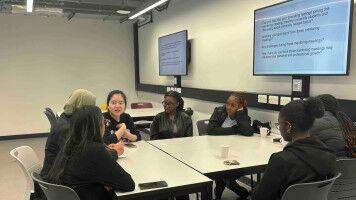
Manchester students mentor local teenagers to build confidence in applying for university

news
University College London
Results 1361 - 1380 of 2154.
Psychology - 10.10.2019
Rest may help reduce PTSD symptoms
A period of rest following a traumatic event can reduce the subsequent development of involuntary 'memory intrusions'*, one of the hallmark symptoms in post-traumatic stress disorder (PTSD), a new UCL study has found. The study, published in Scientific Reports and funded by the European Research Council and Wellcome, suggests memory disturbances in PTSD may be ameliorated by increased 'consolidation' (a process by which memories are stored and contextualised), which could shed new light on treatment and prevention.
Life Sciences - 10.10.2019
Analysis: We can stop multiple sclerosis, and this is how
Professor Alan Thompson, Dean of the UCL Faculty of Brain Sciences, writes about progress made in finding treatments for multiple sclerosis. Twenty-five years ago there were no treatments for multiple sclerosis (MS) - a neurological condition that affects more than 100,000 people living in the UK. Today the picture is very different.
Health - Pharmacology - 07.10.2019
Secrets of lung cancer spread found in patients’ blood and biopsies
Early signs that a patient's lung cancer may spread and become untreatable can be picked up in samples of their blood and tumour, according to a trio of papers co-led by UCL. The three studies, published , are all part of Cancer Research UK's £14million TRACERx project, which aims to understand how lung cancer cells change over time and become resistant to treatment.
Environment - 07.10.2019
China is on track to meet its ultra-low emissions goals for 2020
Polluting emissions from Chinese thermal power plants declined significantly between 2014 and 2017, according to research involving UCL. The reductions are important in helping to control China's national emissions which could lead to an improvement in air quality and considerable health benefits. A team of experts from the UK and China analysed emissions from coal, oil, natural gas and biomass power plants, with a focus on coal-fired power plants as the major contributors to ambient air pollution.
Social Sciences - 03.10.2019
"Children’s voices" omitted from care records, UCL study finds
The social care records of looked-after children and young people need to include those children's voices, according to a collaborative research project led by UCL with the Care Leaver's Association and the charity Family Action. The MIRRA (Memory - Identity - Rights in Records - Access) project, led by Professor Elizabeth Shepherd (UCL Information Studies), collected interview and focus group data from more than 80 care leavers, social work practitioners and information professionals.
Health - 02.10.2019
Health worsens the longer you live in a deprived neighbourhood
Living in a deprived neighbourhood as a child can have negative effects on long-term health and the longer people stay in poor areas, the more likely they are to become ill, according to a UCL-led study. The international study, which is the first systematic review to bring together research on neighbourhood effects on health and well-being over the life course, is published today in the European Journal of Public Health.
Health - 01.10.2019
Analysis: Having sex in older age could make you happier and healthier
Dr Sarah Jackson (UCL Epidemiology & Health) co-authors an article discussing new research which examines the importance of having sex in older age. Sexual activity is an essential part of intimate relationships, though it tends to decline as people get older. But although research shows that frequency of sexual activity can decrease with age, for many older people, sex still remains an important part of their life.
Pharmacology - Health - 30.09.2019
Fruit flies live longer with combination drug treatment
A triple drug combination has been used to extend the lifespan of fruit flies by 48% in a new study led by UCL and the Max Planck Institute for Biology of Ageing. The three drugs are all already in use as medical treatments: lithium as a mood stabiliser, trametinib as a cancer treatment and rapamycin as an immune system regulator.
Health - Life Sciences - 27.09.2019
Method discovered to reactivate tumour fighting genes ’silenced’ by cancer
Scientists at UCL have developed a method to reactivate 'tumour suppressor' genes, which are switched off by cancer cells - a finding which could lead to new targeted biotherapies for cancer. In the study, published in Nature Structural and Molecular Biology , researchers at UCL Cancer Institute and the Cancer Research UK UCL Centre aimed to identify ways to block the function of a regulatory protein called PRC2 (Polycomb repressive complex 2).
Life Sciences - Health - 26.09.2019
New genes identified in hearing loss, providing treatment hope
Researchers have identified 44 genes linked to age-related hearing loss, giving a much clearer understanding of how the condition develops, in a new study led by UCL and King's College London. In the study, published today in The American Journal of Human Genetics , researchers analysed the genetic data from over 250,000 participants of the UK Biobank aged 40-69 years to see which genes were associated with people who had reported having or not having hearing problems on questionnaire.
Environment - Paleontology - 26.09.2019
Ecosystems take two million years to recover after mass extinctions
It takes ecosystems two million years to recover after a mass extinction and for them to become functional and resilient again, according to new UCL co-led research. The study Hojung Kim and Dr Sarah Alvarez) and academics from Southampton, Frankfurt and California. The team looked at 13 million years' worth of fossil plankton records in the aftermath of near annihilation of ocean plankton, during the Cretaceous/Paleogene mass extinction, providing a remarkable glimpse into how the marine ecosystem 'reboots'.
Health - Innovation - 24.09.2019
UCL plays significant role in pioneering data research centres
UCL is a key partner in four of seven new centres announced by Health Data Research UK. The data hubs, to be set up across the UK from October this year, will speed up research for new medicines, treatments and health technologies to support quicker diagnosis and save lives. They will promote better use of health data by linking up different types of data and making it more easily accessible and user-friendly for research, while maintaining strict controls around data privacy and consent.
Life Sciences - Health - 24.09.2019
Some high-cholesterol genes differ between countries
Some of the genes that predict the risk of high cholesterol don't apply to people from Uganda the same as they do in European populations, finds a new UCL-led study. The new Nature Communications study adds to evidence that genetic research involved in drug development and risk prediction testing might not apply equally to non-European populations.
Health - Pharmacology - 24.09.2019
Gum disease linked with higher risk of hypertension
People with gum disease (periodontitis) have a greater likelihood of high blood pressure (hypertension), according to a new UCL-led study. The meta-analysis of previous findings was published today in Cardiovascular Research , a journal of the European Society of Cardiology. "We observed a linear association - the more severe periodontitis is, the higher the probability of hypertension," said senior author Professor Francesco D'Aiuto (UCL Eastman Dental Institute).
Computer Science - Mathematics - 24.09.2019
Numbers limit how accurately digital computers model chaos
Digital computers use numbers based on flawed representations of real numbers, which may lead to inaccuracies when simulating the motion of molecules, weather systems and fluids, find UCL and Tufts University scientists. The study, published today in Advanced Theory and Simulations , shows that digital computers cannot reliably reproduce the behaviour of 'chaotic systems' which are widespread.
Life Sciences - 23.09.2019
Humans evolved from all across Africa
Modern humans evolved in Africa, and groups from all over the continent contributed to that process, so we should stop searching for a single point of origin, according to researchers led by UCL and the Max Planck Institute for the Science of Human History. In a comment paper published in Nature Ecology and Evolution , the researchers argue that our evolutionary past must be understood as the outcome of dynamic changes in connectivity, or gene flow, between early humans scattered across Africa.
Astronomy & Space - Environment - 23.09.2019
UCL to form closer ties with the European Space Agency
A memorandum of collaboration to be agreed by UCL and the European Space Agency (ESA) is one of the most comprehensive to date between ESA and a university and builds on existing close co-operation on missions to study space weather and other phenomena in space. The memorandum, due to be signed by Jan Woerner, Director General of ESA, and David Price, UCL Vice-Provost (Research), will cover a swathe of topics ranging from planetary science to space policy, governance and security.
Environment - Astronomy & Space - 20.09.2019
Opinion: Five climate change science misconceptions - debunked
Professor Mark Maslin (UCL Geography) writes about common climate change myths and explains how each can be disproven. The science of climate change is more than 150 years old and it is probably the most tested area of modern science. However the energy industry, political lobbyists and others have spent the last 30 years sowing doubt about the science where none really exists.
Pharmacology - 20.09.2019
Antidepressants may reduce anxiety more than depressive symptoms
One of the most common antidepressants, sertraline, leads to an early reduction in anxiety symptoms, commonly found in depression, several weeks before any improvement in depressive symptoms, a UCL-led clinical trial has found. Published in The Lancet Psychiatry and funded by the National Institute for Health Research (NIHR), this is the largest-ever placebo-controlled trial of an antidepressant, which has not been funded by the pharmaceutical industry.
Astronomy & Space - Environment - 19.09.2019
Opinion: How we detected water on a potentially habitable exoplanet for the first time
Angelos Tsiaras (UCL Physics & Astronomy) writes about the methods used to discover water vapour in the atmosphere of K2-18 b, the first potentially habitable planet outside of our solar system. With more than 4,000 exoplanets - planets orbiting stars other than our sun - discovered so far, it may seem like we are on the cusp of finding out whether we are alone in the universe.


Environment - Mar 27
The University of Manchester signs Memorandum of Understanding with United Utilities
The University of Manchester signs Memorandum of Understanding with United Utilities
Agronomy & Food Science - Mar 27
Gather & Gather unveils fresh new Spring/Summer 2026 menu designed for the warmer seasons
Gather & Gather unveils fresh new Spring/Summer 2026 menu designed for the warmer seasons
Environment - Mar 26
University of Manchester hits major sustainability milestone, with Main Campus becoming 100% 'Zero Landfill'
University of Manchester hits major sustainability milestone, with Main Campus becoming 100% 'Zero Landfill'
Campus - MANCHESTER - Mar 26
Manchester students mentor local teenagers to build confidence in applying for university
Manchester students mentor local teenagers to build confidence in applying for university