


Environment - Mar 27
The University of Manchester signs Memorandum of Understanding with United Utilities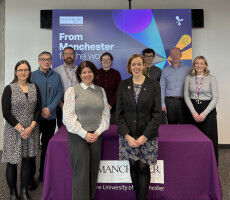
The University of Manchester signs Memorandum of Understanding with United Utilities
Agronomy & Food Science - Mar 27
Gather & Gather unveils fresh new Spring/Summer 2026 menu designed for the warmer seasons
Gather & Gather unveils fresh new Spring/Summer 2026 menu designed for the warmer seasons
Environment - Mar 26
University of Manchester hits major sustainability milestone, with Main Campus becoming 100% 'Zero Landfill'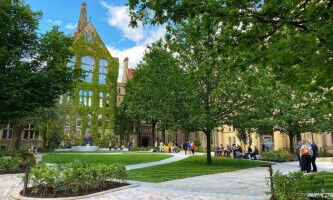
University of Manchester hits major sustainability milestone, with Main Campus becoming 100% 'Zero Landfill'
Campus - MANCHESTER - Mar 26
Manchester students mentor local teenagers to build confidence in applying for university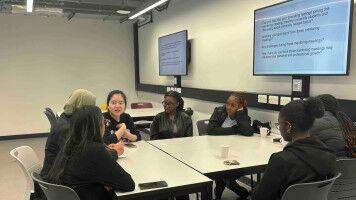
Manchester students mentor local teenagers to build confidence in applying for university

news
University College London
Results 1341 - 1360 of 2154.
Environment - 06.11.2019
Wasps as an effective pest control for agriculture
Common wasp species could be valuable at sustainably managing crop pests, finds a new UCL-led experimental study in Brazil. The study, published in Proceedings of the Royal Society B , found that social wasps are effective predators that can manage pests on two high-value crops, maize and sugarcane.
Life Sciences - History & Archeology - 05.11.2019
3,000-year-old Egyptian wheat genome sequenced for first time
The genome of an ancient Egyptian wheat has been sequenced for the first time by a UCL-led team, revealing historical patterns of crop movement and domestication. The study was carried out by an international research team, which mapped the genetic code from a sample of wheat harvested over 3,000 years ago, that was excavated in 1924 from the Hememiah North Spur site in Egypt.
Law - Philosophy - 05.11.2019
Lawyers asked to advise on unethical issues
Nearly half (45%) of in-house lawyers have been asked to advise on an action with debatable ethics, according to research by UCL. The research, published in a new report ' Which way is the wind blowing? Understanding the moral compass of in-house legal counsel' also found that 39% of in-house lawyers had been asked to advise on something which was potentially illegal.
Environment - Chemistry - 05.11.2019
Deep sea vents had ideal conditions for origin of life
By creating protocells in hot, alkaline seawater, a UCL-led research team has added to evidence that the origin of life could have been in deep-sea hydrothermal vents rather than shallow pools. Previous experiments had failed to foster the formation of protocells - seen as a key stepping stone to the development of cell-based life - in such environments, but the new study, published in Nature Ecology & Evolution , finds that heat and alkalinity might not just be acceptable, but necessary to get life started.
Life Sciences - Health - 31.10.2019
Cognitive differences linked to amyloid at age 70
People with more harmful amyloid plaques in the brain already score worse than their peers on cognitive tests at age 70, finds a new UCL-led study. Amyloid plaques are implicated in Alzheimer's disease, which typically develops multiple years later, so the new findings, published in Neurology , might show early warning signs before any disease develops.
Music - 30.10.2019
Name that tune: Brain takes just 100 to 300 milliseconds to recognise familiar music
The human brain can recognise a familiar song within 100 to 300 milliseconds, highlighting the deep hold favourite tunes have on our memory, a UCL study finds. Anecdotally the ability to recall popular songs is exemplified in game shows such as 'Name That Tune', where contestants can often identify a piece of music in just a few seconds.
Health - 30.10.2019
Quitting smoking and more exercise can halve risk of life-threatening frailty
Quitting smoking and doing more exercise can cut the chances of becoming frail in later years by more than half, according to new research led by De Montfort University Leicester (DMU) and UCL. A team of researchers from UCL, De Montfort University Leicester and St George's University, Grenada, studied data collected by the English Longitudinal Study of Aging (ELSA), which collects information from people aged over 50 to understand aspects of growing old.
Astronomy & Space - Physics - 29.10.2019
Particle detector for hunting dark matter installed a mile underground
The central component of LUX-ZEPLIN (LZ) - the largest direct-detection dark matter experiment in the US - has been slowly lowered 4,850 feet down a shaft formerly used in gold-mining operations by a team involving UCL physicists. Although dark matter accounts for about 27 percent of the universe, we do not know what it is made of and experiments have yet to make direct contact with a particle - it has only been detected through its gravitational effects on normal matter.
Environment - Life Sciences - 29.10.2019
Macaques’ stone tool use varies despite same environment
Stone tool use develops differently within species of Old World monkeys in spite of shared environmental and ecological settings, according to a new study involving UCL. Macaques are the only Old World monkeys that have been observed using percussive stone tools and scientists do not know for certain how or why certain groups have developed this behaviour.
Astronomy & Space - Physics - 28.10.2019
Mapping the universe in extraordinary detail using UCL lenses
A three-dimensional map of the Universe that reaches deeper in space and time than ever before is one step closer as final testing begins on the Dark Energy Spectroscopic Instrument (DESI), designed and built in part by UCL physicists. From early 2020, DESI will observe the light from 35 million distant galaxies and 2.4 million quasars over five years to precisely map their distance from Earth and gauge how quickly they are moving away from us.
Social Sciences - 24.10.2019
Brexit vote linked to rise in discrimination and anxiety among migrants
The social climate in the UK following the European Union (EU) referendum has had a detrimental impact on migrants' mental health, according to a new study led by UCL. The study, published today in the American Psychological Association's Journal of Consulting and Clinical Psycholog y, suggests that the result of the 2016 Brexit referendum has contributed to a rise in discrimination and anxiety amongst migrants living in the UK.
Astronomy & Space - Earth Sciences - 24.10.2019
Martian landslides not conclusive evidence of ice
Giant ridges on the surface of landslides on Mars could have formed without ice, challenging their use by some as unequivocal evidence of past ice on the red planet, finds a new UCL-led study using state-of-the-art satellite data. Detailed three-dimensional images of an extensive landslide on Mars, which spans an area more than 55 kilometres wide, have been analysed to understand how the unusually large and long ridges and furrows formed about 400 million years ago.
Health - Pharmacology - 21.10.2019
Detecting the (almost) undetectable: new cancer alliance
UCL research teams are part of a new transatlantic research alliance to develop radical new strategies and technologies to detect cancer at its earliest stage. Cancer Research UK is the lead funder of the International Alliance for Cancer Early Detection (ACED), a £55m investment bringing together UCL, Canary Center at Stanford University, the University of Cambridge, the OHSU Knight Cancer Institute, and the University of Manchester.
Astronomy & Space - 18.10.2019
Sun explorer spacecraft leaves for launch site
The European Space Agency's Solar Orbiter, which carries instruments proposed, designed and built at UCL, is completing final testing in Germany before travelling to Cape Canaveral, USA, for launch in February 2020. Solar Orbiter will perform unprecedented close-up observations of the Sun, to help answer questions about why the Sun's corona is so hot and why the solar wind flows away from the Sun so rapidly, typically at 400-500 kilometres per second.
Health - Environment - 15.10.2019
Predicting Ebola outbreaks by understanding how ecosystems influence human health
The next Ebola outbreak could be predicted using a new UCL-developed model that tracks how changes to ecosystems and human societies combine to affect the spread of the deadly infectious disease. The model could help policymakers to decide where to target vaccine deployment, or develop healthcare infrastructure, to reduce the risk of zoonotic disease outbreaks - illnesses that spread between animals and humans.
Economics - Environment - 15.10.2019
US green economy worth $1.3 trillion per year
The US green economy is estimated to generate over $1.3 trillion in revenue per year, representing 16.5% of the global green economy, according to a new study by UCL. The green economy - broadly defined as an economy that is low carbon, resource efficient and socially inclusive - is a major source of jobs in the US, employing an estimated 9.5 million people.
Social Sciences - 15.10.2019
Lowest-paid workers have longest retirements
The lowest-paid workers in the UK have three more years of retirement on average compared to their professional counterparts, but are more likely to suffer ill health after stopping work, a new UCL-led study suggests. The study, published today in The Journal of Epidemiology and Community Health , examined the length of time between stopping work and dying among people in England and Wales born before 1951.
Social Sciences - Psychology - 14.10.2019
Opinion: Mental health is a care we must share
Professor Peter Fonagy, Head of UCL Psychology & Language Sciences, writes about how wide social networks can help to shield people from mental disorder, arguing that we should celebrate this collective responsibility. The government published its first national review of children and young people's mental wellbeing on 10 October, World Mental Health Day.
Life Sciences - Environment - 14.10.2019
Conclusive sighting of rare whale confirmed
The first conclusive evidence of a rare whale species - the True's beaked whale (Mesoplodon mirus) - inhabiting a region of the North East Atlantic has been confirmed by a research team involving UCL. Images taken during a wildlife photography trip in the Bay of Biscay in July 2018 have given conservationists the opportunity to study this species in exquisite new detail.
Life Sciences - Linguistics & Literature - 11.10.2019
Seven Questions with Claudia Cannavo
This week we catch up with Neuroscience PhD student Claudia, who shares with us her favourite musical in London, experience meeting fellow Neurology scientists in Paris and top spot in the city for finding inspiration to write. What are you studying, why are you interested in this subject and what do you plan to do in the future? I am currently doing a PhD in Neuroscience researching Alzheimer's disease.


Environment - Mar 27
The University of Manchester signs Memorandum of Understanding with United Utilities
The University of Manchester signs Memorandum of Understanding with United Utilities
Agronomy & Food Science - Mar 27
Gather & Gather unveils fresh new Spring/Summer 2026 menu designed for the warmer seasons
Gather & Gather unveils fresh new Spring/Summer 2026 menu designed for the warmer seasons
Environment - Mar 26
University of Manchester hits major sustainability milestone, with Main Campus becoming 100% 'Zero Landfill'
University of Manchester hits major sustainability milestone, with Main Campus becoming 100% 'Zero Landfill'
Campus - MANCHESTER - Mar 26
Manchester students mentor local teenagers to build confidence in applying for university
Manchester students mentor local teenagers to build confidence in applying for university