


Environment - Mar 27
The University of Manchester signs Memorandum of Understanding with United Utilities
The University of Manchester signs Memorandum of Understanding with United Utilities
Agronomy & Food Science - Mar 27
Gather & Gather unveils fresh new Spring/Summer 2026 menu designed for the warmer seasons
Gather & Gather unveils fresh new Spring/Summer 2026 menu designed for the warmer seasons
Environment - Mar 26
University of Manchester hits major sustainability milestone, with Main Campus becoming 100% 'Zero Landfill'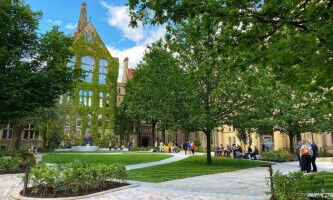
University of Manchester hits major sustainability milestone, with Main Campus becoming 100% 'Zero Landfill'
Campus - MANCHESTER - Mar 26
Manchester students mentor local teenagers to build confidence in applying for university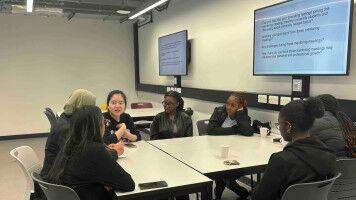
Manchester students mentor local teenagers to build confidence in applying for university

news
University College London
Results 1281 - 1300 of 2154.
Health - Pharmacology - 21.01.2020
Immune cell health discovery could optimise cancer therapies
Scientists at UCL have discovered how immune cells, essential for tackling infections and cancers, are able to 'recycle' material within themselves in order to stay healthy and function, a breakthrough finding which could lead to more effective immunotherapies. In the study, published in Cell Reports , researchers investigated how 'autophagy' - the natural physiological process of 'self-eating' which allows intracellular components, such as mitochondria, to be degraded and replaced - takes place in liver-based T cells.
Health - Social Sciences - 21.01.2020
Health gap between rich and poor has widened
The health of the poorest people in Britain has declined since the mid-20th century, and is worse when compared to those born a century ago, suggests a new UCL-led study. The study, published in the BMJ Journal of Epidemiology and Community Health , compared health and income data from more than 200,000 working-age adults who were born between 1920 and 1970.
Social Sciences - Environment - 21.01.2020
New housing design in England overwhelmingly ’mediocre’ or ’poor’
The design of new housing developments in England is overwhelmingly 'mediocre' or 'poor', with less-affluent communities the worst affected, according to a national audit conducted by UCL for CPRE, the countryside charity, and the Place Alliance. A housing design audit for England reveals that 75% of new housing development should not have gone ahead due to 'mediocre' or 'poor' design.
Life Sciences - Environment - 21.01.2020
Small predators lose out from human land use
Predators, especially small invertebrates like spiders and ladybirds, are the most likely to be lost when natural habitats are converted to agricultural land or towns and cities, finds a new UCL-led study. The first of its kind, global study on the impacts of human land use on different groups of animals is published in the British Ecological Society journal Functional Ecology .
Health - Pharmacology - 20.01.2020
Blood test for eight gene signatures could predict onset of tuberculosis
Scientists at UCL have shown a blood test could predict the onset of tuberculosis three to six months before people become unwell, a finding which could help better target antibiotics and save countless lives. In the study, published in The Lancet Respiratory Medicine , researchers sought to identify which, if any, gene expression signatures in blood could be used to predict the disease at a very early stage and before symptoms arise.
Pharmacology - Social Sciences - 20.01.2020
Racial disparities in drug prescriptions for dementia
Disparities in drug prescribing suggest that black and Asian people with dementia are not receiving the same quality of care as their white peers, according to a new UCL-led study in the UK. Asian people with dementia are less likely to receive anti-dementia drugs, and take them for shorter periods, according to the findings published in Clinical Epidemiology .
Social Sciences - 17.01.2020
Older ethnic minority adults have fewer close friends
Older adults from ethnic minority groups report having fewer close friends and fewer friends who live locally than older white people, according a new UCL study. The research, published in Ageing & Society , found that Black and Asian adults over the age of 65 years are almost twice as likely to report having no close friends (9% and 7% respectively) compared to White and mixed or 'other' ethnicity adults of the same age (both 4%).
Life Sciences - Computer Science - 16.01.2020
Artificial intelligence used to predict 3D structure of proteins
A deep learning system can predict the structure of a protein using its genetic sequence more accurately than any previous modelling system, according to a study by researchers at DeepMind and UCL. Nearly every function our body performs relies on proteins. Predicting the intricate 3D structure of a protein is important because its structure largely determines its function and, once the structure is known, scientists can develop drugs that target this unique shape.
Earth Sciences - Environment - 16.01.2020
Asteroid impact, not volcanic eruptions, killed the dinosaurs
Volcanic activity did not play a direct role in the mass extinction event that killed the dinosaurs and about 75 per cent of Earth's species 66 million years ago, according to a team involving UCL and University of Southampton researchers.
Life Sciences - 15.01.2020
Analysis: Women who have more sex may enter the menopause later
Megan Arnot (UCL Anthropology) discusses a new study conducted with Professor Ruth Mace (UCL Anthropology) which found that women's sexual behaviour is connected with menopause timing. Globally, on average, women experience the menopause at around the age of 50. But there's a great deal of variation in this age both within and between countries.
Life Sciences - 15.01.2020
Women who have less sex enter the menopause earlier
Megan Arnot (UCL Anthropology) discusses a new study conducted with Professor Ruth Mace (UCL Anthropology) which found that women's sexual behaviour is connected with menopause timing. Globally, on average, women experience the menopause at around the age of 50. But there's a great deal of variation in this age both within and between countries.
Life Sciences - 15.01.2020
Having less sex linked to earlier menopause
Women who engage in sexual activity weekly or monthly have a lower risk of entering menopause early relative to those who report having some form of sex less than monthly, according to a new UCL study. The researchers observed that women, who reported engaging in sexual activity weekly, were 28% less likely to have experienced menopause at any given age than women who engaged in sexual activity less than monthly.
Life Sciences - Health - 14.01.2020
Brain blood flow sensor discovery could aid treatments for dementia
Researchers at UCL have discovered the mechanism that allows the brain to monitor its own blood supply, a finding in rats which may help to find new treatments for conditions including hypertension (high blood pressure) and dementia. For decades, scientists have suspected that the brain had a way of monitoring and regulating its own blood flow separate from the body-wide blood pressure control system, but until now no one had proven this.
Health - Pharmacology - 14.01.2020
Routine HIV screening in general practice boosts testing and early diagnosis
Offering HIV screening to new patients in general practice on a routine basis increases testing rates and improves detection and earlier diagnosis, according to research co-led by UCL and Queen Mary University of London HIV testing rates in general practice are low, despite testing being recommended in UK and international guidelines.
Social Sciences - Health - 14.01.2020
Wealth adds nine years to ’healthy’ life expectancy
The wealthiest men and women can expect to live an additional eight to nine years free from disability compared to people in the poorest groups, according to new UCL-led research. The study, published today in the Journal of Gerontology , analysed data from 10,754 and 14,803 adults aged 50 and over from the English Longitudinal Study of Ageing (ELSA) and the US Health and Retirement Study (HRS), respectively.
Environment - Life Sciences - 13.01.2020
Global database of bird species shows how body shape predicts lifestyle
A database of 10,000 bird species shows how measurements of wings, beaks and tails can predict a species' role in an ecosystem, according to a study led by UCL and Imperial College London. Given that many bird species perform important ecological functions, such as pollinating plants, spreading seeds, or controlling pests, the database may help scientists to understand and predict how the loss of species will affect ecosystem health.
Life Sciences - Health - 08.01.2020
Key to Iron Age ’Heslington brain’ preservation
The 2,600-year-old Heslington brain, discovered in 2008 near York in the UK, was probably so well-preserved due to tightly folded brain proteins, finds a new UCL-led study. The brain matter was the only soft tissue that remained in the skull, which dated from around 673-482 BCE. The new findings, published in Journal of the Royal Society Interface , suggest that the first few months after the person's death may have been key to the extraordinary degree of brain preservation.
Life Sciences - Health - 08.01.2020
2,600-year-old brain preserved with protein folding
The 2,600-year-old Heslington brain, discovered in 2008 near York in the UK, was likely so well-preserved due to tightly folded brain proteins, finds a new UCL-led study. The brain matter was the only soft tissue that remained in the skull, which dated from around 673-482 BCE. The new findings, published in Journal of the Royal Society Interface , suggest that the first few months after the person's death may have been key to the extraordinary degree of brain preservation.
Materials Science - 08.01.2020
Early humans optimised stone tool use at Tanzania’s Olduvai Gorge
Early Stone Age populations living up to 1.8 million years ago made complex decisions in selecting different types of stone to optimise a variety of cutting tools, according to a new study by UCL, University of Kent and the Centre for Human and Social Sciences, Spain. The study, published in the Journal of Royal Society Interface , offers new insight into the complexity of stone tool use, design and production.
Health - 07.01.2020
Immune cell discovery opens door to new powerful cancer therapies
Scientists at UCL have identified how a subset of immune cells are activated to kill cancerous cells, a finding in mice which could hold the key to new powerful therapies against cancer. This new study built on previous research*, also led by Professors Sergio Quezada and Karl Peggs (both UCL Cancer Institute), which found that following immunotherapy some CD4+ T cells, traditionally thought to be 'helper' and 'regulator' immune cells, become cytotoxic and directly engage with and kill cancer cells.


Environment - Mar 27
The University of Manchester signs Memorandum of Understanding with United Utilities
The University of Manchester signs Memorandum of Understanding with United Utilities
Agronomy & Food Science - Mar 27
Gather & Gather unveils fresh new Spring/Summer 2026 menu designed for the warmer seasons
Gather & Gather unveils fresh new Spring/Summer 2026 menu designed for the warmer seasons
Environment - Mar 26
University of Manchester hits major sustainability milestone, with Main Campus becoming 100% 'Zero Landfill'
University of Manchester hits major sustainability milestone, with Main Campus becoming 100% 'Zero Landfill'
Campus - MANCHESTER - Mar 26
Manchester students mentor local teenagers to build confidence in applying for university
Manchester students mentor local teenagers to build confidence in applying for university