


Environment - Mar 27
The University of Manchester signs Memorandum of Understanding with United Utilities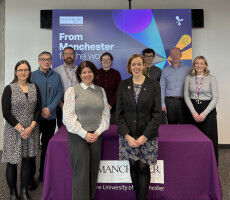
The University of Manchester signs Memorandum of Understanding with United Utilities
Agronomy & Food Science - Mar 27
Gather & Gather unveils fresh new Spring/Summer 2026 menu designed for the warmer seasons
Gather & Gather unveils fresh new Spring/Summer 2026 menu designed for the warmer seasons
Environment - Mar 26
University of Manchester hits major sustainability milestone, with Main Campus becoming 100% 'Zero Landfill'
University of Manchester hits major sustainability milestone, with Main Campus becoming 100% 'Zero Landfill'
Campus - MANCHESTER - Mar 26
Manchester students mentor local teenagers to build confidence in applying for university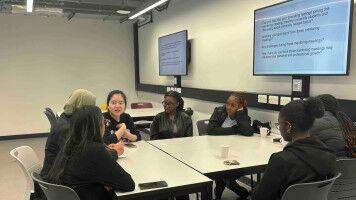
Manchester students mentor local teenagers to build confidence in applying for university

news
University College London
Results 1261 - 1280 of 2154.
Environment - Life Sciences - 17.02.2020
Freshwater insects recover while spiders decline in UK
Many insects, mosses and lichens in the UK are bucking the trend of biodiversity loss, according to a comprehensive analysis of over 5,000 species led by UCL and the UK Centre for Ecology & Hydrology (UKCEH). The researchers say their findings on UK biodiversity between 1970 and 2015, published in Nature Ecology & Evolution , may provide evidence that efforts to improve air and water quality could be paying off.
Chemistry - Materials Science - 17.02.2020
Fast-charging, long-running, bendy energy storage breakthrough
A new bendable supercapacitor made from graphene, which charges quickly and safely stores a record-high level of energy for use over a long period, has been developed and demonstrated by UCL and Chinese Academy of Sciences researchers. While at the proof-of-concept stage, it shows enormous potential as a portable power supply in several practical applications including electric vehicles, phones and wearable technology.
Health - Pharmacology - 14.02.2020
Cough syrup drug being trialled as Parkinson’s treatment
After finding that a drug found in cough syrups may have use as a treatment for Parkinson's disease, UCL researchers have received funding for the next stage in clinical trials. Ambroxol, a medication originally designed to clear phlegm and ease coughing for people with respiratory diseases such as bronchitis, is being tested to see if it can slow down the progression of Parkinson's disease by keeping cells healthier for longer.
Health - Pharmacology - 14.02.2020
AI helps predict heart attacks and stroke
Artificial intelligence has been used for the first time to instantly and accurately measure blood flow, in a study led by UCL and Barts Health NHS Trust. The results were found to be able to predict chances of death, heart attack and stroke, and can be used by doctors to help recommend treatments which could improve a patient's blood flow.
Life Sciences - Health - 13.02.2020
Huge bacteria-killing viruses blur the boundaries defining life
Hundreds of unusually large, bacteria-killing viruses with capabilities normally associated with living organisms, have been identified by a team involving UCL, blurring the line between viruses and living microbes. These phages - short for bacteriophage, so-called because they "eat" bacteria - are of a size and complexity considered typical of life, carry numerous genes normally found in bacteria, and use these genes against their bacterial hosts and other viruses, as reported in Nature .
Social Sciences - 12.02.2020
Sitting still linked to increased risk of depression in adolescents
Too much time sitting still - sedentary behaviour - is linked to an increased risk of depressive symptoms in adolescents, finds a new UCL-led study. The Lancet Psychiatry study found that an additional 60 minutes of light activity (such as walking or doing chores) daily at age 12 was associated with a 10% reduction in depressive symptoms at age 18.
Mathematics - 11.02.2020
Opinion: School ability grouping is potentially harmful
In light of recent research findings, involving 9,000 pupils, that suggest attainment groupings may have an effect on pupils' self-confidence, Dr Becky Taylor (UCL Institute of Education) explains how schools may want to reflect on existing teaching practices. England's schools make more use of within-school "ability" grouping than those in other similar countries, yet there is no evidence that this practice results in better outcomes overall for students.
Health - Life Sciences - 11.02.2020
HRH The Princess Royal opens new microscopy centre
A state-of-the-art centre for advanced biomedical research imaging was opened today (Tuesday) at UCL by Her Royal Highness The Princess Royal, giving researchers access to cutting-edge new microscopes from ZEISS. The UCL Multiscale Imaging Centre, in partnership with ZEISS (to be known as UZMIC), is the first ZEISS laboratory in Europe outside of Germany, strengthening UCL's connections across Europe.
Health - Life Sciences - 11.02.2020
Global initiative to use wearables to revolutionise disease detection
A global initiative involving UCL researchers will be using wearable technology such as wristbands and mobile apps to revolutionise the early detection of neurodegenerative diseases such as Alzheimer's. The Early Detection of Neurodegenerative diseases (EDoN) initiative, led by Alzheimer's Research UK, will harness and analyse a wealth of digital data to develop signatures of disease - or "fingerprints" - that can be then detected using wearable technologies, such as smart watches.
Environment - 07.02.2020
Climate change a key driver of bumblebee decline
Increasingly hot temperatures appear to be driving declines in bumblebee populations across Europe and North America, according to a UCL and University of Ottawa study. The study, published in Science , found that in the course of a single human generation, the likelihood of a bumblebee population surviving in a given place has declined by an average of over 30%.
Life Sciences - Health - 06.02.2020
Artificial virus created to help fight against superbugs
An artificial virus capable of attacking superbug infections resistant to antibiotics has been bioengineered by researchers at UCL, NPL, University of Cambridge, University of Exeter and King's College London. The rise of superbugs is a serious concern in the medical community as bacteria evolve to evade existing treatments faster than new antibiotics can be developed.
Life Sciences - Health - 05.02.2020
Genetic variants reduce risk of Alzheimer’s disease
A DNA study of over 10,000 people by UCL scientists has identified a class of gene variants that appear to protect against Alzheimer's disease. The findings, published in Annals of Human Genetics , suggest these naturally occurring gene variants reduce the functioning of proteins called tyrosine phosphatases, which are known to impair the activity of a cell signalling pathway known as PI3K/Akt/GSK-3'.
Health - 05.02.2020
Artificial intelligence can spot when correlation means causation
A new artificial intelligence (AI) has allowed researchers at UCL and Babylon Health, for the first time, to demonstrate a useful and reliable way of sifting through masses of correlating data to spot when correlation means causation. By fusing old, overlapping and incomplete datasets this new method, inspired by quantum cryptography, paves the way for researchers to glean the results of medical trials that would otherwise be too expensive, difficult or unethical to run.
Astronomy & Space - 04.02.2020
Black hole discovery celebrated in special stamp set
A black hole simulation by UCL scientist Dr Ziri Younsi was revealed today in a special stamp collection and coin cover by Royal Mail to celebrate the 200th anniversary of the Royal Astronomical Society (RAS). Dr Younsi is part of the Event Horizon Telescope collaboration team who successfully captured the image of a black hole in a world first last year.
Life Sciences - Health - 31.01.2020
Analysis: Protective lungs cells replenish in ex-smokers reducing cancer risk
Research co-led by UCL has discovered that protective cells in the airways of ex-smokers could explain why quitting smoking reduces the risk of developing lung cancer. Here senior author, Professor Sam Janes (UCL Medicine), writes about the research and explains its importance. We know that quitting smoking is an excellent way to reduce your risk of developing lung cancer.
Life Sciences - 30.01.2020
Specific genes which affect learning ability in Down’s syndrome
Professor Matthew Walker (UCL Queen Square Institute of Neurology) explains: "We have shown - for the first time - that different and multiple genes are contributing to the various cognitive problems associated with Down's syndrome." Down's syndrome is a genetic disorder that occurs in about 1 in 800 births.
Health - Life Sciences - 30.01.2020
Protective cells could cut risk of lung cancer for ex-smokers
Protective cells in the lungs of ex-smokers could explain why quitting smoking reduces the risk of developing lung cancer, finds new research co-led by UCL and the Wellcome Sanger Institute. The study, funded by Cancer Research UK, discovered that people who had stopped smoking had more genetically healthy lung cells, which have a much lower risk of developing into cancer.
Astronomy & Space - Physics - 30.01.2020
Telescope reveals most detailed images of the Sun
The largest telescope in the world, which was built by a team involving UCL Mullard Space Science Laboratory engineers and scientists, has captured the clearest and most detailed images of the Sun. The first images and videos from the National Science Foundation's (NSF) Daniel K. Inouye Solar Telescope reveal unprecedented detail of the Sun's surface, with experts saying it will enable a new era of solar science and a leap forward in understanding the Sun and its impacts on our planet.
Life Sciences - Health - 29.01.2020
Novel insight into chromosome 21 and its effect on Down syndrome
A UCL-led research team has, for the first time, identified specific regions of chromosome 21, which cause memory and decision-making problems in mice with Down syndrome, a finding that provides valuable new insight into the condition in humans. Most people have 46 chromosomes in each cell, divided into 23 pairs: people with Down syndrome (DS) have an extra copy of chromosome 21, which carries over 200 genes.
History & Archeology - 29.01.2020
Iron Age ’warrior’ burial uncovered in West Sussex
A richly-furnished grave belonging to an Iron Age 'warrior' buried 2,000 years ago has been uncovered in West Sussex by UCL archaeologists. Iron weapons had been placed inside the grave, including a sword in a highly-decorated scabbard and a spear. The burial was discovered during an excavation commissioned by Linden Homes, who are developing a site on the outskirts of Walberton, near Chichester, to create 175 new homes.


Environment - Mar 27
The University of Manchester signs Memorandum of Understanding with United Utilities
The University of Manchester signs Memorandum of Understanding with United Utilities
Agronomy & Food Science - Mar 27
Gather & Gather unveils fresh new Spring/Summer 2026 menu designed for the warmer seasons
Gather & Gather unveils fresh new Spring/Summer 2026 menu designed for the warmer seasons
Environment - Mar 26
University of Manchester hits major sustainability milestone, with Main Campus becoming 100% 'Zero Landfill'
University of Manchester hits major sustainability milestone, with Main Campus becoming 100% 'Zero Landfill'
Campus - MANCHESTER - Mar 26
Manchester students mentor local teenagers to build confidence in applying for university
Manchester students mentor local teenagers to build confidence in applying for university