


Environment - Mar 27
The University of Manchester signs Memorandum of Understanding with United Utilities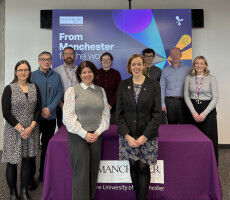
The University of Manchester signs Memorandum of Understanding with United Utilities
Agronomy & Food Science - Mar 27
Gather & Gather unveils fresh new Spring/Summer 2026 menu designed for the warmer seasons
Gather & Gather unveils fresh new Spring/Summer 2026 menu designed for the warmer seasons
Environment - Mar 26
University of Manchester hits major sustainability milestone, with Main Campus becoming 100% 'Zero Landfill'
University of Manchester hits major sustainability milestone, with Main Campus becoming 100% 'Zero Landfill'
Campus - MANCHESTER - Mar 26
Manchester students mentor local teenagers to build confidence in applying for university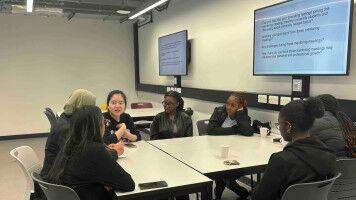
Manchester students mentor local teenagers to build confidence in applying for university

news
University College London
Results 1241 - 1260 of 2154.
Health - 11.03.2020
Smart bones curve to protect against fracture
Bones grow curved in response to pressure and strain and these changes can be long-lasting, according to a new study by UCL, the Royal Veterinary College London and the Max Planck Institute. Bones can change their shape throughout our life by regulating bone formation and resorption processes, which is often a response to forces which press, pull and twist the skeleton during everyday movements and exercise.
Social Sciences - 11.03.2020
Baboon mothers carry their dead infant up to ten days
Baboon mothers living in the wild carry dead infants for up to ten days, according to a new study led by UCL and Université de Montpellier. The research, published in Royal Society Open Science , is the most extensive study on baboons, reporting on 12 cases of group responses to infants' deaths, including a miscarriage and two stillbirths, recorded over 13 years in wild Namibian chacma baboons.
Health - Pharmacology - 10.03.2020
Prostate cancer ’fingerprint’ detected in blood sample
Scientists at UCL have invented a new test to identify the earliest genetic changes of prostate cancer in blood: a process which could allow doctors to see if cancers have spread, monitor tumour behaviour and enable better treatment selection. In the study, published in The Journal of Clinical Investigation, researchers at UCL Cancer Institute used Next Generation Sequencing (NGS) to establish if they could identify prostate cancer DNA in blood plasma.
Life Sciences - Psychology - 09.03.2020
Two brain systems for thinking about others’ thoughts
The brain seems to have two different systems enabling us to put ourselves in someone else's shoes, which develop at different ages, finds a new study involving UCL. The two systems mature at different times such that only four-year-olds can understand what another person is thinking, and not, as some have assumed, one-year-olds, according to the study published in Proceedings of the National Academy of Sciences (PNAS) .
Life Sciences - Health - 06.03.2020
Seismic imaging technology could deliver detailed images of the brain
Scientists at UCL and Imperial College London have developed a new computational technique that could lead to fast, finely detailed brain imaging with a compact device that uses only sound waves. The team says their proof-of-concept study, published in npj Digital Medicine , paves the way for the development of high-fidelity clinical imaging of the human brain that could be superior to existing technology.
Materials Science - Health - 05.03.2020
Bacteria killed by new light-activated coating
A new coating that activates in low intensity light to kill bacteria such as Staphylococcus aureus and Escherichia coli has been developed by a UCL-led team of researchers. To stop the spread of disease, it could be used to coat phone screens and keyboards, as well as the inside of catheters and breathing tubes, which are a major source of healthcare-associated infections (HCAIs).
Social Sciences - Health - 03.03.2020
Minorities’ higher psychosis risk linked to cultural distance from majority
Social inequalities and language differences could be responsible for the higher psychosis risk in ethnic minority groups, finds a UCL-led study. The researchers say their findings, published today in Psychological Medicine , might reflect the impact of being more marginalised from mainstream society.
Career - 03.03.2020
BAME millennials at greater risk of being in unstable employment
Millennials from Black, Asian and Minority Ethnic (BAME) backgrounds are 47% more likely to be on a zero-hours contract, compared to their White peers, according to a new report from the UCL Centre for Longitudinal Studies, Carnegie UK Trust, and Operation Black Vote Millennials from Black, Asian and Minority Ethnic (BAME) backgrounds are 47% more likely to be on a zero-hours contract, and have 10% greater odds of working a second job, compared to their White peers, according to a new report from the UCL Centre for Longitudinal Studies, Carnegie UK Trust, and Operation Black Vote.
Social Sciences - Health - 03.03.2020
Hunter gatherers facilitated a cultural revolution through small social networks
Hunter-gatherer ancestors, from around 300,000 years ago, facilitated a cultural revolution by developing ideas in small social networks, and regularly drawing on knowledge from neighbouring camps, suggests a new study by UCL and University of Zurich. The study, published in Science Advances , mapped close-range social interactions of Agta hunter-gatherers in the Philippines using radio sensor technology to record close range interactions between individuals every hour for one month.
Health - Life Sciences - 03.03.2020
App detecting jaundice may prevent deaths in newborns
A smartphone app that allows users to check for jaundice in newborn babies simply by taking a picture of the eye may be an effective, low-cost way to screen for the condition, according to a pilot study led by UCL and UCLH. Jaundice, where the skin and whites of the eyes turn yellow, causes 114,000 newborn deaths and 178,000 cases of disability a year worldwide, despite being a treatable condition.
Earth Sciences - Environment - 02.03.2020
Ocean changes almost starved life of oxygen
Chemical changes in the oceans more than 800 million years ago almost destroyed the oxygen-rich atmosphere that paved the way for complex life on Earth, finds new research involving UCL scientists. Then, as now, the planet had an oxidising atmosphere driven by phytoplankton, which release oxygen during photosynthesis.
Media - Social Sciences - 25.02.2020
Analysis: How do those bereaved by suicide respond to media reports?
Guidelines on reporting suicide are aimed at preventing further suicides and minimising distress to the bereaved. Here Dr Alexandra Pitman (UCL Psychiatry) writes about her research looking at how relatives of suicide victims respond to news, and speaks to others in the field. You are a junior reporter on a busy local newspaper.
Social Sciences - 25.02.2020
Life expectancy not improving for first time in 100 years
For the first time in more than 100 years life expectancy has failed to increase across the country, and for the poorest 10% of women it has actually declined, according to a new report from Sir Michael Marmot and the UCL Institute of Health Equity. 10 years on since Sir Marmot first published the Marmot Review, the new report confirms that over the last decade health inequalities have widened overall, and the amount of time people spend in poor health has increased since 2010.
Life Sciences - Health - 21.02.2020
African swine fever virus genome mapped
Researchers at UCL and the Pirbright Institute have mapped the expression of genes across the entire African swine fever virus (ASFV) genome, which has helped to establish their order of activation as well as uncovering new genes. The research, published in the Journal of Virology , could provide vital information for those developing vaccines and antiviral drugs to prevent the deadly pig disease caused by the virus.
Life Sciences - Health - 21.02.2020
Iron in brain shows cognitive decline in people with Parkinson’s
A cutting-edge MRI technique to detect iron deposits in different brain regions can track declines in thinking, memory and movement in people with Parkinson's disease, finds a new UCL-led study. The findings, published in the Journal of Neurology, Neurosurgery, and Psychiatry , suggest that measures of brain iron might eventually help predict which people with Parkinson's will develop dementia.
Pharmacology - Health - 20.02.2020
Some antibiotics linked with birth defects
Children of mothers prescribed macrolide antibiotics during the first trimester of pregnancy are at an increased risk of major birth defects when compared with penicillin, and the drugs should be used 'with caution' according to a new UCL study. The study, published today in The BMJ , aimed to assess the association between macrolides - a class of drugs used to treat common bacterial infections - and major malformations such as heart and genital defects, as well as four neurodevelopmental disorders (cerebral palsy, epilepsy, ADHD, and autism spectrum disorder) in children.
Social Sciences - Life Sciences - 18.02.2020
Lifelong antisocial behaviour linked to brain structure differences
People who engage in persistent antisocial behaviour long after adolescence have characteristic differences in brain structure, finds a new UCL-led study. The study, published in The Lancet Psychiatry , identified brain differences between people who engage in antisocial behaviour - such as theft, aggression, violence, bullying, lying, or repeated failure to take care of work or school responsibilities - only during adolescence and those who persist throughout adulthood.
Career - Economics - 18.02.2020
German minimum wage drove workers to more productive firms
The introduction of the minimum wage for the first time in Germany in 2015 drove workers from smaller to larger and more productive businesses that pay higher wages, according to a UCL and Institute for Employment Research (IAB) Nuremberg study. The study, published as a CReAM discussion paper, is the most comprehensive analysis of the wider implications of Germany's minimum wage policy.
Health - Life Sciences - 18.02.2020
How cancer cells communicate shown for first time
New technology developed at UCL is, for the first time, enabling cancer scientists to analyse the individual behaviour of millions of different cells living inside lab-grown tumours - a breakthrough which could lead to new personalised cancer treatments. The research, published in Nature Methods, provides new insight into how mutated cancer cells "mimic the growth signals" normally expressed by healthy cells - which allows cancer cells to grow unchecked.
Health - Life Sciences - 18.02.2020
How cancer cells communicate is seen for first time, thanks to UCL technology
New technology developed at UCL is, for the first time, enabling cancer scientists to analyse the individual behaviour of millions of different cells living inside lab-grown tumours - a breakthrough which could lead to new personalised cancer treatments. The research, published in Nature Methods, provides new insight into how mutated cancer cells "mimic the growth signals" normally expressed by healthy cells - which allows cancer cells to grow unchecked.


Environment - Mar 27
The University of Manchester signs Memorandum of Understanding with United Utilities
The University of Manchester signs Memorandum of Understanding with United Utilities
Agronomy & Food Science - Mar 27
Gather & Gather unveils fresh new Spring/Summer 2026 menu designed for the warmer seasons
Gather & Gather unveils fresh new Spring/Summer 2026 menu designed for the warmer seasons
Environment - Mar 26
University of Manchester hits major sustainability milestone, with Main Campus becoming 100% 'Zero Landfill'
University of Manchester hits major sustainability milestone, with Main Campus becoming 100% 'Zero Landfill'
Campus - MANCHESTER - Mar 26
Manchester students mentor local teenagers to build confidence in applying for university
Manchester students mentor local teenagers to build confidence in applying for university