


Environment - Mar 27
The University of Manchester signs Memorandum of Understanding with United Utilities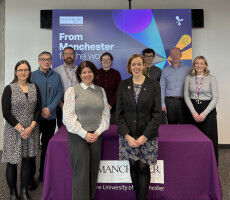
The University of Manchester signs Memorandum of Understanding with United Utilities
Agronomy & Food Science - Mar 27
Gather & Gather unveils fresh new Spring/Summer 2026 menu designed for the warmer seasons
Gather & Gather unveils fresh new Spring/Summer 2026 menu designed for the warmer seasons
Environment - Mar 26
University of Manchester hits major sustainability milestone, with Main Campus becoming 100% 'Zero Landfill'
University of Manchester hits major sustainability milestone, with Main Campus becoming 100% 'Zero Landfill'
Campus - MANCHESTER - Mar 26
Manchester students mentor local teenagers to build confidence in applying for university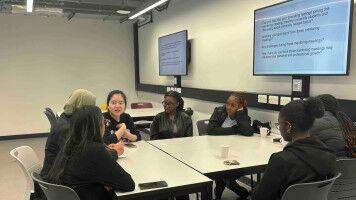
Manchester students mentor local teenagers to build confidence in applying for university

news
University College London
Results 1201 - 1220 of 2154.
Health - Pharmacology - 07.05.2020
Hospitals are safer places than you might think, new Covid-19 research finds
Pioneering research suggests that currently the public should not fear contracting Covid-19 from hospital staff, who appear to be at low risk of infection by patients. These are the early results from research led by Barts Health consultant Prof James Moon (UCL Institute of Cardiovascular Science) in collaboration with colleagues at UCL and Queen Mary University of London.
Health - Career - 07.05.2020
Covid-19 activity levels begin to rebound
Activity levels during lockdown in Britain's busiest regions including Greater London, Greater Manchester and the West Midlands have begun to rebound following successive week-by-week declines, according to new UCL analysis of geographical data. Combining in-app mobile data with demographic indicators, the researchers found that activity levels - defined as the number of unique mobile devices used per hour in each study area - declined during the first five weeks of lockdown, but have ticked up since the 19 th April.
Health - 07.05.2020
BAME groups two to three times more likely to die from Covid-19
The likelihood of death from Covid-19 is significantly higher among England's Black, Asian and Ethnic Minority (BAME) groups than the general population, finds a new UCL analysis of NHS data. Researchers say the findings are consistent with emerging global data and support the need for the UK Government to take urgent action to reduce the risk of death from Covid-19 for BAME groups.
Environment - Life Sciences - 06.05.2020
Opinion: Will three billion people really live in temperatures as hot as the Sahara by 2070?
Professor Mark Maslin (UCL Geography) comments on human adaptability in adversity in relation to a new study discussing the potential impact of climate change on human living conditions. Humans are amazing creatures, in that they have shown they can live in almost any climate. Think of the Inuit who live in the Arctic or the Bedouins in the deserts of North Africa.
Life Sciences - Pharmacology - 06.05.2020
Mutations in SARS-CoV-2 offer insights into virus evolution
By analysing virus genomes from over 7,500 people infected with Covid-19, a UCL-led research team has characterised patterns of diversity of SARS-CoV-2 virus genome, offering clues to direct drugs and vaccine targets. The study, led by the UCL Genetics Institute, identified close to 200 recurrent genetic mutations in the virus, highlighting how it may be adapting and evolving to its human hosts.
Materials Science - Environment - 06.05.2020
New material engineered to capture carbon dioxide emissions
Researchers at UCL and Newcastle University have developed a new class of self-forming membrane to separate carbon dioxide from a mixture of gases. Operating like a coffee filter, it lets harmless gases, such as nitrogen, exit into the atmosphere and allows the carbon dioxide to be processed separately.
Health - Social Sciences - 05.05.2020
Time spent in busy public places could double risk of contracting COVID-19
Using public transport, shopping, dining out, going to a party or place of worship and spending time with someone who has a cold are all associated with significantly higher risks of contracting a respiratory illness such as COVID-19, according to new UCL research. The peer-reviewed Wellcome funded study, used data from the England and Wales Flu Watch cohort and is the first to investigate the impact of specific public activities on the risk of acquiring respiratory tract infection in a population-based cohort.
Environment - Economics - 05.05.2020
Green policies essential for UK’s economic recovery
Green policies such as increasing use of renewable energy and investing in electric vehicles should be at the heart of Government recovery plans after the Covid-19 crisis, according to a briefing paper co-authored by Professor Paul Ekins (UCL Institute for Sustainable Resources). The document, put together by the COP26 Universities Network of which UCL is a member, draws on new research assessing the economic and climate impact of taking a green route out of the crisis.
Health - Life Sciences - 04.05.2020
Covid-19 may increase blood clotting and blockage of brain blood vessels
Clinical observations of COVID-19 patients, who went on to have a stroke, suggest coronavirus may cause clots within blood vessels (arteries) in the brain, finds a team of neurologists from UCL and UCLH (the National Hospital for Neurology and Neurosurgery), London.
Health - Pharmacology - 04.05.2020
AI-supported test for very early signs of glaucoma progression
A new test can detect glaucoma progression 18 months earlier than the current gold standard method, according to results from a UCL-sponsored clinical trial. A new test can detect glaucoma progression 18 months earlier than the current gold standard method, according to results from a UCL-sponsored clinical trial.
Economics - 01.05.2020
Low income workers disproportionally affected by Covid-19
Low income workers in developing countries face a higher risk of income loss during the Covid-19 lockdown as it is less possible to conduct their jobs from home, suggests a new study from UCL, Bank of Thailand, Universidad Carlos III de Madrid and GRIPS, Tokyo. The study, published in Covid Economics: Vetted and Real-Time Papers , used Thailand as a case study but the findings are highly relevant for other countries with similar labour market structures - specifically, those with a large share of self-employment and low social safety net.
Administration - 01.05.2020
Most London pavements are not wide enough for social distancing
Two thirds of pavements in London are not wide enough for people to observe the government's advice to stay two metres apart, according to new UCL analysis. Looking at data for every street in Greater London, the researchers found that only 36% had pavements that were at least three metres wide - judged to be the minimum required for people to be able to keep their distance.
Health - Pharmacology - 30.04.2020
Opinion: Until we have a vaccine for coronavirus, treatments like remdesivir are our only hope
Dr Jennifer Rohn (UCL Medicine) explains that conflicting evidence from early trials is the norm in science, and we must be patient as the data unfolds. Drug discovery and testing, even under normal circumstances, is a high-risk process full of red herrings and dashed hopes. In the throes of a global pandemic, the stakes are even higher and the risks remain the same.
Health - Pharmacology - 30.04.2020
Preliminary results of Covid-19 drug treatment trial found to improve recovery
An international clinical trial, co-led by UCL and the Medical Research Council, which is testing the effectiveness of the drug remdesivir on patients hospitalised with Covid-19, has shown "very promising" preliminary results. Launched at the start of April, the Adaptive Covid-19 Treatment Trial (ACTT-EU/UK) trial, is taking place in about 75 hospitals globally, with the Medical Research Council (MRC) Clinical Trials Unit at UCL leading the UK and EU study.
Health - 29.04.2020
Covid-19 effects in the elderly tracked in ongoing study
To better understand the impact of Covid-19 on the elderly, and to find out why the virus disproportionality affects this age group, LINKAGE has developed the 'Covid-19 sub-study'. Lead researcher Dr Daniel Davis (UCL Population Science & Experimental Medicine), said: "The original design of the LINKAGE study has meant we are in the perfect position to follow participants at all stages of infection: from being well, into early infection and throughout the course of the illness.
Psychology - 28.04.2020
Artificial intelligence still lags behind humans at recognising emotions
When it comes to reading emotions on people's faces, artificial intelligence still lags behind human observers, according to a new study involving UCL. The difference was particularly pronounced when it came to spontaneous displays of emotion, according to the findings published in PLOS One. The research team, led by Dublin City University, looked at eight "out of the box" automatic classifiers for facial affect recognition (artificial intelligence that can identify human emotions on faces) and compared their emotion recognition performance to that of human observers.
Environment - Earth Sciences - 24.04.2020
Dramatic decrease in cold-water plankton during industrial era
There has been a dramatic decrease in cold-water plankton during the 20th century, in contrast to thousands of years of stability, according to a new UCL-led study. The research, published in Geophysical Research Letters , analysed the fossilised remains of plankton, sampled from the Northeast Atlantic Ocean, south of Iceland.
Administration - Health - 23.04.2020
Support for increased police powers depends on public trust
Public support for increased police powers relies heavily on trust and legitimacy, according to a new study by UCL and the London School of Economics (LSE). In the new paper, published in the British Journal of Criminology , the authors assessed the factors that matter most to the public when deciding if they support the police's use of Live Facial Recognition (LFR) technology.
Health - Pharmacology - 23.04.2020
Real-time pneumonia test for Covid-19 patients aiding faster therapy
An ongoing UCL-led research study, which quickly identifies the cause of a patient's pneumonia, enabling earlier optimisation of treatment, is being re-purposed to assist with the coronavirus pandemic. Pneumonia is one of the main symptoms of severe Covid-19 disease and, because many critically ill Covid-19 patients can no longer breathe by themselves they are put onto mechanical ventilators.
Health - Social Sciences - 23.04.2020
Analysis: Why Covid kills more people from Britain’s minorities
Professor Nishi Chaturvedi (UCL MRC Unit for Lifelong Health & Ageing) considers demography, co-morbidities and age when analysing why more people from minorities are dying from Covid-19. One explanation is demography. The virus hit London first and hardest. But even when you take these regional differences into account there is a mismatch.


Environment - Mar 27
The University of Manchester signs Memorandum of Understanding with United Utilities
The University of Manchester signs Memorandum of Understanding with United Utilities
Agronomy & Food Science - Mar 27
Gather & Gather unveils fresh new Spring/Summer 2026 menu designed for the warmer seasons
Gather & Gather unveils fresh new Spring/Summer 2026 menu designed for the warmer seasons
Environment - Mar 26
University of Manchester hits major sustainability milestone, with Main Campus becoming 100% 'Zero Landfill'
University of Manchester hits major sustainability milestone, with Main Campus becoming 100% 'Zero Landfill'
Campus - MANCHESTER - Mar 26
Manchester students mentor local teenagers to build confidence in applying for university
Manchester students mentor local teenagers to build confidence in applying for university