


Environment - Mar 27
The University of Manchester signs Memorandum of Understanding with United Utilities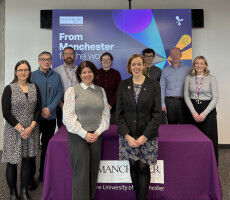
The University of Manchester signs Memorandum of Understanding with United Utilities
Agronomy & Food Science - Mar 27
Gather & Gather unveils fresh new Spring/Summer 2026 menu designed for the warmer seasons
Gather & Gather unveils fresh new Spring/Summer 2026 menu designed for the warmer seasons
Environment - Mar 26
University of Manchester hits major sustainability milestone, with Main Campus becoming 100% 'Zero Landfill'
University of Manchester hits major sustainability milestone, with Main Campus becoming 100% 'Zero Landfill'
Campus - MANCHESTER - Mar 26
Manchester students mentor local teenagers to build confidence in applying for university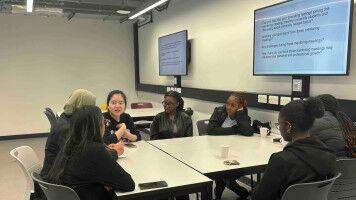
Manchester students mentor local teenagers to build confidence in applying for university

news
University College London
Results 121 - 140 of 2154.
Environment - Earth Sciences - 20.03.2025

A wide diversity of marine life, that may include previously unknown species, flourishes in a region of ocean once hidden beneath a thick cover of ice, finds a recently-returned Antarctic expedition co-led by a UCL researcher. The expedition, in partnership with Schmidt Ocean Institute, examined and mapped the unseen submarine environment off the Antarctic Peninsula, in an area that was until recently covered by a massive ice shelf and that in late 2024 shed a colossal iceberg from its floating edge.
Life Sciences - Health - 20.03.2025

The parts of the brain that are needed to remember words, and how these are affected by a common form of epilepsy, have been identified by a team of neurologists and neurosurgeons at UCL. The new study, published in Brain Communications , found that shrinkage in the front and side of the brain (prefrontal, temporal and cingulate cortices, and the hippocampus) was linked to difficulty remembering words.
Health - Life Sciences - 14.03.2025
Social disadvantage can accelerate ageing and increase disease risk
People with favourable socioeconomic conditions, such as high incomes or education levels, face a reduced risk of age-related diseases and show fewer signs of biological ageing than peers of the same age, finds a new study led by UCL researchers. Social inequalities appear to have a direct impact on the biological ageing process, according to the authors of the Nature Medicine paper.
Physics - Materials Science - 12.03.2025

Tiny, individual, flexible ribbons of crystalline phosphorus discovered by UCL researchers in 2019 exhibit magnetic and semiconducting properties at room temperature, opening new possibilities for next-generation electronics, finds a new study involving members of the same team. The findings, published in the journal Nature , confirm the one-atom-thick ribbons, known as phosphorene nanoribbons, as a unique class of material that could enable more energy-efficient computing and unlock new quantum technologies.
Life Sciences - 12.03.2025
How the brain uses ’building blocks’ to navigate social interactions
Our brains use basic 'building blocks' of information to keep track of how people interact, enabling us to navigate complex social interactions, finds a new study led by UCL researchers. For the study, published in Nature , the researchers scanned the brains of participants who were playing a simple game involving a teammate and two opponents, to see how their brains were able to keep track of information about the group of players.
Psychology - 10.03.2025
At-home brain speed tests bridge cognitive data gaps
Online tests of women's reaction times offer insights into cognitive function and could help fill data gaps on early cognitive problems, potentially shedding light on dementia development later in life, finds a new study led by researchers at UCL and other universities. The new paper, published in BMJ Open , finds that online tests can be an easy and effective way for women in their 40s and older to volunteer for dementia prevention research from their homes instead of visiting clinics.
Life Sciences - Psychology - 06.03.2025

Circuits in the brain that are crucially involved in implementing decisions by directing between perseverance, exploration and disengagement have been identified by a UCL-led research team, in a new study in mice. The neural circuits found in the brainstem may help to further understand a number of neuropsychiatric conditions including obsessive-compulsive disorder (OCD), autism and major depressive disorder.
Environment - 05.03.2025
Earth’s natural climate changes may be predictable
Analysis of Earth's past ice ages, tracked across one million years, has shed new light on the mystery of the planet's natural climate cycles, enabling improved projections of future climate, finds a new study co-authored by UCL researchers. Published in Science, the international team of scientists led by Cardiff University identified the specific contributions of various subtle changes in Earth's orbit that cause the climate to shift between warm periods and glacial periods every 100,000 years.
Paleontology - History & Archeology - 05.03.2025

The oldest collection of mass-produced prehistoric bone tools reveal that human ancestors were likely capable of more advanced abstract reasoning one million years earlier than thought, finds a new study involving researchers at UCL and CSIC- Spanish National Research Council. The paper, published in Nature, describes a collection of 27 now-fossilised bones that had been shaped into hand tools 1.5 million years ago by human ancestors.
Paleontology - 04.03.2025

A team including UCL researchers has identified two new dinosaur species found in present-day Romania that lived shortly before dinosaurs went extinct. The end of the Cretaceous Period, 66 million years ago, marked the dramatic extinction of the dinosaurs following an asteroid impact. Until now, our understanding of this mass extinction has been largely shaped by fossils from North America.
Health - Pharmacology - 27.02.2025
Prostate cancer testing varies widely between GP practices
A large-scale study involving UCL researchers has found huge variation between GP practices on whether they are likely to pick up prostate cancer using a blood test. The study aimed to investigate the proportion of patients whose prostate cancer was identified by using a prostate-specific antigen (PSA) test when patients had no symptoms.
Health - Life Sciences - 26.02.2025
Biological organ ages predict disease risk decades in advance
Our organs age at different rates, and a blood test determining how much they've each aged could predict the risk of conditions like lung cancer and heart disease decades later, finds a new study led by UCL researchers. The findings, published in The Lancet Digital Health , show how accelerated ageing in specific organs can predict not only diseases affecting that organ, but diseases across the rest of the body as well.
Health - Life Sciences - 26.02.2025

A landmark study, involving UCL researchers, has found 69 previously unidentified genetic determinants of rare disease, including uncommon forms of epilepsy and schizophrenia. The research, published in Nature and led by Queen Mary University of London, uses a new analytical approach for identifying the genetic basis of rare diseases, which could diagnose more cases and help develop new treatments for patients.
Pharmacology - Health - 26.02.2025
Ethnic minority groups prescribed higher doses of antipsychotics
Among people prescribed antipsychotics on the NHS for a diagnosis of severe mental illness, people from ethnic minority backgrounds and those from deprived areas in the UK are prescribed higher doses, according to an analysis led by UCL researchers. The researchers say their findings, published in The British Journal of Psychiatry and supported by Wellcome, do not confirm why some groups are prescribed higher doses, but raise concerns that certain groups may be given higher than necessary doses with associated risks of side effects.
Life Sciences - Health - 25.02.2025
’Healthy fats’ could protect against motor neurone disease
Enhancing levels of 'healthy fats' like omega-3s in the brain could be beneficial in motor neurone disease (MND) finds a new study in fruit flies and brain cells, led by UCL researchers. Previous epidemiological studies have linked high dietary levels of omega-3 fatty acids - like those found in oily fish, nuts and seeds - with a lower risk of developing MND, and longer survival in people affected by the disease.
Pharmacology - 24.02.2025

The UK's new legal requirement for folic acid to be added to non-wholemeal wheat flour does not go far enough and a bolder policy would prevent hundreds more birth defects each year, say researchers including UCL's Professor Sir Nicholas Wald. In a new study, published in the , the research team argue that the evidence has been consistent that higher levels of folic acid fortification would prevent about 80% of neural tube defects - defects which result in life-threatening and disabling spinal conditions such as spina bifida and anencephaly.
Health - Innovation - 24.02.2025

A new service aimed at supporting older people who are starting to become frail, could reduce emergency hospital admissions by more than a third and save the NHS money, finds a new study led by UCL researchers. The results from the clinical trial, published in The Lancet Healthy Longevity and funded by the National Institute for Health and Care Research (NIHR), evaluated the effect and cost-effectiveness of a new service, consisting of six personalised home-based visits from a support worker, tailored to each person to identify what they need to stay well and independent.
Psychology - Health - 19.02.2025

A new psychological therapy designed by a team of UCL-led researchers has been found to reduce rates of violence and aggression among male offenders with antisocial personality disorder (ASPD). The study, published in The Lancet Psychiatry and funded by the National Institute for Health and Care Research (NIHR), investigated whether aggression and antisocial behaviours could be improved by a modified form of mentalisation-based treatment (MBT).
Health - Life Sciences - 18.02.2025

The immune systems of cancer patients are highly disrupted, with those who have a higher number of immune cells in their blood having a better survival rate, finds a new study that uses a pioneering technique developed by researchers at UCL and the Francis Crick Institute. The tool, described in Nature Genetics , is called Immune Lymphocyte Estimation from Nucleotide Sequencing (ImmuneLENS).
Health - Psychology - 14.02.2025

Older people have greater life satisfaction and sense of life's worth than they did before the Covid-19 pandemic, finds a new study led by a UCL researcher. The research, published in Aging and Mental Health , used the English Longitudinal Study of Ageing (ELSA) to track 3,999 people over the age of 50 in England for 11 years.


Environment - Mar 27
The University of Manchester signs Memorandum of Understanding with United Utilities
The University of Manchester signs Memorandum of Understanding with United Utilities
Agronomy & Food Science - Mar 27
Gather & Gather unveils fresh new Spring/Summer 2026 menu designed for the warmer seasons
Gather & Gather unveils fresh new Spring/Summer 2026 menu designed for the warmer seasons
Environment - Mar 26
University of Manchester hits major sustainability milestone, with Main Campus becoming 100% 'Zero Landfill'
University of Manchester hits major sustainability milestone, with Main Campus becoming 100% 'Zero Landfill'
Campus - MANCHESTER - Mar 26
Manchester students mentor local teenagers to build confidence in applying for university
Manchester students mentor local teenagers to build confidence in applying for university