


Environment - Mar 27
The University of Manchester signs Memorandum of Understanding with United Utilities
The University of Manchester signs Memorandum of Understanding with United Utilities
Agronomy & Food Science - Mar 27
Gather & Gather unveils fresh new Spring/Summer 2026 menu designed for the warmer seasons
Gather & Gather unveils fresh new Spring/Summer 2026 menu designed for the warmer seasons
Environment - Mar 26
University of Manchester hits major sustainability milestone, with Main Campus becoming 100% 'Zero Landfill'
University of Manchester hits major sustainability milestone, with Main Campus becoming 100% 'Zero Landfill'
Campus - MANCHESTER - Mar 26
Manchester students mentor local teenagers to build confidence in applying for university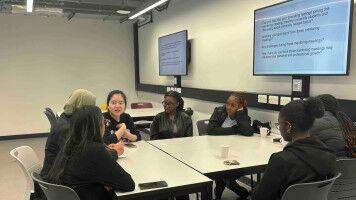
Manchester students mentor local teenagers to build confidence in applying for university

news
University College London
Results 1181 - 1200 of 2154.
Health - 05.06.2020
Disadvantaged former smokers are more likely to use e-cigarettes to quit
People from lower socioeconomic groups in England have higher rates of e-cigarette use compared with more affluent groups among those who have quit smoking, according to a new UCL-led study. The study, published today in JAMA Network Open and funded by Cancer Research UK (CRUK), analysed data from 34,442 people aged 16 and over who had formerly smoked.
Health - Pharmacology - 04.06.2020
Immunosuppressants do not increase Covid-19 risk for people with rheumatic diseases
Most people with rheumatic diseases such as arthritis can recover from Covid-19, as the immunosuppressant medications they take do not appear to increase hospitalisation risk, finds an international study involving UCL. But one type of medication may increase the risk of hospitalisation, suggesting caution is needed, according to the study published in Annals of the Rheumatic Diseases .
Health - Social Sciences - 04.06.2020
Anxiety & depression levels fall as lockdown eased
Levels of anxiety and depression in the UK have both fallen in the past week but remain above the usual reported averages, according to UCL's Covid-19 social study of over 90,000 adults during the coronavirus epidemic. The ongoing study, which was launched in the week before lockdown, is funded by the Nuffield Foundation with additional support from Wellcome and UK Research and Innovation (UKRI).
Life Sciences - Health - 02.06.2020
Gene discovery in fruit flies ’opens new doors’ for hearing loss cure in elderly
Scientists at UCL have discovered sets of regulatory genes, which are responsible for maintaining healthy hearing. The finding, made in fruit flies, could potentially lead to treatments for age-related hearing loss (ARHL) in humans. Globally one third of people (1.23 billion people) aged over 65 experience hearing impairment, and while there are thought to be more than 150 candidate genes which may affect hearing loss, there is no unified view on how to use these to develop novel preventive or curative hearing loss therapies.
Health - Life Sciences - 02.06.2020
Bees grooming each other can boost colony immunity
Honeybees that specialise in grooming their nestmates (allogroomers) to ward off pests play a central role in the colony, finds a new UCL and University of Florence study. Allogroomer bees also appear to have stronger immune systems, possibly enabling them to withstand their higher risk of infection, according to the findings published in Scientific Reports .
Economics - Health - 02.06.2020
Slow easing of lockdowns may be better for global economy
A cautious approach to easing lockdown restrictions that reduces the risk of later lockdowns may be better for the global supply chain in the long run, according to a new modelling study led by UCL and Tsinghua University. The paper, published today in Nature Human Behaviour , is the first peer-reviewed study to comprehensively assess potential global supply chain effects of Covid-19 lockdowns, modelling the impact of lockdowns on 140 countries, including countries not directly affected by Covid-19.
Health - Pharmacology - 01.06.2020
UCL supports delivery of potential Covid-19 vaccine
Scientists at UCL's Vax-Hub have been working with Oxford University to provide the research base for a Covid-19 vaccine that is now being trialled at University College London Hospitals (UCLH) with support from UCL researchers. A team led by Professor Martina Micheletti (UCL Biochemical Engineering) collaborated with the Jenner Institute at Oxford on the adenovirus vector manufacturing platform that the Oxford team adapted and developed into a potential vaccine for Covid-19.
Health - Pharmacology - 28.05.2020
Mapping COVID-19 effects and treatments in patients’ blood
A new coalition of more than 500 scientists from 18 countries, involving UCL, will data on COVID-19 gleaned from the use of mass spectrometry techniques which examine people's blood and other biomarkers. Announced in The Lancet today, and coordinated from The University of Manchester, the COVID-19 MS Coalition is made up of many of the world's leading mass spectrometry experts who will work together to look at the ways in which the novel coro rus is present in patients' blood and examine in detail how the virus is structured.
Life Sciences - 27.05.2020
Strong convictions can blind us to information that challenges them
When people are highly confident in a decision, they take in information that confirms their decision, but fail to process information which contradicts it, finds a UCL brain imaging study. The study, published , helps to explain the neural processes that contribute to the confirmation bias entrenched in most people's thought processes.
Life Sciences - Health - 27.05.2020
Optimal time to treat Huntington’s disease identified
The earliest brain changes due to Huntington's disease can be detected 24 years before clinical symptoms show, according to a new UCL-led study. The researchers say their findings, published in The Lancet Neurology , could help with clinical trials by pinpointing the optimal time to begin treating the disease.
Health - Pharmacology - 27.05.2020
Analysis: Take lessons from cancer evolution to the clinic
TRACERx, the first long-term study of how lung cancer evolves, is revealing that therapies targeting multiple proteins in tumour cells could help outpace the disease. Here, Chief Investigator Professor Charles Swanton (UCL Cancer Institute), discusses the latest findings. How non-small-cell lung cancer evolves in individual patients is being studied in a project called TRACERx (Tracking Cancer Evolution through Therapy), the first such large-scale, longitudinal study to do so.
History & Archeology - 22.05.2020
Opinion: Historical films may be decaying much faster than we thought
Writing for The Conversation, PhD student Ida R. Ahmad (UCL Institute for Sustainable Heritage) explains that precious historical documents are under threat from 'vinegar syndrome', which causes film to decompose. A significant chunk of the world's history is facing an existential threat. US government deeds , recordings of Indigenous Australians and photographs of English seaside life spanning three decades are just some of the historical documents recorded on acetate film that are suffering irreversible damage due to what's known as vinegar syndrome.
Life Sciences - Health - 22.05.2020
SARS-CoV-2 mutations do not appear to increase transmissibility
None of the mutations currently documented in the SARS-CoV-2 virus appear to increase its transmissibility in humans, according to a study led by UCL researchers. The analysis of virus genomes from over 46,000 people with COVID-19 from 99 countries is published today .
Health - Social Sciences - 22.05.2020
Children appear half as likely to catch COVID-19 as adults
Children and young people appear to be more than 50% less likely to catch SARS-CoV-2, the virus that causes COVID-19, than adults but evidence remains weak on how likely they are to transmit the virus, finds a UCL-led review of test and tracing and population screening studies. Researchers say the findings, which are awaiting peer review and formal publication, provide further evidence on children's susceptibility to COVID-19, and the data will be important for governments making decisions about school reopening and easing lockdown restrictions.
Health - 22.05.2020
Mental health issues ’substantial health concern’ among police internationally
Mental health issues are a "substantial health concern" among police officers, with around one in four potentially drinking at hazardous levels, and around one in 10 meeting the criteria for anxiety disorder and suicidal thoughts, finds a UCL-led study. The pooled data analysis of available international evidence, published online today in Occupational & Environmental Medicine , also found that one in seven officers meet criteria for post-traumatic stress disorder and depression.
Health - Psychology - 19.05.2020
Coronavirus infections may lead to delirium and potentially PTSD
People taken ill by coronavirus infections may experience psychiatric problems while hospitalised and potentially after they recover, suggests an analysis of past research led by the UCL Institute of Mental Health with King's College London collaborators. The systematic review paper, published in The Lancet Psychiatry , compiled results from shortand long-term studies of people hospitalised by recent coronaviruses, namely SARS (Severe acute respiratory syndrome) in 2002-2004, MERS (Middle East respiratory syndrome) in 2012, as well as COVID-19 this year.
Linguistics & Literature - 15.05.2020
My five steps to revision success
Discover some of the best strategies for successful revision in this article by English Literature student Evie Robinson, who shares her top tips for acing exam season here. It's that time of year again. Exam seasons can be super stressful - especially this one! - and it's very easy to feel overwhelmed but there are plenty of things you can do to make this mountain far easier to climb.
Psychology - 13.05.2020
Children with autism face higher risk of eating disorders
Children with autistic traits are more likely than their peers to develop an eating disorder, according to a new UCL-led study. Previous research has found that autism and eating disorders can occur together, as 20-30% of adults with eating disorders have autism, and 3-10% of children and young people with eating disorders.
Health - Pharmacology - 13.05.2020
Lockdown ease could lead to tens of thousands of excess deaths unless vulnerable are protected
The risk of death among people with health conditions, such as heart disease or diabetes, is five times higher than in people without underlying conditions and easing the lockdown must take into account this clinical vulnerability, according to new UCL-led research. The study, published today in The Lancet , analysed 3.8 million health records and found that between 37,000 and 73,000 excess deaths could occur from direct and indirect effects of the COVID-19 pandemic within one year depending on how the lockdown is eased.
Life Sciences - 13.05.2020
Moths have a secret but vital role as pollinators in the night
Moths are important pollen transporters in English farmland and might play a role in supporting crop yields, according to a new UCL study. The research, published in Biology Letters , shows that moth pollen transport networks are larger and more complex than networks for daytime pollinators. The team found that moths transport pollen from a high number of plants also visited by bees, butterflies and hoverflies, but also interacted with plants not commonly visited by these insects.


Environment - Mar 27
The University of Manchester signs Memorandum of Understanding with United Utilities
The University of Manchester signs Memorandum of Understanding with United Utilities
Agronomy & Food Science - Mar 27
Gather & Gather unveils fresh new Spring/Summer 2026 menu designed for the warmer seasons
Gather & Gather unveils fresh new Spring/Summer 2026 menu designed for the warmer seasons
Environment - Mar 26
University of Manchester hits major sustainability milestone, with Main Campus becoming 100% 'Zero Landfill'
University of Manchester hits major sustainability milestone, with Main Campus becoming 100% 'Zero Landfill'
Campus - MANCHESTER - Mar 26
Manchester students mentor local teenagers to build confidence in applying for university
Manchester students mentor local teenagers to build confidence in applying for university