


Environment - Mar 27
The University of Manchester signs Memorandum of Understanding with United Utilities
The University of Manchester signs Memorandum of Understanding with United Utilities
Agronomy & Food Science - Mar 27
Gather & Gather unveils fresh new Spring/Summer 2026 menu designed for the warmer seasons
Gather & Gather unveils fresh new Spring/Summer 2026 menu designed for the warmer seasons
Environment - Mar 26
University of Manchester hits major sustainability milestone, with Main Campus becoming 100% 'Zero Landfill'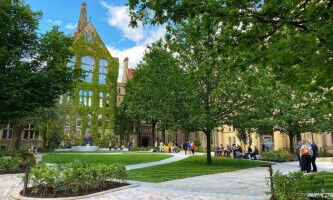
University of Manchester hits major sustainability milestone, with Main Campus becoming 100% 'Zero Landfill'
Campus - MANCHESTER - Mar 26
Manchester students mentor local teenagers to build confidence in applying for university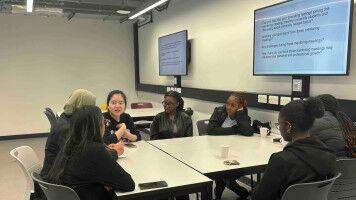
Manchester students mentor local teenagers to build confidence in applying for university

news
University College London
Results 1101 - 1120 of 2154.
Psychology - Pedagogy - 17.09.2020
Housing wealth matters for children’s mental health
Children growing up in families with expensive homes have fewer emotional and behavioural problems, finds new research led by the UCL Centre for Longitudinal Studies (CLS) based at the UCL Social Research Institute. The study, published today in Child Development, is one of the first to look at the links between family wealth and children's development.
Health - Psychology - 16.09.2020
PTSD may double risk of dementia
People who have experienced post-traumatic stress disorder (PTSD) are up to twice as likely to develop dementia later in life, according to a new study by UCL researchers. The research, published in the British Journal of Psychiatry , is the first meta-analysis of global evidence on PTSD and dementia risk.
Environment - 14.09.2020
Mediterranean and tropical biodiversity most vulnerable to human pressures
Animals in tropical and Mediterranean areas are the most sensitive to climate change and land use pressures, finds a new study by UCL researchers. The findings, published today in Nature Ecology & Evolution , show how extinction risks are not evenly distributed worldwide, and suggest that large declines in tropical biodiversity are likely to occur imminently.
Environment - Life Sciences - 10.09.2020
Global wildlife populations declined by two-thirds since 1970
Global animal populations have on average declined by two-thirds in less than half a century, according to the WWF's Living Planet Report 2020 involving UCL researchers, released today. The Living Planet Index (LPI), provided by the Zoological Society of London (ZSL), shows that factors believed to increase the planet's vulnerability to pandemics such as COVID-19 - including land-use change and the use and trade of wildlife - were also some of the drivers behind the 68% average decline in global mammal, bird, amphibian, reptile and fish populations between 1970 and 2016.
Environment - Earth Sciences - 10.09.2020
66 million years of Earth’s climate uncovered from ocean sediments
Changes in the Earth's climate over the last 66 million years have been revealed in unprecedented detail by a team involving UCL researchers, highlighting four distinctive climatic states and the natural millionand thousand-year variability that Earth's climate has experienced. , the new global "climate reference curve" created by the team is the first record to continually and accurately trace how the Earth's climate has changed since the great extinction of the dinosaurs 66 million years ago.
Economics - Environment - 08.09.2020
Multinationals’ supply chains account for a fifth of global emissions
A fifth of carbon dioxide emissions come from multinational companies' global supply chains, according to a new study led by UCL and Tianjin University that shows the scope of multinationals' influence on climate change. The study, published , maps the emissions generated by multinationals' assets and suppliers abroad, finding that the flow of investment is typically from developed countries to developing ones - meaning that emissions are in effect outsourced to poorer parts of the world.
Life Sciences - Pharmacology - 04.09.2020
Genetic links to drug and alcohol use among young people
Young people who are genetically predisposed to risk-taking, low extraversion and schizophrenia are more likely to use alcohol, cigarettes, cannabis, or other illicit drugs, according to a new UCL-led study. The researchers say that the findings, published in Addiction Biology , are in line with the notion that people who are more vulnerable to psychopathology or certain personality traits are more inclined to try several types of drugs or use them to 'self-medicate'.
Psychology - 04.09.2020
Inequality of opportunity drags down everyone’s motivation
Unequal compensation reduces people's motivation to work, even among those who stand to benefit from unfair advantages, finds a new UCL-led study. The researchers found that large disparities in rewards offered for the same task reduce people's happiness, which in turn reduce their willingness to work, in the study published in PLOS One .
Social Sciences - Health - 01.09.2020
Endometriosis more common in teenage girls than previously thought
Teenage girls are just as likely to suffer with endometriosis as adult women, a finding which UCL and University of Birmingham researchers say is surprising and could help doctors provide better treatments for younger patients. Endometriosis is a debilitating condition, caused by excessive growth of the womb's tissue lining, which presents with pain in the lower abdomen, typically around the time of a period.
Computer Science - Electroengineering - 27.08.2020
Brain-inspired electronic system could vastly reduce AI’s carbon footprint
Extremely energy-efficient artificial intelligence is now closer to reality after a study by UCL researchers found a way to improve the accuracy of a brain-inspired computing system. The system, which uses memristors to create artificial neural networks, is at least 1,000 times more energy efficient than conventional transistor-based AI hardware, but has until now been more prone to error.
Health - Pharmacology - 24.08.2020
Clinical research reduced by 87 per cent at peak of pandemic
At the peak of the COVID-19 pandemic, clinical research capacity may have been reduced by up to 87% in England, finds a new study led by UCL academics. In the study, published in PLOS One , researchers estimated that at a population infection rate of 10% - at the peak in April, for over a month - less than 400 of the 3,200 (13%) full-time clinical academics in England would be available to do research.
Health - Computer Science - 20.08.2020
Contact tracing apps unlikely to contain COVID-19 spread
Contract tracing apps used to reduce the spread of COVID-19 are unlikely to be effective without proper uptake and support from concurrent control measures, finds a new study by UCL researchers. The systematic review*, published in Lancet Digital Health , shows that evidence around the effectiveness of automated contact tracing systems is currently very limited, and large-scale manual contact tracing alongside other public health control measures - such as physical distancing and closure of indoor spaces such as pubs - is likely to be required in conjunction with automated approaches.
Health - Psychology - 19.08.2020
Telemedicine may well outlast the pandemic, say mental health care staff
The Covid-19 pandemic has brought about rapid innovation in mental health care, and the move to telemedicine is likely here to stay to at least some degree, but new research led by UCL and King's College London cautions that serious barriers still need to be overcome. In a new survey in the UK and an international review of evidence from 29 countries, mental health care staff report how the pandemic and lockdown have been harmful to some people accessing mental health services.
Health - 19.08.2020
Ethnic inequalities among over 50s revealed in new research
Black, Asian and minority ethnic (BAME) people aged between 50 and 70 are more likely to be in the poorest fifth of England's population and live in the most deprived neighbourhoods, finds a new study co-led by UCL researchers. The research, carried out with Institute of Public Policy Research (IPPR) for the Centre for Ageing Better, also found that black people in their 50s and 60s have significantly lower weekly incomes, an average of £100 a week less, than their white peers, and are less likely to own their own homes outright.
Linguistics & Literature - 11.08.2020
Get smart about your summer revision
Discover some of the best strategies for successful revision in this article by English Literature student Evie Robinson, who shares her top tips for acing late summer exam season. Exam seasons can be super stressful, and it's very easy to feel overwhelmed - but there are plenty of things you can do to make this mountain far easier to climb.
Health - Life Sciences - 09.08.2020
Cannabidiol improves blood flow to brain’s hippocampus
A single dose of cannabidiol (CBD) helped increase blood flow to the hippocampus, an important area of the brain associated with memory and emotion, finds a new study led by UCL researchers. Researchers say the findings could be an important discovery for conditions which affect memory, such as Alzheimer's disease and post-traumatic stress disorder (PTSD), and could help better target therapies.
Health - 07.08.2020
Poor mental health in lockdown most common among young women
Young women are the most likely to have experienced high levels of depression, anxiety and loneliness in lockdown, compared to older adults, according to new research from the UCL Centre for Longitudinal Studies (CLS). The study, published today as a briefing paper, also found that young women (aged 30) have shown the biggest increase in mental health problems since they were previously assessed some years before compared to middle-aged (aged 50) and older adults (aged 62).
Life Sciences - 06.08.2020
New insight into the evolution of complex life on Earth
A novel connection between primordial organisms and complex life has been discovered by a team led by UCL and Lancaster University researchers. The new evidence, published in Science , sheds light on the evolutionary origins of the cell division process that is fundamental to complex life on Earth. The study focuses on the cell division of the microbe Sulfolobus acidocaldarius , which thrives in acidic hot springs at temperatures of around 75 ° C. This microbe is classed among the unicellular organisms called archaea that evolved 3.5 billion years ago together with bacteria.
Health - Environment - 05.08.2020
Land use changes may increase disease outbreak risks
Global changes in land use are disrupting the balance of wild animal communities in our environment, and species that carry diseases known to infect humans appear to be benefiting, finds a new UCL-led study. The research team, led by the UCL Centre for Biodiversity & Environment Research, studied evidence from 6,801 ecological communities from six continents, and found that animals known to carry pathogens (disease-causing microorganisms) that can infect humans were more common in landscapes intensively used by people.
Health - 05.08.2020
Why is the government buying Covid tests without evidence they work?
Dr Dami Collier (UCL Infection & Immunity) co-writes an op-ed questioning the decision of the UK Government to purchase the new 90 minute rapid diagnostic tests when there is no present evidence to show they work. Many of us working in NHS hospitals welcomed the news earlier this week that the government had purchased 90-minute Covid-19 tests.


Environment - Mar 27
The University of Manchester signs Memorandum of Understanding with United Utilities
The University of Manchester signs Memorandum of Understanding with United Utilities
Agronomy & Food Science - Mar 27
Gather & Gather unveils fresh new Spring/Summer 2026 menu designed for the warmer seasons
Gather & Gather unveils fresh new Spring/Summer 2026 menu designed for the warmer seasons
Environment - Mar 26
University of Manchester hits major sustainability milestone, with Main Campus becoming 100% 'Zero Landfill'
University of Manchester hits major sustainability milestone, with Main Campus becoming 100% 'Zero Landfill'
Campus - MANCHESTER - Mar 26
Manchester students mentor local teenagers to build confidence in applying for university
Manchester students mentor local teenagers to build confidence in applying for university