


Campus - GLASGOW - Mar 16
Evidence from five decades of graduates confirms Humanities skills power careers and lifelong impact
Evidence from five decades of graduates confirms Humanities skills power careers and lifelong impact
Health - Mar 13
Oxford and Serum Institute of India sign IP license agreement to advance NipahB vaccine candidate
Oxford and Serum Institute of India sign IP license agreement to advance NipahB vaccine candidate
Career - Mar 13
Faye Holland joins pioneering Cambridge x Manchester collaboration as Partnership Director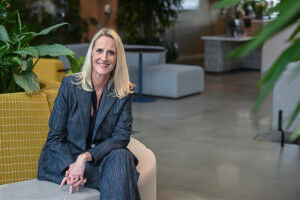
Faye Holland joins pioneering Cambridge x Manchester collaboration as Partnership Director
news
University of Leeds
Results 21 - 40 of 250.
Environment - Earth Sciences - 21.02.2023

Governments are not using the latest mapping technology to report key environmental data about tropical forests to the UN, say researchers. Under what is known as the UN's Global Stocktake , set up as part of the Paris Agreement, governments report on the level of carbon emitted or removed in forested areas.
Pharmacology - Health - 16.02.2023
Pharmacists based in care homes make them safer for residents
Basing specialist pharmacists in care homes can help make residents safer by cutting potential harm from medicines, according to research carried out by University of Leeds academics. The Care Home Independent Pharmacist Prescriber Study (CHIPPS), which involved researchers in Leeds and across the country, trialled onsite pharmacists in dozens of care homes.
Environment - Earth Sciences - 15.02.2023

Researchers have used nearly half a million fossils to solve a scientific mystery - why the number of different species is greatest near the equator and decreases towards polar regions. The results, published in the journal Nature , give valuable insight into how biodiversity is generated over long timescales, and how climate change can affect the richness of global species.
Environment - 06.02.2023
How much microfibre do we emit with our washing?
The UK-s laundry releases microfibres weighing the equivalent of up to 1,500 double-decker buses every year, according to new research. The discovery was made by academics in Leeds' School of Design , who co-created a test to measure how different materials and washing conditions affect the amount of microfibres released into water.
Career - Health - 27.01.2023
People with arthritis 20% less likely to be in work
The typical person living with arthritis in the UK is 20% less likely to be in work than their equivalent without the condition, new research shows. And the most striking finding was that non-university educated women aged 60-plus are at least 37% less likely to be in work if they have arthritis, compared to matched individuals without the condition.
Health - Pharmacology - 20.01.2023
’Remarkable’ results in colon cancer trial
Giving colon cancer patients chemotherapy before surgery cuts the risk of the disease coming back, according to the results of a new clinical trial. The FOxTROT trial, a collaborative study by scientists at Leeds and the University of Birmingham, showed that giving colon cancer patients chemotherapy before rather than after surgery reduced the chance of cancer returning within 2 years by 28%.
Environment - 16.01.2023
Hydropower without the environmental impact
Scientists have analysed data from nearly three million rivers across the globe to identify where hydropower stations could be sited with limited environmental impacts. The analysis identified 124,761 potential locations that met the strict environmental criteria. Of those, 4,644 of the schemes could be run profitably and would be capable of generating an additional 5.
Agronomy & Food Science - 13.01.2023
Why chocolate feels so good? It ’s down to lubrication
Scientists have decoded the physical process that takes place in the mouth when chocolate is eaten, as it changes from a solid into a smooth emulsion that many people find totally irresistible. By analysing each of the steps, the interdisciplinary research team at the University of Leeds hope it will lead to the development of a new generation of luxury chocolate that will have the same feel and texture but will be healthier to consume.
Environment - Computer Science - 09.01.2023

Scientists have developed AI to track the development of crevasses - or fractures - on the Thwaites Glacier ice tongue in west Antarctica. Crevasses are indicators of stress building-up in the glacier. A team of researchers from the University of Leeds and University of Bristol have adapted an AI algorithm originally developed to identify cells in microscope images to spot crevasses forming in the ice from satellite images.
Environment - Agronomy & Food Science - 16.12.2022
UK needs to use phosphorus sustainably
Phosphorus use in the UK needs to be better managed and used in a much more sustainable way to reduce river pollution and increase resilience over rising fertiliser prices, say researchers. Despite phosphorus being a key nutrient in the agricultural sector for which there is no alternative, the food and feedstock industries rely on imports from a small number of countries including China, Russia and Morocco.
Forensic Science - 09.12.2022
Parks should be safe places for women and girls
Parks in West Yorkshire should be better designed and managed so that women and girls feel safe throughout the day and after dark, according to a new study. A team of researchers at the University of Leeds interviewed more than a hundred women and girls from across the county and found that most of them believed their local parks were unsafe.
Environment - Life Sciences - 08.12.2022
Forest restoration - ’balance nitrogen-fixing trees with other species’
Reforestation projects could be made more effective with the findings of new research into the constraints on nitrogen fixation among plants. Some trees, such as those from the Fabaceae or legume family, form a symbiotic relationship with bacteria, enabling them to them take in nitrogen from the air.
Health - Psychology - 08.12.2022
First-wave COVID-19 linked to long-term depressive symptoms
People who reported contracting COVID-19 early in the pandemic were twice as likely to experience depressive symptoms 13 months later than those who did not, new research has found. Those who reported having COVID in early 2020 were also 1.67 times more likely to experience clinically meaningful levels of anxiety after 13 months, than those who avoided COVID-19 in the same time period.
Health - Agronomy & Food Science - 29.11.2022
How women can reduce risk of hip fracture
Increasing intake of protein and drinking regular cups of tea or coffee is a way women could reduce their risk of suffering a hip fracture, according to new research. Food scientists at the University of Leeds have found that for women, a 25 grams a day increase in protein was associated with, on average, a 14% reduction in their risk of hip fracture.
Health - Pharmacology - 16.11.2022
Preventing European cancer epidemic
Europe will face a cancer epidemic in the next decade if weaknesses in cancer health systems and cancer research are not urgently addressed, say the authors of a major new report. The large-scale collaborative research project, in which the University is a key participant, warns that prioritising cancer research is crucial for European countries to deliver more affordable, higher quality, and more equitable cancer care.
Environment - 10.11.2022
’Communicate smarter’ about climate change action
Policy analysts and planners will be able to -communicate smarter- about climate change action by using a new online decision-support tool which has been launched at COP27. Developed by researchers at the University of Leeds and the Met Office , it synthesises the latest scientific evidence on the broader effects of climate change initiatives.
Physics - Astronomy & Space - 03.11.2022
Magnetism could help explain Earth’s formation
A peculiar property of the Earth's magnetic field could help us to work out how our planet was created 4.5 billion years ago, according to a new scientific assessment. There are several theories about how the Earth and the Moon were formed, most involving a giant impact. They vary from a model where the impacting object strikes the newly formed Earth a glancing blow and then escapes, through to one where the collision is so energetic that both the impactor and the Earth are vaporized.
Environment - History & Archeology - 02.11.2022

The world's largest tropical peatland turned from being a major store of carbon to a source of carbon dioxide emissions as a result of climate change thousands of years ago, new research has revealed. Around the time that Stonehenge was built, 5,000 years ago, the climate of central Congo began to dry, leading to the peatlands emitting carbon dioxide.
Environment - Agronomy & Food Science - 25.10.2022
Mapping the pressures of global food production
A map showing the environmental pressures from global food production has been developed by researchers, to identify ways of creating more sustainable and just food systems. The analysis looked at greenhouse gas emissions, water use, habitat disturbance and pollution, such as effluent or fertiliser run off from farms.
Career - Economics - 19.10.2022
Over a third of office workers ’hybrid misfits’
Over a third of office staff are working away from home for more days than they would like, according to new research from the University. Some 39% of office workers are so-called hybrid "misfits" and don't have the right balance of home and office working, the survey funded by the Economic and Social Research Council found.


Campus - GLASGOW - Mar 16
Evidence from five decades of graduates confirms Humanities skills power careers and lifelong impact
Evidence from five decades of graduates confirms Humanities skills power careers and lifelong impact
Health - Mar 13
Oxford and Serum Institute of India sign IP license agreement to advance NipahB vaccine candidate
Oxford and Serum Institute of India sign IP license agreement to advance NipahB vaccine candidate
Career - Mar 13
Faye Holland joins pioneering Cambridge x Manchester collaboration as Partnership Director
Faye Holland joins pioneering Cambridge x Manchester collaboration as Partnership Director