


news
GLASGOW
Results 261 - 280 of 981.
Health - 04.08.2022
Measuring blood pressure in both arms can help reduce cardiovascular risk and hypertension
Blood pressure should be measured in both arms and the higher reading should be adopted to improve hypertension diagnosis and management, according to a new study. The research, led by University of Exeter, analysed data from 53,172 participants in 23 studies worldwide to examine the implications of choosing the higher or lower arm pressure.
Earth Sciences - 03.08.2022
Super eruptions are millions of years in the making - followed by rapid surge
New research suggests that super-eruptions occur when huge accumulations of magma deep in the Earth's crust, formed over millions of years, move rapidly to the surface, disrupting pre-existing rock. Researchers from the Scottish Universities Environmental Research Centre (SUERC) and the University of Bristol led an international team of scientists to make the discovery using a model for crustal flow.
Environment - Innovation - 01.08.2022
Next-gen heat pump could cut energy bills and carbon emissions
Researchers from the University of Glasgow have developed a new type of heat pump, a flexible heat pump technology, which could help households save on their energy bills and contribute towards net-zero emissions goals. Heat pumps are a low-carbon alternative to gas boilers. They draw energy from external low temperature sources, most commonly outdoor air, in order to heat indoor spaces.
Health - Life Sciences - 27.07.2022
COVID-19 tied to wildlife sales at Chinese market; alternative scenarios extremely unlikely
Analyses based on locations and viral genome sequencing of early COVID-19 cases show the pandemic started in Wuhan's Huanan market in late 2019. Researchers, including Professor David L Roberson at the MRC-University of Glasgow Centre for Virus Research (CVR), have confirmed that live animals sold at the Huanan Seafood Wholesale Market were the likely source of the COVID-19 pandemic that has claimed 6.4 million lives since it began in late 2019.
Health - 27.07.2022
High rates of avoidable deaths among most disadvantaged
A new study, looking at more than half a million adults in Scotland, has highlighted very high rates of premature mortality from avoidable causes of death amongst society's most disadvantaged. Using population data from Glasgow, researchers were able to show that homelessness, opioid addiction, involvement in the criminal justice system and psychosis were all independently, and jointly linked to early and avoidable deaths.
Health - 26.07.2022
Hepatitis cases in children linked to adeno-associated virus AAV2
Recent acute hepatitis cases of unknown origin in children have now been linked to the virus AAV2 in two new UK studies, with no evidence of a direct link to SARS-CoV-2 infection. Submitted to MedRxiv as pre-prints, both studies found that the common virus AAV2 (adeno-associated virus 2) was present at high levels in all samples from patients with unexplained hepatitis.
Chemistry - Physics - 20.07.2022
Chemical production breakthrough could make £9bn industry greener and cleaner
Researchers at a Scottish university have found a greener, cleaner way to produce a common chemical relied on by multibillion-dollar industries. In a new paper published today in the journal Cell Reports Physical Science , researchers from the University of Glasgow demonstrate a new method of creating anilines - chemicals commonly used in the manufacture of products including dyes, plastics and insulation, and pharmaceuticals like paracetamol.
Computer Science - 19.07.2022
Research project lends helping human hand to AI decisionmakers
A new research project is setting out to help artificial intelligence systems make fairer choices by lending them a helping human hand. Researchers from the University of Glasgow and Fujitsu Ltd. have teamed up for the year-long collaboration, which is called 'End-users fixing fairness issues', or Effi.
Electroengineering - Innovation - 13.07.2022
Future robots could ’see’ using new type of electronic skin
A new form of flexible photodetector could provide future robots with an electronic skin capable of 'seeing' light beyond the range of human vision. A team of engineers from the University of Glasgow are behind the breakthrough development, which involves a newly-developed method of printing microscale semiconductors made from gallium arsenide onto a flexible plastic surface.
Life Sciences - Health - 04.07.2022
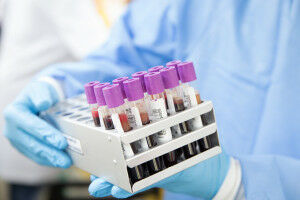
Blood test could predict future risk of leukaemia, study finds A blood test could predict risk of developing leukaemia in the elderly population years in advance by identifying changes in blood cell production, according to new research. By identifying those most at risk it should be possible to provide preventive or early treatment in the future to improve patient outcomes, experts say.
Environment - Materials Science - 27.06.2022
Green electronics project sets out to create compostable crop sensors
An international research collaboration is setting out to find new ways of monitoring grop growth with biodegradable sensors which can be composted at the end of their lifespan. The £1.8m CHIST-ERA project, called Transient Electronics for Sustainable ICT in Digital Agriculture, is led by researchers from the University of Glasgow and supported by colleagues in Canada, Finland, Poland and Switzerland.
Environment - History & Archeology - 27.06.2022
Ancient world adapted to climate change
A new study shows how the ancient world adapted to climate change A new study of the ancient world of Anatolia - now Turkey - shows how they adapted to climate change but offers a warning for today's climate emergency. The efforts of ancient populations to minimise the impacts of climate change were undermined during longer climate shifts when it is combined with other events such as pandemics, earthquakes and wars - findings the lead author says offer scary parallels to the modern day.
Forensic Science - 22.06.2022

Vulnerable students are turning to online 'essay mills' to purchase written work that they then pass off as their own, threatening academic integrity and exploitation, a new study has found. Researchers based at the Scottish Centre for Crime and Justice Research found hundreds of examples of online adverts targeting students in what is known as 'contract cheating'.
History & Archeology - 18.06.2022

Were the bones of fallen Battle of Waterloo soldiers sold as fertiliser? Thousands of soldiers died on the Belgium battlefield yet very few human remains have been found. Now a new study by the University of Glasgow's Professor Tony Pollard suggests it is the most probable outcome of such a bloodied affair, but the archaeologist says it isn't quite a situation of 'case closed'.
Life Sciences - Microtechnics - 01.06.2022
E-skin that can feel pain could create new generation of touch-sensitive robots
An electronic skin which can learn from feeling 'pain' could help create a new generation of smart robots with human-like sensitivity. A team of engineers from the University of Glasgow developed the artificial skin with a new type of processing system based on 'synaptic transistors, which mimics the brain's neural pathways in order to learn.
Health - 31.05.2022
The devastating cost of austerity on health across the UK
People across the UK are dying younger as a result of austerity, with people living in the poorest areas hardest hit. A new report out today calls for urgent action and presents 40 recommendations to turn the situation around. Mortality rates, and related indicators such as life expectancy, are important markers of the health of a population.
Health - 24.05.2022
Scottish study on COVID-19 patients could change future heart and lung treatment
A ground-breaking study led by experts from NHS Golden Jubilee and the University of Glasgow into the effects of COVID-19 on Scottish patients in Intensive Care Units (ICUs) has confirmed evidence that the virus is associated with impaired function of the right side of the heart. Specialists at NHS Golden Jubilee's University National Hospital say that these findings could play a vital role in not only saving the lives of COVID-19 patients, but for the care of potentially fatal heart and lung issues generally, as well as helping prepare for any possible future pandemic.
Health - Pharmacology - 23.05.2022
Heart Inflammation found in 1 in 8 patients after hospitalisation with COVID-19
One in eight people who were hospitalised with COVID-19 between May 2020 and March 2021 were later diagnosed with myocarditis, or heart inflammation, according to major new research into the clinical long-term effects of COVID-19. The largest study of its kind to date was led by the University of Glasgow in collaboration with NHS Greater Glasgow and Clyde (NHS GGC), and followed for one year, in real time, 159 patients after they were hospitalised with COVID-19.
Materials Science - Chemistry - 10.05.2022

The cellular forms of natural materials are the inspiration behind a new lightweight, 3D printed smart architected material developed by an international team of engineers. The team, led by engineers from the University of Glasgow, mixed a common form of industrial plastic with carbon nanotubes to create a material which is tougher, stronger and smarter than comparable conventional materials.
Health - Pharmacology - 04.05.2022
Krill oil may be beneficial to muscle function and size, in people over 65
Krill oil may be beneficial to muscle function and size in healthy people over the age of 65, according to new research. The study - led by the University of Glasgow's Institute of Cardiovascular and Medical Sciences (ICAMS) and published in Clinical Nutrition - found that krill oil supplementation of four grams per day could have beneficial effects on skeletal muscle function and size in this age group.


