


news
GLASGOW
Results 221 - 240 of 981.
Life Sciences - Chemistry - 09.03.2023
Biochemical synthesis discovery could unlock new drug development breakthroughs
A mystery about how a chemical compound found in nature could be synthesised in the lab may have been solved, scientists say - a breakthrough which could unlock new developments in medicine. Scientists from universities and research institutions in Scotland and Germany are behind the discovery, published in the journal Nature Chemistry .
Earth Sciences - Environment - 02.03.2023
New perspective on processes behind Earth system change
The incoming head of the School of Geographical and Earth Sciences has contributed a Perspective article to the latest edition of the journal Science . Professor Todd Ehlers, currently of the University of Tübingen, Germany, was invited to contribute the piece in response to research published in the same issue which discusses a new computer-model reconstruction of global topography over the last 100 million years.
Social Sciences - Economics - 24.02.2023
Severity in gambling behaviours and suicidality linked in young adults
An increase in difficulties with gambling is linked to a heightened risk of suicide attempts among young adults, according to new research led by the University of Glasgow. 'Changes in severity of problem gambling and subsequent suicide attempts: a longitudinal survey of young adults in Great Britain, 2018-20' shows that over the course of a year, young adults (aged 16-24) who experienced an increase in severity of gambling harms were 2.74 times more likely to attempt suicide than those whose gambling was unchanged.
Health - Environment - 24.02.2023
Microphones could help track disease risk in the wild
Researchers have shown how sounds recorded by low-cost microphones could be used to help track infectious disease risks in the rainforest and in other rapidly changing landscapes. The study - published in Trends in Parasitology and led by the University of Glasgow - discusses how listening to the sounds of an ecosystem can inform our understanding of factors that drive the spread of disease between animals and people.
Earth Sciences - Environment - 10.02.2023

New analysis of the Winchcombe meteorite has revealed just how quickly space rocks which fall to Earth can be contaminated by our atmosphere. The meteorite, which landed in Gloucestershire in February last year, was the first to be recovered on UK soil in nearly 30 years. Fragments were recovered from a domestic driveway hours after it entered the Earth's atmosphere.
Psychology - Life Sciences - 10.02.2023
Reading facial expressions may be partly subjective
Does someone look angry or sad? You can probably offer an answer to that question based on the information you can see just by looking at their face. That's because facial expressions - or a combination of different small facial movements - can be read by other humans to help understand what a person might be feeling at that exact moment.
Health - 09.02.2023
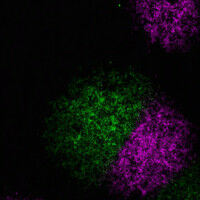
This winter many of us will experience the symptoms caused by colds and flu. Coughs, sneezes, sore throats and fevers are all caused by unwelcome viral visitors who temporarily setup home in our respiratory systems. But what's really happening inside our bodies as viruses fight to overpower our immune systems - and each other - in a bid to succeed? Now, scientists at the MRC-University of Glasgow Centre for Virus Research (CVR) have revealed more about the hidden world of respiratory viral infection.
Law - 03.02.2023
Domestic abuse information ’not adequately captured’ in child contact cases
Domestic abuse allegations and convictions of parents who have perpetrated abuse are not being adequately captured by Scottish civil courts during child contact hearings, a new study by the Universities of Glasgow and Edinburgh Napier has found. Researchers discovered family lawyers were heavily reliant on their clients telling them about ongoing or past domestic abuse as there is no formal mechanism for them to be informed about criminal proceedings.
Physics - Chemistry - 24.01.2023
Scientists open new window on the physics of glass formation
Research from an international team of scientists has cast new light on the physics of vitrification - the process by which glass forms. Their findings, which centre on analysis of a common feature of glasses called the boson peak, could help pave the way for new developments in materials science. The peak can be observed in glass when special equipment is used to study the vibrations of its constituent atoms, where it spikes in the terahertz range.
Physics - Innovation - 20.01.2023
Method to preserve entanglement could enable new quantum tech
An international team of researchers has developed a new method of overcoming a key challenge for the development of future quantum tech. In a new paper published in the journal Physical Review X Quantum, the researchers describe how they may have solved a key problem for quantum technologies by keeping particles entangled in previously impossible conditions.
Health - 19.01.2023
At-home cardiac rehabilitation programme is a success in Scotland
REACH-HF, an award-winning cardiac rehabilitation programme which helps people living with heart failure improve their quality of life from the convenience and safety of their own homes, should be rolled out across Scotland, according to a new study. Led by researchers at the University of Glasgow, the SCOT:REACH-HF study followed more than 100 people with heart failure in Scotland as they participated in the REACH-HF programme.
Economics - Health - 13.01.2023

A new study funded by the British Academy and Global Challenges Research Fund (GCRF) has reported that governments across Sub-Saharan Africa are struggling to keep pace with the mass expansion of gambling, brought about through online technologies and smartphone apps. An international team, coordinated by the universities of Glasgow, Ghana and Bath, in partnership with the Malawi Epidemiology and Intervention Research Unit (MEIRU), reviewed existing policies in place to regulate the gambling industry across 49 countries.
Environment - 22.12.2022

Heat pumps could reduce biogas carbon footprint by 36%, research suggests An alternative source of heat could significantly reduce the carbon footprint of a process which turns food waste into power, new research suggests. A University of Glasgow-led team of scientists have demonstrated that using air-source heat pumps to support anaerobic digestion could cut the carbon emitted during the production of biogas by more than a third.
Life Sciences - Health - 19.12.2022
Stranded dolphins’ brains show common signs of Alzheimer’s disease
The brains of three different species of stranded dolphins show classic markers of human Alzheimer's disease, according to the most extensive study into dementia in odontocetes (toothed whales). The new pan-Scotland research, a collaboration between the University of Glasgow, the Universities of St Andrews and Edinburgh and the Moredun Research Institute, studied the brains of 22 odontocetes which had all been stranded in Scottish coastal waters.
Life Sciences - Health - 29.11.2022
Ancient viruses may hold key to effective gene therapy treatments
Scientists have unlocked key insights into virus evolution, revealing new information that could help develop treatments for a wide variety of genetic diseases. The research, which was led by scientists at the MRC-University of Glasgow Centre for Virus Research (CVR) and University of Massachusetts Chan Medical School, focuses on a group of small, ubiquitous viruses called 'parvoviruses' (from the Latin word "parvus" meaning 'small', 'puny' or 'unimportant').
History & Archeology - Environment - 18.11.2022

The world's first urban state societies developed in Mesopotamia, modern-day Iraq, some 5500 years ago. No other artefact type is more symbolic of this development than the so-called Beveled Rim Bowl (BRB), the first mass produced ceramic bowl. BRB function and what food(s) these bowls contained has been the subject of debate for over a century.
Earth Sciences - Environment - 18.11.2022
Sea level rise to dramatically speed up erosion of rock coastlines by 2100
Rock coasts, which make up over half the world's coastlines, could retreat more rapidly in the future due to accelerating sea level rise. This is according to new research led by Imperial College London and supported by researchers from the University of Glasgow. The researchers modelled likely future cliff retreat rates of two rock coasts in the UK, based on forecasts of sea level rise for different greenhouse gas emissions and climate change scenarios.
Earth Sciences - Chemistry - 16.11.2022
Winchcombe meteorite holds information about the origin of Earth’s oceans
The Winchcombe meteorite, a rare carbonaceous meteorite which crashed onto a driveway in Gloucestershire, has been found to contain extra-terrestrial water and organic compounds that reveal insights into the origin of Earth's oceans. A new study led by experts from the Natural History Museum and the University of Glasgow reports the orbital history and first laboratory analyses of the Winchcombe meteorite, which was recovered only hours after its spectacular fireball lit up the skies over the UK in February 2021.
Health - Life Sciences - 15.11.2022
Hope for drug treatment to slow neurodegenerative disease
New research provides hope for drug treatment to slow neurodegenerative disease Scientists have found a new drug treatment that can slow the progression of neurodegenerative disease in mice. The breakthrough research may offer fresh hope in tackling currently untreatable conditions such as Alzheimer's disease.
Life Sciences - Environment - 11.11.2022
The water flow rate of a fish’s ’home’ affects the survival of their offspring
The water flow where adult fish live can affect the body shape and survival of their offspring, according to new research. The study - led by an international collaboration between CRIOBE and the University of Glasgow, and published today in Functional Ecology - found that the survival of fish born from parents living under high water flow was reduced by half compared to fish born from those living under low water flow.


