


news
CAMBRIDGE
Results 1661 - 1680 of 1682.
Health - Economics - 07.07.2010

One of the most famous and influential mantras of Barack Obama's chief economic adviser - that wealthier nations are also healthier - has been called into question by a new study. The research, by a University of Cambridge-led team of social scientists, examined data from 22 countries to test the widely-accepted principle that stimulating economic growth will automatically improve public health levels, particularly in the developing world.
Life Sciences - 01.07.2010
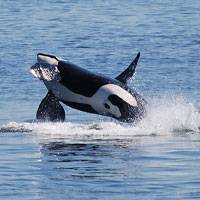
A study by Cambridge and Exeter universities has found a link between killer whales, pilot whales and humans - the only three known species where females stop breeding relatively early in their lifespan. Despite very different social structures between the three species, the research - by Dr Rufus Johnstone of the Department of Zoology at Cambridge and Dr Michael Cant of Exeter - shows that in each case females become increasingly genetically related to those they live with as they get older.
Health - 29.06.2010

The use of statins in patients without a prior history of heart attacks and strokes is of little real benefit in preventing deaths in the short term - the largest study of its type to date has found. Researchers from the University of Cambridge and St George's Hospital, London analysed data from 65,000 participants around the world in 11 randomized controlled trials.
Health - Life Sciences - 25.06.2010
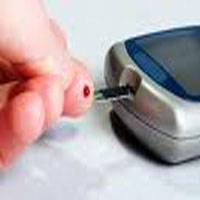
Having diabetes doubles the risk of developing a wide range of blood vessel diseases, including heart attacks and different types of stroke, researchers in Cambridge have found. Diabetes is now estimated to be responsible for 1 in every 10 deaths from cardiovascular disease, or about 325,000 cardiovascular deaths per year in all industrialised countries put together.
Environment - 22.06.2010

From the collapse of the Doha Development Agenda to the ongoing impasse over climate change, the failure of governments to achieve real progress at the international negotiating table happens with depressing regularity. Now a new study suggests that one of the reasons why so many diplomatic discussions end up in a state of deadlock could be because most politicians are looking at the problem the wrong way round.
Life Sciences - 08.06.2010
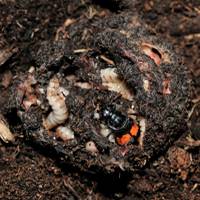
Scientists in Cambridge have found cracks in the long-standing theory that the number of eggs animals have - and the size of those eggs - is related to how much parental care they invest in their offspring. Humans, like other mammals, have relatively few offspring into which they invest an immense amount of effort.
Health - Life Sciences - 07.06.2010

Medication that increases levels of the brain chemical dopamine could open up new ways for helping some heavy users of cocaine and amphetamines kick the habit, researchers from Cambridge have found. They also found for the first time that how compulsively a person uses stimulants provides an important clue about whether a particular drug user would benefit from this kind of medication.
History & Archeology - Economics - 04.06.2010

Society risks losing touch with reality in the debate about whether children are being exposed to adult, sexual content too young, because other agendas are creeping in "under the radar", a new analysis warns. The comments appear in a new University of Cambridge study, which examines the current dispute about whether media such as music videos, girls' magazines and corporate advertising are having a dangerous effect on children by exposing them to adult sexual themes.
Physics - 30.05.2010
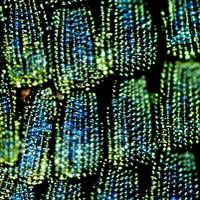
Cambridge scientists have discovered a way of mimicking the stunningly bright and beautiful colours found on the wings of tropical butterflies. The findings could have important applications in the security printing industry, helping to make bank notes and credit cards harder to forge. The striking iridescent colours displayed on beetles, butterflies and other insects have long fascinated both physicists and biologists, but mimicking nature's most colourful, eye-catching surfaces has proved elusive.
Earth Sciences - 27.05.2010

Scientists have found the possible source of a huge carbon dioxide 'burp' that happened some 18,000 years ago and which helped to end the last ice age. The results provide the first concrete evidence that carbon dioxide (CO2) was more efficiently locked away in the deep ocean during the last ice age, turning the deep sea into a more 'stagnant' carbon repository - something scientists have long suspected but lacked data to support.
Life Sciences - 26.05.2010
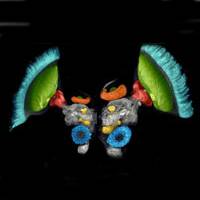
One of the most devastating events in the insect world - the locust swarm - has extraordinary effects on the insect's brains, scientists in Cambridge have discovered. Although desert locusts are infamous for their swarming behaviour - when they migrate en masse and consume everything in their path - they usually occur in a solitary form, living alone and actively avoiding fellow locusts.
Chemistry - Economics - 25.05.2010

The University of Cambridge's Discovery Fund recently made its second investment in a new University spin-out which is developing water droplets that serve as 'miniature test tubes'. The Fund has made a seed investment in Sphere Fluidics, which was formed earlier this month. The company aims to commercialise picolitre droplet technology, which enables researchers to carry out large numbers of simultaneous reactions contained within small water droplets a fraction of a millimetre in size.
Physics - Life Sciences - 21.05.2010
Eight Cambridge researchers are among the 44 new Fellows announced by the Royal Society this week. Sir Paul Nurse, President of the Royal Society said: "It is a true pleasure to welcome this year's new Fellows to the Royal Society. They join the ranks of the UK and Commonwealth's leading scientists, counting themselves among early Fellows such as Isaac Newton, Robert Boyle and Charles Darwin.
Health - Social Sciences - 06.05.2010

Girls appear to be "protected" from showing antisocial behaviour until their teenage years, new research from the University of Cambridge has found. The study sheds new light on antisocial behaviour in girls compared with boys and suggests that rather than violence or antisocial behaviour simply reflecting bad choices, the brains of people with antisocial behaviour may work differently from those who behave normally.
Earth Sciences - Linguistics & Literature - 05.05.2010

An international group of scientists will gather at the University of Cambridge on Friday 7 May 2010 to celebrate the 25th anniversary of the discovery of the hole in the ozone layer, one of the most dramatic scientific findings of modern times. The event will be web cast live. The seminal paper, published in the journal Nature, alerted the world to a major environmental threat and paved the way for concerted international action to address the problem.
Life Sciences - Health - 05.05.2010
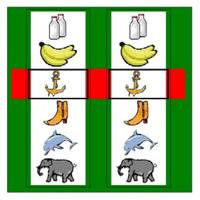
The brains of problem gamblers react more intensely to near misses than casual gamblers, new research from the University of Cambridge has found. The results could help explain what keeps problem gamblers betting even though they keep losing. The study involved scanning the brains of 20 gamblers using functional magnetic resonance imaging while they played a computerised slot machine.
Environment - 26.04.2010
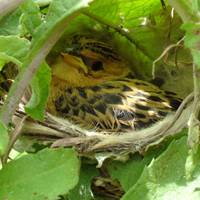
Using field experiments in Africa and a new computer model that gives them a bird's eye view of the world, Cambridge scientists have discovered how a bird decides whether or not a cuckoo has laid an egg in its nest. The finding offers unique insights into a 20 million-year-old evolutionary arms race.
Life Sciences - Architecture & Buildings - 22.04.2010

The team of neuroscientists and computer experts from the UK, US and Germany compared the way these systems are organised and found that the same networking principles underlie all three. Using data for the large part already in the public domain, including Magnetic Resonance Imaging data from human brains, a map of the nematode's nervous system and a standard computer chip, they examined how the elements in each system are networked together.
Health - Economics - 15.04.2010
Happiness hinges on the lives of others
People's happiness is significantly bound up with that of their "significant others", a new study into men and women's differing attitudes to well-being has found. Sociologists at the University of Cambridge found that although men and women give different answers when asked about what affects their quality of life, many in fact associate personal happiness with the welfare of families and loved ones at a deeper level.
Earth Sciences - History & Archeology - 25.03.2010
Scientists find first ever southern tyrannosaur dinosaur
Scientists from Cambridge, London and Melbourne have found the first ever evidence that tyrannosaur dinosaurs existed in the southern continents. They identified a hip bone found at Dinosaur Cove in Victoria, Australia as belonging to an ancestor of Tyrannosaurus rex. The find sheds new light on the evolutionary history of this group of dinosaurs.


