


news
CAMBRIDGE
Results 1581 - 1600 of 1682.
Health - Life Sciences - 03.02.2012

Research provides insight into why some individuals with a family history of drug abuse are at higher risk of addiction.
Life Sciences - 02.02.2012

Some plants go to extraordinary lengths to attract pollinators. A unique collaboration between plant scientists and physicists is revealing the full extent of botanical advertising. We need to look at flowers like an insect looks at them, using sophisticated optical instruments and measuring ultraviolet reflection." —Dr Beverley Glover If you want to stand out from the crowd, you might dress to impress.
Health - Life Sciences - 16.01.2012
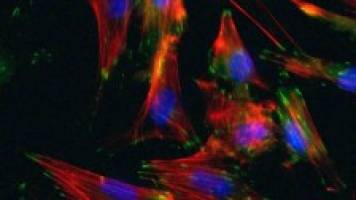
Scientists have created cells which make up the walls of blood vessels; research could lead to new treatments and better screening for cardiovascular disease. This research represents an important step in being able to generate the right kind of smooth muscle cells to help construct these new blood vessels.
Life Sciences - 13.01.2012
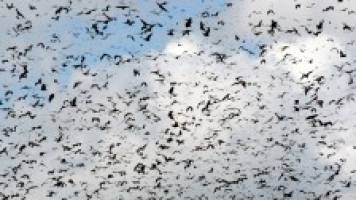
The ability to study these viruses within an isolated bat colony has given us new insight into these processes." —Alison Peel A new study on African bats provides a vital clue for unravelling the mysteries in Australia's battle with the deadly Hendra virus. The study focused on an isolated colony of straw-coloured fruit bats on islands off the west coast of central Africa.
Environment - 09.01.2012

Research shows that a new ice age could well have been upon us in the next millennium were it not for increases in CO2 due to humans, despite the advantageous trend in solar radiation of our current age. Our work suggests that natural insolation will not be cancelling the impacts of man-made global warming." —Dr Luke Skinner In terms of the ebb and flow of the Earth's climate over the course of its history, the next ice age is starting to look overdue.
Health - Life Sciences - 06.01.2012
Hopes for reversing age-associated effects in MS patients
Proof of principle study suggests the age-associated decline of the remyelination process is reversible For individuals with MS, this means that in theory regenerative therapies will work throughout the duration of the disease." —Robin Franklin New research highlights the possibility of reversing ageing in the central nervous system for multiple sclerosis (MS) patients.
Health - Life Sciences - 05.01.2012
Reprogrammed oestrogen binding linked to more aggressive breast cancer
Researchers have discovered how receptors for the female sex hormone oestrogen attach to a different part of the DNA in breast cancer patients who are more likely to relapse.
Health - Life Sciences - 22.12.2011

A collaboration between virologists and neuroscientists at Cambridge University has demonstrated how viruses that cross the blood/brain barrier could be exploited to slow down, or even halt, the progress of Parkinson's and other neurodegenerative diseases.
Psychology - 21.12.2011

New research from Cambridge University and others shows that, with sensitive ing, young children can be reliable witnesses in cases of abuse. Children provided remarkable amounts of free recall information in response to open prompts which did not direct them." —Professor Michael Lamb A new study shows that children as young as three or four years old can talk informatively and accurately about experiences - including incidents of abuse - if they are ed by specialists who understand children's strengths and weaknesses.
Life Sciences - Chemistry - 20.12.2011

Learning is when you change your behaviour in the light of new experience, and this is what a locust needs to do when it gets caught up in the crowd." —Dr Swidbert Ott from the University of Cambridge Department of Zoology New research has found that a protein associated with learning and memory plays an integral role in changing the behaviour of locusts from that of harmless grasshoppers into swarming pests.
Life Sciences - 14.12.2011

Scientists discover why buttercups reflect yellow on chins - and it doesn't have anything to do with whether you like butter Our research provides exciting insight into not only a children's game but also into the lengths to which flowers will go to attract pollinators." —Dr Beverley Glover, Department of Plant Sciences Scientists have found that the distinctive glossiness of the buttercup flower ( Ranunculus repens ), which children like to shine under the chin to test whether their friends like butter, is related to its unique anatomical structure.
Health - 30.11.2011

The test could be especially important for older patients - we often see growths in the adrenal glands during a routine CT scan." —Morris Brown, Professor of Clinical Pharmacology at the University of Cambridge A new test developed by researchers at the University of Cambridge could help doctors diagnose thousands of people with the most common curable cause of high blood pressure (hypertension).
Life Sciences - Health - 29.11.2011

A University of Cambridge study, which set out to investigate DNA methylation in the human heart and the "missing link" between our lifestyle and our health, has now mapped the link in detail across the entire human genome.
Economics - 29.11.2011

It is currently an efficient filter system that could be used in countries with poor access to fresh potable water, or to remove heavy metals and industrial waste products from ground water sources." —Dr Easan Sivaniah from the University of Cambridge's Cavendish Laboratory Scientists have developed a new method of creating nanoporous materials with potential applications in everything from water purification to chemical sensors.
Health - Life Sciences - 28.11.2011

I believe that we are creating a Centre that will become globally recognized for innovation. Our collective expertise, proven ability to collaborate, and open innovation model provide an exciting basis for the future.
Health - Linguistics & Literature - 18.11.2011
Mining the language of science
Scientists are developing a computer that can read vast amounts of scientific literature, make connections between facts and develop hypotheses. Ask any biomedical scientist whether they manage to keep on top of reading all of the publications in their field, let alone an adjacent field, and few will say yes.
Life Sciences - 17.11.2011

Electrical impulses emitted by orexin cells stimulate wakefulness and tell the body to burn calories. We wondered whether dietary nutrients alter those impulses." —Dr Denis Burdakov of the Department of Pharmacology A new study has found that protein and not sugar activates the cells responsible for keeping us awake and burning calories.
Life Sciences - Chemistry - 14.11.2011

The discovery by scientists in Cambridge and Alberta of a fifth adaptor protein - a tiny and vital component of many cells -will lay the foundations for a greater understanding of genetic disorders. This fundamental research could impact on the study of diseases where certain molecules fail to get trafficked correctly." —Dr Jennifer Hirst The people who work there call it the Titanic.
Health - Life Sciences - 11.08.2011
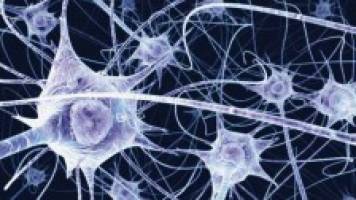
Scientists have identified 29 new genetic variants linked to multiple sclerosis, providing key insights into the biology of a very debilitating neurological disease. Many of the genes implicated in the study are relevant to the immune system, shedding light onto the immunological pathways that underlie the development of multiple sclerosis.
Life Sciences - Chemistry - 08.06.2011
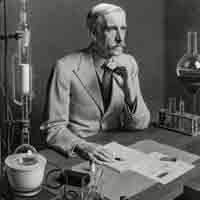
A plaque commemorating the life and work of the eminent biochemist Sir Frederick Gowland Hopkins (1861 to 1947) will be unveiled at his former Cambridge home on Friday. The plaque will be displayed on the exterior of 71 Grange Road, Cambridge, where Hopkins lived with his family for many years. It has been designed and made by the present owner of the house, Mark Bury FRSA, a distinguished engraver, designer and lettercutter.


