


news 2026
« BACK
 Arrival of Homo Erectus may have triggered Mosquitoes’ taste for human blood
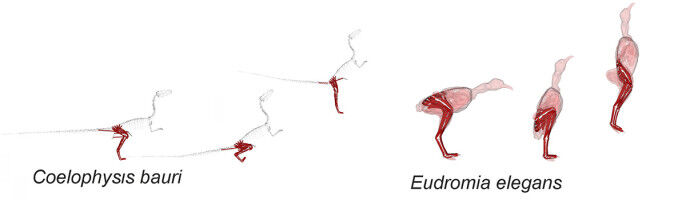 Dinosaurs may have used their tails to power jumps
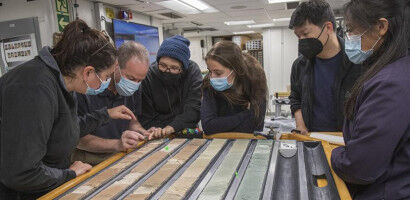 Flickering glacial climate may have shaped early human evolution
Paleontology
Results 1 - 6 of 6.
Paleontology - Life Sciences - 05.03.2026
The arrival of substantial numbers of early human ancestors ( Homo erectus) in the Southeast Asian prehistoric landmass of Sundaland, approximately 1.8 million years ago, likely triggered an evolutionary shift in Leucosphyrus mosquitoes, according to a new study. Researchers from The University of Manchester suggest that during the Early Pleistocene, the arrival and presence of these early hominins drove the mosquitoes to adapt to feeding on humans.
Health - Paleontology - 25.02.2026
New research from the Royal Veterinary College (RVC) has revealed that when dinosaurs leapt into the air, they may have used their tails as well as their legs. The study concludes that long-tailed, bipedal carnivores (like Velociraptor ) could have powered higher jumps by swinging their massive tails - a strategy that was later lost as birds evolved shorter tails and had to adopt different jumping techniques.
Earth Sciences - Paleontology - 19.02.2026
Researchers have identified a 'tipping point' about 2.7 million years ago when global climate conditions switched from being relatively warm and stable to cold and chaotic, as continental ice sheets expanded in the northern hemisphere. Following this transition, Earth's climate began swinging back and forth between warm interglacial periods and frigid ice ages, linked to slow, cyclic changes in Earth's orbit.
Life Sciences - Paleontology - 28.01.2026
443-million-year-old fossils reveal early vertebrate eyes
A photograph of a second Jamoytius specimen, again with a zinc X-ray map overlain at top, where the eye structure is visible but less well preserved. In this specimen the body scales were also preserved and when mapped for the elements calcium (bottom left) and phosphorous (bottom right) the scales are shown to have the same chemistry as bone.
Paleontology - 22.01.2026
Jumping giants: Fossils show giant prehistoric kangaroos could still hop
Scientists studying the fossil remains of giant prehistoric kangaroos have found that even animals weighing more than 200kg may not have been too big to bounce, overturning long-held assumptions about the limits of hopping. Today, the red kangaroo is the largest living hopping animal and weighs around 90kg.
History & Archeology - Paleontology - 21.01.2026
Prehistoric tool made from elephant bone is the oldest discovered in Europe
A remarkable prehistoric hammer made from elephant bone, dating back nearly half a million years ago, has been uncovered in southern England and analysed by archaeologists from UCL and the Natural History Museum, London. It is the oldest elephant bone tool to ever be discovered in Europe and provides an extraordinary glimpse into the ingenuity of the early human ancestors who made it.


