Cardiff student at the centre of LIGO’s mysterious new discovery
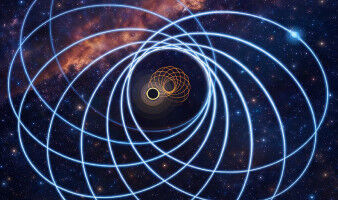
A Cardiff University student has found himself at the centre of a major breakthrough discovery that could potentially help to solve a decades-old mystery. Charlie Hoy, currently in the third year of his PhD and a member of the Laser Interferometer Gravitational Wave Observatory (LIGO) Scientific Collaboration, has played a leading role in deciphering new data observed from the violent collision of two objects roughly 800 million light-years away from Earth. In a new paper published today, the LIGO team describe a cosmic 'face-off' between two objects that circled each other before finally colliding and merging into a single black hole, generating a huge splash of gravitational waves that were emitted across the Universe and detected here on Earth. The scientists are confident that one of the objects was itself a huge black hole roughly 23 times the mass of our sun, but they have been left stunned by the second object which appears to have been like nothing that has ever been detected before. The size of the mysterious object lies in what scientists call the 'mass gap' and is thought to be something that is heavier than the heaviest known neutron star yet lighter than the lightest known black hole. Up until now, scientists have not been able to find direct evidence of anything that lies within this mass gap. The announcement is the latest in a line of spectacular discoveries whereby gravitational waves - tiny ripples that spread through space and time when two massive objects collide - have been detected on Earth and used to paint a picture of some of the biggest, most violent and unusual cosmic events happening across the Universe.