


news 2016
Categories
Years
2009 | 2010 | 2011 | 2012 | 2013 | 2014 | 2015 | 2016 | 2017 | 2018 | 2019 | 2020 | 2021 | 2022 | 2023 | 2024 | 2025 | 2026 |
2009 | 2010 | 2011 | 2012 | 2013 | 2014 | 2015 | 2016 | 2017 | 2018 | 2019 | 2020 | 2021 | 2022 | 2023 | 2024 | 2025 | 2026 |
Results 1041 - 1052 of 1052.
Life Sciences - Agronomy & Food Science - 06.01.2016
People face subconscious urges to over-eat at this time of year, study finds
People have evolved to have subconscious urges to over-eat, and limited ability to avoid becoming obese, especially in winter, a study by the Universities of Bristol and Exeter has found. There is not yet an evolutionary mechanism to help us overcome the lure of sweet, fatty and unhealthy food and avoid becoming overweight for understandable and sensible reasons, according to researchers.
Agronomy & Food Science - 06.01.2016
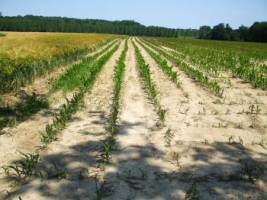
Droughts hit cereal crops harder since 1980s, study shows Drought and extreme heat events in Europe slashed cereal harvests in recent decades by up to 20 per cent according to new research by the University of Sussex and Canadian academics. At a time when global warming is projected to produce more extreme weather yields and production around the world.
Health - Life Sciences - 06.01.2016
Cancer drug shows promise for treating Duchenne Muscular Dystrophy
A drug commonly used to treat leukaemia is showing potential as a treatment that could slow the progression of the muscle-wasting condition, Duchenne Muscular Dystrophy. Duchenne Muscular Dystrophy most commonly affects boys, with around 2,400 people in the UK affected by the condition. There is currently no cure and most patients are not expected to live past the age of 30.
Chemistry - 06.01.2016
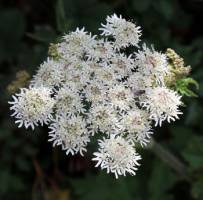
Sussex research exposes secret cocktail of toxic pesticides in hedgerows and wildflowers Scientists at the University of Sussex have discovered that bees are exposed to a chemical cocktail when feeding from wildflowers growing next to neonicotinoid-treated crops in UK farmland. These chemical cocktails could make the impact of neonicotinoids up to 1,000 times more potent than previously realised.
Life Sciences - Mathematics - 06.01.2016
How two-tone cats get their patches comes to light in cell study
Scientists have discovered how the distinctive piebald patches seen in black and white cats and some horses are formed in the womb. Their insights could shed light on medical conditions that occur early in development, such as holes in the heart, which are caused by cells not moving to the right place as an embryo develops.
Chemistry - Physics - 06.01.2016
Detection of molecules important for healthcare could soon be 1000 times faster
Scientists should soon be able to capture biological molecules a thousand times faster, allowing better detection of important health issues. DNA mutations, which can lead to cancers and other problems, can be difficult to detect in biological samples as they are relatively rare. In order to analyse all DNA molecules for signs of mutation, it is important to gather as many as possible, but this is often time-consuming.
Health - 06.01.2016
Alcohol effects food consumption
A researcher from the University's Institute of Psychology, Health and Society has published a paper in Health Psychology about the adverse effect alcohol has on a person's inhibitory control when it comes to food. Eating after consuming alcohol is not uncommon and, in the past, many researchers have linked alcohol to the stimulation of appetite and energy intake.
Health - Life Sciences - 05.01.2016
Monitoring chicken flock behaviour could help combat leading cause of food poisoning
A new technique that monitors the movement of chickens can be used to predict which flocks are at risk of becoming infected with Campylobacter - the most common bacterial source of food poisoning in humans in the UK. Research by scientists at Oxford University has found that by using a camera system to analyse the 'optical flow' of chickens, at-risk flocks can be detected when the birds are only seven to 10 days old - much earlier than is usually possible with conventional on-farm sampling methods.
Health - 05.01.2016
Making patients safer in surgery
Surgery is getting safer thanks to research by an Oxford University team that has brought together two previously competing theories about how best to protect patients. Previous attempts to improve patient safety in surgery used one of two approaches. Some investigators tried to improve teamwork and communication by training team members to interact better, using principles developed in the aviation industry.
Health - Life Sciences - 05.01.2016
Map shows hotspots for bat-human virus transmission risk
West Africa, sub-Saharan Africa and South East Asia are most at risk from bat viruses 'spilling over' into humans resulting in new emerging diseases, according to a new global map compiled by scientists at UCL, the Zoological Society of London (ZSL) and the University of Edinburgh. The map shows risk levels due to a variety of factors including large numbers of different bat viruses found locally, increasing population pressure, and hunting bats for bushmeat.
Environment - 04.01.2016
Melting of massive ice ’lid’ resulted in huge release of CO2 at the end of the ice age
A new study of how the structure of the ocean has changed since the end of the last ice age suggest that the melting of a vast 'lid' of sea ice caused the release of huge amounts of carbon dioxide into the atmosphere. Although conditions at the end of the last ice age were very different to today, this study highlights the importance that dynamic features such as sea ice have on regulating the climate system.
Health - History & Archeology - 01.01.2016
Ymposium looks at the pioneering legacy of Scottish scientists in the field of tropical disease
They were far removed from the developing countries whose diseases they were studying, yet Scottish doctors and scientists have been at the forefront of research into tropical diseases, like sleeping sickness, leishmaniasis and schistosomiasis, since the late 19th century. Many of the diseases that are endemic to developing countries in the tropics are caused by parasites - an extraordinary number of which were first discovered by graduates of the University of Glasgow.


