


news 2013
« BACK
 Investment in innovative science could reduce need for animal research
 New stem cell gene therapy gives hope to prevent inherited neurological disease
Life Sciences
Results 181 - 200 of 436.
Life Sciences - Health - 09.08.2013
Autism affects different parts of the brain in women and men
New research sheds light on previously under-researched area of study - females with autism. The findings suggest that we should not blindly assume that everything found in males with autism applies to females. Dr Meng-Chuan Lai Autism affects different parts of the brain in females with autism than males with autism, a new study reveals.
Life Sciences - 09.08.2013
Scientist names new fly species after the Professor who has supported his work
09 Aug 2013 A Professor from The University of Manchester has had his name immortalised as a new species of fly. Professor Richard Preziosi, from the Faculty of Life Sciences, said he was delighted with the unusual tribute from researcher Dr Dave Penney. Dr Penney discovered the new species of fly, which he has named Proceroplatus preziosii, on the Caribbean island of Hispaniola, after finding a fossil in 16 million-year-old amber from the Dominican Republic.
Health - Life Sciences - 08.08.2013
Metabolic ’fingerprinting’ of tumours could help bowel cancer patients
It is possible to see how advanced a bowel cancer is by looking at its metabolic 'fingerprint', according to new research. Bowel cancer is the third most common type of cancer globally, with over one million new cases diagnosed every year. Accurately determining the stage that a tumour has reached is crucial for deciding which treatments to offer.
Life Sciences - 06.08.2013
Girls with anorexia have elevated autistic traits
Girls with anorexia nervosa show a mild echo of the characteristics of autism, suggests new research in the journal Molecular Autism. This new research is suggesting that underlying the surface behaviour, the mind of a person with anorexia may share a lot with the mind of a person with autism Simon Baron-Cohen In particular, compared to typical girls, girls with anorexia have an above average number of autistic traits, an above average interest in systems, whilst they score below average in empathy.
Health - Life Sciences - 04.08.2013
Curable cause for some cases of high blood pressure
Five per cent of high blood pressure cases are caused by small nodules on hormone gland; now scientists have developed a scan which enables rapid diagnosis. This tremendous collaboration illustrates how gene technology can be used to identify specific causes for common diseases which can now be cured rather than requiring life-long drug treatment.
Health - Life Sciences - 02.08.2013
New findings could influence the development of therapies to treat dengue disease
New research into the fight against Dengue, an insect-borne tropical disease that infects up to 390 million people worldwide annually, may influence the development of anti-viral therapies that are effective against all four types of the virus. The findings, led by researchers at the University of Bristol and published in the Journal of Biological Chemistry today [2 August], show for the first time that there may be significant differences in specific properties of the viral proteins for the four dengue virus types.
Health - Life Sciences - 01.08.2013
Research hope for bladder cancer
Research carried out by a team at Plymouth University has for the first identified an important mechanism behind the process that allows a benign, small polyp to develop into spreading and invasive bladder cancer. Bladder cancer is a common condition – an estimated 10,000 people are diagnosed with the disease each year in the UK.
Health - Life Sciences - 01.08.2013
Molecular ’switch’ in cancers of the testis and ovary
We need new ways of treating patients with malignant germ cell tumours to minimise the toxic effects of chemotherapy and to improve survival rates when tumours are resistant to treatment. Professor Nick Coleman Cambridge scientists have identified an 'on/off' switch in a type of cancer which typically occurs in the testes and ovaries called 'malignant germ cell tumours'.
Life Sciences - Health - 30.07.2013
We use cookies to ensure that we give you the best experience on our website. You can change your cookie settings at any time. Otherwise, we'll assume you're OK to continue. Investment in innovative science could reduce need for animal research Durham University has been awarded £74,993 to reduce animal use in science and improve animal welfare.
Life Sciences - Health - 30.07.2013
A new tool for brain research
Physicists and neuroscientists from The University of Nottingham and University of Birmingham have unlocked one of the mysteries of the human brain, thanks to new research using functional Magnetic Resonance Imaging (fMRI) and electroencephalography (EEG). The work will enable neuroscientists to map a kind of brain function that up to now could not be studied, allowing a more accurate exploration of how both healthy and diseased brains work.
Life Sciences - Social Sciences - 30.07.2013
Evolution of monogamy in humans the result of infanticide risk
The threat of infants being killed by unrelated males is the key driver of monogamy in humans and other primates. The study by academics from UCL, University of Manchester, University of Oxford and University of Auckland, is the first to reveal this evolutionary pathway for the emergence of pair living.
Life Sciences - 29.07.2013
Risk of infanticide drove evolution of monogamy
The threat of infants being killed by unrelated males is the key driver of monogamy in humans and other primates. The study, by academics from UCL, Oxford University, the University of Manchester and the University of Auckland, is the first to show that this evolutionary pathway explains the emergence of pair living.
Social Sciences - Life Sciences - 29.07.2013
Monogamy evolved as a mating strategy
Where females are widely dispersed, the best strategy for a male is to stick with one female, defend her, and make sure that he sires all her offspring. In short, a male's best strategy is to be monogamous. Professor Tim Clutton-Brock Social monogamy, where one breeding female and one breeding male are closely associated with each other over several breeding seasons, appears to have evolved as a mating strategy, new research reveals.
Life Sciences - Health - 26.07.2013
Key target responsible for triggering detrimental effects in brain trauma identified
Researchers studying a type of cell found in the trillions in our brain have made an important discovery as to how it responds to brain injury and disease such as stroke. A University of Bristol team has identified proteins which trigger the processes that underlie how astrocyte cells respond to neurological trauma.
Life Sciences - 25.07.2013
Want to stick with your diet? Better have someone hide the chocolate
Study indicates that removing a temptation is more effective than relying on willpower alone. Our research suggests that the most effective way to beat temptations is to avoid facing them in the first place. Molly Crockett If you are trying to lose weight or save for the future, new research suggests avoiding temptation may increase your chances of success compared to relying on willpower alone.
Health - Life Sciences - 25.07.2013
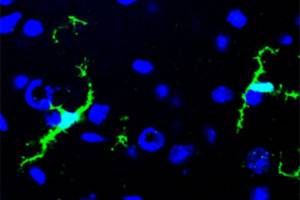
25 Jul 2013 Scientists from The University of Manchester have used stem cell gene therapy to treat a fatal genetic brain disease in mice for the first time. The method was used to treat Sanfilippo - a fatal inherited condition which causes progressive dementia in children - but could also benefit several neurological, genetic diseases.
Chemistry - Life Sciences - 24.07.2013
Wave of blue fluorescence reveals pathway of death in worms
The final biological events in the life of a worm have been described by scientists at UCL, revealing how death spreads like a wave from cell to cell until the whole organism is dead. Watch video When individual cells die, it triggers a chemical chain reaction that leads to the breakdown of cell components and a build-up of molecular debris.
Life Sciences - Health - 24.07.2013
Cat dander triggers allergic responses
Immune system's extreme reaction to cat allergen previously poorly understood; study could lead to new treatments for those with cat and dog allergies We are hopeful that our research will lead to new and improved treatments for cat and possibly dog allergy sufferers Clare Bryant New research reveals how the most common cause of severe allergic reactions to cats, the Fel d 1 protein which is found in cat dander, triggers an allergic response.
Life Sciences - 24.07.2013
Trout develop tolerance to heavily polluted water
New research from King's College London and the University of Exeter has shown how a population of brown trout can survive in the contaminated waters of the River Hayle in Cornwall where metal concentrations are so high they would be lethal to fish from unpolluted sites. The team believe this is due to changes in the expression of their genes.
Life Sciences - Social Sciences - 23.07.2013
Worries of family and friends could affect recovery of brain haemorrhage patients
We use cookies to ensure that we give you the best experience on our website. You can change your cookie settings at any time. Otherwise, we'll assume you're OK to continue. More support is needed to ease the fears of family and friends of brain haemorrhage patients after new research suggested that their worries could inadvertently affect the recovery of their loved ones, scientists said today (Tuesday July 23).


