


news 2013
« BACK
 Language and tool-making skills evolved at same time
 New illusion of consciousness
 The brain system that stops worriers just going with the flow
 Size of personal space is affected by anxiety
Life Sciences
Results 141 - 160 of 436.
Health - Life Sciences - 06.09.2013
Disease-causing genes spread easily in emerging lethal fungus infection
A rare, emerging fungal disease that is spreading throughout Canada and Northwestern USA can easily pass its deadly genes to related fungal strains within the species but less readily to more distant relatives, according to new research from the University of Birmingham. The findings will help to understand the origins of infectious outbreaks and predict the likelihood of the disease spreading to other populations and geographical areas.
Health - Life Sciences - 05.09.2013
University spinout announces positive results from peptide therapeutic trial for patients with relapsing Multiple Sclerosis (MS)
A University of Bristol spinout company that focuses on treating the underlying cause of autoimmune diseases has announced positive results from its peptide therapeutic trial for patients with relapsing Multiple Sclerosis (MS). Apitope, a drug discovery and development company founded by Professor David Wraith in the School of Cellular and Molecular Medicine , completed the second Phase I clinical trial to assess the safety of its peptide therapeutic 'ATX-MS-1467', as well as biological parameters, in a total of 43 patients with relapsing MS.
Health - Life Sciences - 05.09.2013
Low Omega-3 could explain why some children struggle with reading
An Oxford University study has shown that a representative sample of UK schoolchildren aged seven to nine years had low levels of key Omega-3 fatty acids in their blood. Furthermore, the study found that children's blood levels of the long-chain Omega-3 DHA (the form found in most abundance in the brain) 'significantly predicted' how well they were able to concentrate and learn.
Life Sciences - Earth Sciences - 05.09.2013
Who do you fin you are? Tuna's odd family tree
Some of the strangest fish in the sea are closely related to dinner table favourites the tunas and mackerels, an international team including Oxford University scientists has found. Deep sea fish such as the black swallower, with an extendable stomach that enables it to eat fish larger than itself, and manefishes, some sporting spiky fins like a Mohican haircut, are close cousins to mackerels and tuna despite having completely different body shapes and lifestyles.
Health - Life Sciences - 05.09.2013
Parasitic worm genome reveals potential drug and vaccine targets
Analysis of the genome of a parasitic worm that infects livestock worldwide has revealed potential targets for treatments and vaccines. Five enzymes essential to the survival of barber pole worm have been identified with two already being studied as potential drug targets against other pathogens. A team of scientists, including researchers from the University of Glasgow's College of Medical, Veterinary and Life Sciences sequenced the genome of Haemonchus contortus, which resides in the gut of sheep and other livestock globally.
Life Sciences - Agronomy & Food Science - 04.09.2013
Psychological effects of genetic testing for risk of weight gain
Obesity gene testing does not put people off weight loss and may help to reduce self-blame, according to a new study by researchers from the Health Behaviour Research Centre at UCL. Previous studies have shown that genes play a role in a person's risk of becoming overweight. One gene, called FTO, has been found to have the biggest influence so far.
Health - Life Sciences - 04.09.2013
Better hygiene in wealthy nations may increase Alzheimer’s risk
People living in industrialised countries may be more likely to develop Alzheimer's due to greatly reduced with bacteria, viruses and other microorganisms - which can lead to problems with immune development and increased risk of dementia, suggests a new study. There are important implications for forecasting future global disease burden, especially in developing countries as they increase in sanitation Molly Fox New research has found a "very significant" relationship between a nation's wealth and hygiene and the Alzheimer's "burden" on its population.
Life Sciences - Physics - 04.09.2013
Queen Mary scientists uncover genetic similarities between bats and dolphins
The evolution of similar traits in different species, a process known as convergent evolution, is widespread not only at the physical level, but also at the genetic level, according to new research led by scientists at Queen Mary University of London and published in Nature this week. The scientists investigated the genomic basis for echolocation, one of the most well-known examples of convergent evolution to examine the frequency of the process at a genomic level.
Life Sciences - Health - 03.09.2013
Stroke-causing mutant gene identified by scientists - along with a potential treatment
A genetic mutation that can lead to haemorrhagic stroke has been identified by scientists - along with a drug to potentially treat it. Research published in the journal Human Molecular Genetics highlights a mutation in the gene COL4a2 that causes bleeding in the brain. COL4a2 is a protein that is expressed by the gene of the same name, which forms a structure outside the cell called a basement membrane.
Health - Life Sciences - 03.09.2013
Research could lead to a new test to predict risk of pregnancy complications
03 Sep 2013 Researchers from The University of Manchester and Central Manchester University Hospitals NHS Trust have identified proteins in the blood that could be used to predict whether a woman in her first pregnancy is at increased risk of developing pre-eclampsia. Pre-eclampsia is a complication of pregnancy where the mother develops high blood pressure and protein is present in the urine.
Life Sciences - Health - 02.09.2013
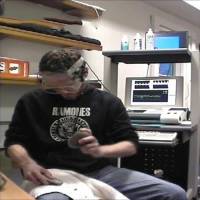
Research by the University of Liverpool has found that the same brain activity is used for language production and making complex tools, supporting the theory that they evolved at the same time. Researchers from the University tested the brain activity of 11 expert stone tool makers (flint knappers) as they undertook a stone-making task and a standard language test.
Psychology - Life Sciences - 30.08.2013
Heart in your Hand? Neuroscientists discover a new illusion of consciousness The sight of a virtual-reality hand pulsing in time with your heart beat is enough to convince your brain that it's part of your body, according to a new study published this week from the Sackler Centre for Consciousness Science at the University of Sussex.
Health - Life Sciences - 30.08.2013
Why time changes are a struggle
New research in mice reveals why the body is so slow to recover from jet-lag and identifies a target for the development of drugs that could help us adjust more quickly to changes in time zone. The researchers at Oxford University and F. Hoffmann La Roche have identified a mechanism that limits the ability of the body clock to adjust to changes in patterns of light and dark.
Environment - Life Sciences - 29.08.2013
Moss growth in Antarctica linked to climate change
Increases in temperature on the Antarctic Peninsula during the latter part of the 20th century were accompanied by an acceleration in moss growth, scientists have learned. Writing in the journal Current Biology they describe the activity as unprecedented in the last 150 years. By combining multiple analyses we have clearly demonstrated a substantial increase in plant growth since the 1960s, coincident with changes to the local climate Jessica Royles, Lead Author The Peninsula sustains moss banks some of which are more than 5000 years old.
Life Sciences - Health - 28.08.2013
The brain system that stops worriers just going with the flow Chronic worriers are more likely to use analytical thought processes when making decisions rather than relying on 'gut instincts', according to a new University of Sussex study published this week. A team of psychologists reviewed the body of research in recent years that has identified two systems used by the brain for processing information.
Life Sciences - Health - 28.08.2013
Scientist to study new ways to tackle Alzheimer’s
A project that will investigate new ways to protect brain cells from damage in Alzheimer's will begin this month thanks to an Alzheimer's Research UK grant. The one-year pilot project, led by Dr Nina Balthasar at the University of Bristol, could bring new treatments for Alzheimer's a step closer. Dr Balthasar and her team are setting out to understand how a protein called tau, which is known to build up and tangle inside brain cells in Alzheimer's disease, interferes with the cells' energy-producing 'power stations', called mitochondria.
Life Sciences - 28.08.2013
The space surrounding the body (known by scientists as 'peripersonal space'), which has previously been thought of as having a gradual boundary, has been given physical limits by new research into the relationship between anxiety and personal space. New findings have allowed scientists to define the limit of the 'peripersonal space' surrounding the face as 20-40cm away.
Life Sciences - History & Archeology - 27.08.2013
European hunter-gatherers owned pigs as early as 4600BC
We use cookies to ensure that we give you the best experience on our website. You can change your cookie settings at any time. Otherwise, we'll assume you're OK to continue. European hunter-gatherers owned pigs as early as 4600BC European hunter-gatherers acquired domesticated pigs from nearby farmers as early as 4600BC, according to new evidence.
Life Sciences - Health - 27.08.2013
Computer test reveals high prevalence of attention disorders in stroke patients
A majority of stroke patients have problems paying attention and could be helped by brain-training computer games, a new study suggests. Researchers at Imperial College London found that problems such as difficulty filtering out distractions, difficulty following instructions, and reduced alertness are much more common in stroke patients than doctors realise.
Environment - Life Sciences - 25.08.2013
New research offers insight into marine life’s ability to adapt to climate change
A study into marine life around an underwater volcanic vent in the Mediterranean, might hold the key to understanding how some species will be able to survive in increasingly acidic sea water should anthropogenic climate change continue. Researchers have discovered that some species of polychaete worms are able to modify their metabolic rates to better cope with and thrive in waters high in carbon dioxide (CO2), which is otherwise poisonous to other, often closely-related species.


