


news 2013
« BACK
 Population ’boom-and-bust’ followed start of farming in Western Europe
 Anatomical analysis puts insects in their place
 Oldest existing lizard-like fossil hints at scaly origins
 Durham welcomes new guidelines about reporting of animal research
 Restricting antibiotics could be key to fighting 'hospital superbug'
 Male fruit flies sleep around but females keep it in the family
Life Sciences
Results 101 - 120 of 436.
Health - Life Sciences - 02.10.2013
Specialised intestinal cells cause some cases of Crohn’s disease
Researchers discover that the cells play a major role in inflammation which underlies Crohn's disease in small intestine. If we are able to break down Crohn's disease into subsets by understanding the underlying mechanisms, which we have done here, we hope to develop much more targeted, effective treatments.
Life Sciences - 01.10.2013
How ants investigate the housing market when searching for their ideal home
An immediate and chronic concern for many of us is how the British housing market influences our whole economy: surprisingly ants also have issues over the value of new homes, researchers from the University of Bristol have found. Colonies of rock ants ( Temnothorax albipennis ) need to find ideal homes for the safety and productivity of the queen mother and all of her offspring.
History & Archeology - Life Sciences - 01.10.2013
The introduction of farming into Western Europe 7,500 years ago led to dramatic population collapse on a similar scale to the Black Death, according to researchers at UCL. The study, which is published , is the first to show the existence of a 'boom-and-bust' pattern, with decreases in population size as great as 60 per cent following rapid initial population increases of up to three or four times previous levels.
Life Sciences - 30.09.2013
New research links individual animal behaviour with social spacing
Certain animal species are capable of co-ordinating their spatial behaviour to cover terrain by maintaining areas of exclusive use while sharing other regions of space with their neighbours, new research has found. The joint study by Luca Giuggioli and Jonathan Potts from the University of Bristol, and Daniel Rubenstein and Simon Levin from Princeton University shows that animals deposit marks wherever they go to show their presence, and retreat from marks left by a member of the same species more quickly if the encountered mark is recent.
Life Sciences - Health - 30.09.2013
Researchers uncover 48 new genetic variants associated with multiple sclerosis
Each of the new associations brings nearer an understanding of how multiple sclerosis develops and thereby closer to our ultimate goal of a rational therapy that is both safe and effective at all stages of the disease. Professor Stephen Sawcer Scientists of the International Multiple Sclerosis Genetics Consortium (IMSGC) have identified an additional 48 genetic variants influencing the risk of developing multiple sclerosis.
Life Sciences - Chemistry - 30.09.2013
Structure of chromosomes revealed
It took several years to develop all the computational tools to make this happen, but the structures we can now reconstruct from this high-quality data are quite striking. More importantly, this new approach is allowing us to study the variation in chromosome structure on a cell-by-cell basis. Tim Stevens Scientists have developed a novel approach to determine the 3D structures of chromosomes in single cells, using hundreds of measurements of where different parts of the DNA get close to one another.
Health - Life Sciences - 30.09.2013
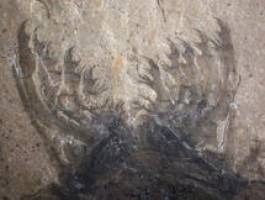
A study by an Oxford University researcher has shed new light on the origins of modern animal groups including insects and spiders. The paper shows that insects evolved from a marine crustacean ancestor, while spiders evolved from a trilobite-like ancestor. Based on analysis of more than 750 anatomical features in over 300 species, more than 200 of which are fossils, the results support previous hypotheses on the evolution of arthropods produced using molecular techniques such as DNA sequencing.
Life Sciences - Mathematics - 27.09.2013
Pigeon wingman rules
Travelling in flocks may make individual birds feel secure but it raises the question of who decides which route the group should take. Mathematical models developed by scientists suggest that a simple set of rules can help flocks, swarms, and herds reach a collective decision about where to go. But investigating how this really works, especially with animal groups in flight, is extremely challenging.
Health - Life Sciences - 27.09.2013
'Jekyll and Hyde' protein offers new route to cancer drugs
The mood changes of a 'Jekyll-and-Hyde' protein, which sometimes boosts tumour cell growth and at other times suppresses it, have been explained in a new study led by Oxford University researchers. The researchers in Britain, with collaborators in Singapore and the USA, carried out a comprehensive biological study of the protein E2F, which is abnormal in the vast majority of cancers.
Life Sciences - Chemistry - 26.09.2013
The fossilised remains of a reptile closely related to lizards are the oldest yet to be discovered. Two new fossil jaws discovered in Vellberg, Germany provide the first direct evidence that the ancestors of lizards, snakes and tuatara (known collectively as lepidosaurs), were alive during the Middle Triassic period - around 240 million years ago.
Life Sciences - 26.09.2013
Size matters: brain processes ’big’ words faster than ’small’ words
Bigger may not always be better, but when it comes to brain processing speed, it appears that size does matter. A new study has revealed that words which refer to big things are processed more quickly by the brain than words for small things. Researchers at the University of Glasgow had previously found that big concrete words - 'ocean', 'dinosaur', 'cathedral' - were read more quickly than small ones such as 'apple', 'parasite' and 'cigarette'.
Health - Life Sciences - 26.09.2013
New research helps fight against motor neurone disease
New research from the University of Sheffield could offer solutions into slowing down the progression of motor neurone disease (MND). Scientists from the University of Sheffield's Institute for Translational Neuroscience (SITraN) conducted pioneering research assessing how the devastating debilitating disease affects individual patients.
Health - Life Sciences - 26.09.2013
Folic acid deficiency can affect the health of great, great grandchildren
It surprised us to find that the great, great grandchildren of a parent who has had a folic acid deficiency could have health problems as a result. Dr Erica Watson Folic acid deficiency can cause severe health problems in offspring, including spina bifida, heart defects and placental abnormalities. A study out today reveals that a mutation in a gene necessary for the metabolism of folic acid not only impacts the immediate offspring but can also have detrimental health effects on the next several generations.
Health - Life Sciences - 26.09.2013
Restricting antibiotics could be key to fighting "superbug"
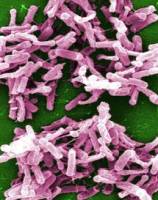
New ways are needed to fight the infection Clostridium difficile and better use of antibiotics could be key, according to the authors of ground-breaking research. In a unique United Kingdom study, the team from the University of Leeds, Oxford University Hospitals NHS Trust and Oxford University, mapped all cases of Clostridium difficile (C.diff) in Oxfordshire over a three-year period (2008 to 2011).
Life Sciences - 26.09.2013
We use cookies to ensure that we give you the best experience on our website. You can change your cookie settings at any time. Otherwise, we'll assume you're OK to continue. Durham welcomes new guidelines about reporting of animal research Durham University has welcomed new guidelines to ensure all reporting of research with animals is high-quality and transparent.
Health - Life Sciences - 26.09.2013
How meningitis bacteria 'slip under the radar'
Scientists have discovered a natural temperature sensor in a type of bacteria that causes meningitis and blood poisoning. The sensor allows the bacteria to evade the body's immune response, leading to life-threatening infections. Professor Christoph Tang, who led the research at the Sir William Dunn School of Pathology, University of Oxford, said: 'These infections are extremely dangerous to vulnerable groups, particularly young children, and can cause blindness, brain damage and limb loss.
Health - Life Sciences - 26.09.2013
New ways are needed to fight the infection Clostridium difficile and better use of antibiotics could be key, say Oxford researchers. The team from Oxford University Hospitals NHS Trust and the University of Oxford led a unique study to map all cases of Clostridium difficile (C.diff) in Oxfordshire over a three-year period from 2008 to 2011.
Life Sciences - Health - 25.09.2013
Ballet dancers’ brains adapt to stop them feeling dizzy
Scientists have discovered differences in the brain structure of ballet dancers that may help them avoid feeling dizzy when they perform pirouettes. The research suggests that years of training can enable dancers to suppress signals from the balance organs in the inner ear. The findings, published in the journal Cerebral Cortex , could help to improve treatment for patients with chronic dizziness.
Health - Life Sciences - 25.09.2013
Link between commonly prescribed statin and memory impairment
New research that looked at whether two commonly prescribed statin medicines, used to lower low-density lipoprotein (LDL) or 'bad cholesterol' levels in the blood, can adversely affect cognitive function has found that one of the drugs tested caused memory impairment in rats. Between six and seven million people in the UK take statins daily and the findings follow anecdotal evidence of people reporting that they feel that their newly prescribed statin is affecting their memory.
Law - Life Sciences - 25.09.2013
Male fruit flies like to have a variety of sexual partners, whereas females prefer to stick with the same mate - or move on to his brothers. An Oxford University study of mating preferences in fruit flies ( Drosophila ) has found that males and females respond to the sexual familiarity of potential mates in fundamentally different ways.


