


news 2013
« BACK
 Language and tool-making skills evolved at same time
 The brain system that stops worriers just going with the flow
 How the tiny fruit fly could help science get to the heart of human genetics
Health
Results 161 - 180 of 538.
Health - Life Sciences - 05.09.2013
Low Omega-3 could explain why some children struggle with reading
An Oxford University study has shown that a representative sample of UK schoolchildren aged seven to nine years had low levels of key Omega-3 fatty acids in their blood. Furthermore, the study found that children's blood levels of the long-chain Omega-3 DHA (the form found in most abundance in the brain) 'significantly predicted' how well they were able to concentrate and learn.
Health - Life Sciences - 05.09.2013
Parasitic worm genome reveals potential drug and vaccine targets
Analysis of the genome of a parasitic worm that infects livestock worldwide has revealed potential targets for treatments and vaccines. Five enzymes essential to the survival of barber pole worm have been identified with two already being studied as potential drug targets against other pathogens. A team of scientists, including researchers from the University of Glasgow's College of Medical, Veterinary and Life Sciences sequenced the genome of Haemonchus contortus, which resides in the gut of sheep and other livestock globally.
Health - Life Sciences - 04.09.2013
Better hygiene in wealthy nations may increase Alzheimer’s risk
People living in industrialised countries may be more likely to develop Alzheimer's due to greatly reduced with bacteria, viruses and other microorganisms - which can lead to problems with immune development and increased risk of dementia, suggests a new study. There are important implications for forecasting future global disease burden, especially in developing countries as they increase in sanitation Molly Fox New research has found a "very significant" relationship between a nation's wealth and hygiene and the Alzheimer's "burden" on its population.
Health - 04.09.2013
Researchers hope to discover the perfect amount of sun for your skin
04 Sep 2013 Researchers from The University of Manchester have teamed up with experts in Leicester to study how much skin damage occurs at different light intensities and on different tones of skins. While experts advise using sun cream to avoid sun burn and skin cancer, it is also acknowledged that some sunlight is also an important source of vitamin D - far better than food.
Life Sciences - Health - 03.09.2013
Stroke-causing mutant gene identified by scientists - along with a potential treatment
A genetic mutation that can lead to haemorrhagic stroke has been identified by scientists - along with a drug to potentially treat it. Research published in the journal Human Molecular Genetics highlights a mutation in the gene COL4a2 that causes bleeding in the brain. COL4a2 is a protein that is expressed by the gene of the same name, which forms a structure outside the cell called a basement membrane.
Health - 03.09.2013
Level playing field for Clostridium difficile diagnosis
The largest study of its kind, carried out by experts at the University of Leeds, has shown the most effective test for the diagnosis of Clostridium difficile (C-Diff). C-Diff is a bacterial infection which causes 3,000 deaths a year in Britain. It affects the digestive system, and is most common in hospital patients treated with antibiotics for other infections.
Health - Agronomy & Food Science - 03.09.2013
Slow-down in the rising weight of most English adults
03 Sep 2013 The trend of increasing body mass index (BMI) may be slowing down in most English adults, according to research published by researchers from The University of Manchester online in the International Journal of Obesity this week. Around two thirds of women and three quarters of men may be relatively resistant to further rises in BMI, the study suggests.
Health - Life Sciences - 03.09.2013
Research could lead to a new test to predict risk of pregnancy complications
03 Sep 2013 Researchers from The University of Manchester and Central Manchester University Hospitals NHS Trust have identified proteins in the blood that could be used to predict whether a woman in her first pregnancy is at increased risk of developing pre-eclampsia. Pre-eclampsia is a complication of pregnancy where the mother develops high blood pressure and protein is present in the urine.
Health - 02.09.2013
Polypill helps people stick to heart disease prevention regimens
People are much more likely to take preventive medicines if they're combined in one pill, an international study has found. The findings are published today in the Journal of the American Medical Association. Taking aspirin, cholesterol-lowering and blood pressure-lowering drugs long-term more than halves heart attack and stroke recurrence.
Health - 02.09.2013
Keeping people working -- new study into the best use of GP ’fit notes’
Researchers from The University of Nottingham are investigating the best way to use fit notes to facilitate a timely return to work for those with health conditions. The study — commissioned by the Institution of Occupational Safety and Health (IOSH) — is the first to look at the way the notes are used to consider the views of patients, employers and GPs together.
Health - 02.09.2013
Long-term variations in blood pressure raises risk of early death
Anyone who has had frequent blood pressure checks knows that blood pressure is never constant. We've all had stressful days and we generally attribute high swings in blood pressure to this. Needless to say we are reassured if a subsequent blood pressure check a few days or weeks later shows a lower reading.
Life Sciences - Health - 02.09.2013
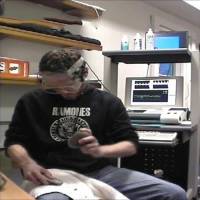
Research by the University of Liverpool has found that the same brain activity is used for language production and making complex tools, supporting the theory that they evolved at the same time. Researchers from the University tested the brain activity of 11 expert stone tool makers (flint knappers) as they undertook a stone-making task and a standard language test.
Health - Life Sciences - 30.08.2013
Why time changes are a struggle
New research in mice reveals why the body is so slow to recover from jet-lag and identifies a target for the development of drugs that could help us adjust more quickly to changes in time zone. The researchers at Oxford University and F. Hoffmann La Roche have identified a mechanism that limits the ability of the body clock to adjust to changes in patterns of light and dark.
Life Sciences - Health - 28.08.2013
The brain system that stops worriers just going with the flow Chronic worriers are more likely to use analytical thought processes when making decisions rather than relying on 'gut instincts', according to a new University of Sussex study published this week. A team of psychologists reviewed the body of research in recent years that has identified two systems used by the brain for processing information.
Life Sciences - Health - 28.08.2013
Scientist to study new ways to tackle Alzheimer’s
A project that will investigate new ways to protect brain cells from damage in Alzheimer's will begin this month thanks to an Alzheimer's Research UK grant. The one-year pilot project, led by Dr Nina Balthasar at the University of Bristol, could bring new treatments for Alzheimer's a step closer. Dr Balthasar and her team are setting out to understand how a protein called tau, which is known to build up and tangle inside brain cells in Alzheimer's disease, interferes with the cells' energy-producing 'power stations', called mitochondria.
Life Sciences - Health - 27.08.2013
Computer test reveals high prevalence of attention disorders in stroke patients
A majority of stroke patients have problems paying attention and could be helped by brain-training computer games, a new study suggests. Researchers at Imperial College London found that problems such as difficulty filtering out distractions, difficulty following instructions, and reduced alertness are much more common in stroke patients than doctors realise.
Health - Chemistry - 22.08.2013
’Better detection’ for Alzheimer’s and cancers
A new chemical discovery will lead to better monitoring and treatment for cancers and degenerative diseases, according to latest research by scientists. In a paper published today in ChemComm an international team of researchers from the Universities of Birmingham, Bath and the East China University of Science and Technology in Shanghai outline a new approach to detecting 'reactive oxygen' using fluorescence.
Life Sciences - Health - 22.08.2013
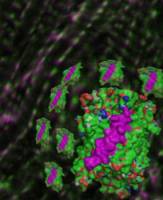
How the tiny fruit fly could help science get to the heart of human genetics A new study by scientists at the University of Sussex shows how the tiny fruit fly could be used to better understand the genetic processes at work in humans, such as those governing heart function. The study, published today (22 August 2013) in the journal Science Express , 1 describes how, studying fruit flies ( Drosophila ), researchers have been able to determine the genetic function of a peptide that regulates a calcium pump (called SERCA) in the heart muscles of the fruit fly.
Health - Life Sciences - 21.08.2013
Study suggests chlamydia infection rates have changed over time but remains common among young women
A study exploring the frequency of chlamydia antibodies among young women - a marker for current and past infection - found this increased between 1993 and 2002, and then declined from 2007 to 2010. The first ever English population-based study of chlamydia antibodies, led by researchers from the University of Bristol , Public Health England and Imperial College , published today [21 Aug] in PLOS ONE .
Life Sciences - Health - 21.08.2013
Schizophrenia symptoms linked to faulty ’switch’ in brain
Scientists at The University of Nottingham have shown that psychotic symptoms experienced by people with schizophrenia could be caused by a faulty 'switch' within the brain. In a study published today in the leading journal Neuron , they have demonstrated that the severity of symptoms such as delusions and hallucinations which are typical in patients with the psychiatric disorder is caused by a disconnection between two important regions in the brain — the insula and the lateral frontal cortex.


