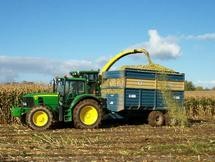
Farming maize. Photo: P Flannagan
Farms that aim for high food production using environmentally-friendly practices could be better for the environment than both organic and conventional farms. A study, led by Oxford University scientists, compared the environmental impact of different farming systems. The researchers found that 'integrated' farms that maximised crop yields whilst using environmentally-friendly techniques - such as crop rotation, organic fertilisers, over winter cover crops, and minimal use of pesticides - would use less energy and generate lower greenhouse gas emissions per unit of production than both organic and conventional farms. A report of the research is published in the journal Agricultural Systems . 'Farming in a way that's good for the environment doesn't have to mean accepting a dramatic drop in food production,' said Hanna Tuomisto, who led the research at Oxford University's Wildlife Conservation Research Unit (WildCRU). 'Our research suggests that integrated farming systems, which combine the best practices for producing high yields with low negative environmental impacts, can be more beneficial for the environment than either organic or conventional farming.' Professor David Macdonald of Oxford University's WildCRU, who directed the research, said: 'integrating the needs of food production and wildlife conservation is a major 21st Century challenge - humanity needs both, and it's only by taking account of all the costs and benefits that the best compromises can be found.' The research also found that possible alternative land uses should be factored in to any assessment of different farming systems.
TO READ THIS ARTICLE, CREATE YOUR ACCOUNT
And extend your reading, free of charge and with no commitment.