New light has been cast on dinosaur footprints
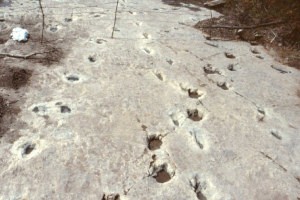
Terrain thought to be ruled by only the largest dinosaurs to inhabit the earth could have in fact been home to dozens of other creatures, ground-breaking research from The University of Manchester has found. Writing in the journal of the Royal Society Interface , Dr Peter Falkingham has discovered that dinosaurs only created lasting footprints if the soil conditions were perfect to do so - and entirely depending on the animal's weight. Dubbed the 'Goldilocks Effect' - as all conditions have to be 'just right' for a print to be created - this work could help to bring ancient environments to life, by showing how a great number of animals can walk over an area, but only a few leave behind tracks. The findings mean that hugely-significant prehistoric dinosaur track sites, such as Paluxy River in Texas, USA, or Fumanya, Spain could have been host to a much larger number of dinosaurs and other animals than the tracks themselves show. Dr Falkingham, from the University's School of Earth, Atmospheric and Environmental Sciences, led a team using detailed computer modelling to recreate the process of large dinosaurs making footprints in different types of mud. The team incorporated scientists from a range of disciplines, including vertebrate palaeontologist Dr Phil Manning and Geotechnical engineer Dr Lee Margetts, both from The University of Manchester, and biomechanicist Dr Karl Bates (University of Liverpool). By using computer modelling to simulate dinosaurs making tracks, the scientists were able for the first time to run dozens of simulations in order to systematically change the conditions of the mud.
TO READ THIS ARTICLE, CREATE YOUR ACCOUNT
And extend your reading, free of charge and with no commitment.