


news 2011
Life Sciences
Results 101 - 120 of 241.
Health - Life Sciences - 15.07.2011
Stem cell study reveals complexity of glue molecule’s role in cancer
A protein molecule that 'glues' cells together and so has a key role in cancer is also responsible for many other important functions of cells, a new study has found. University of Manchester scientists say their unexpected findings are important because they could lead to a better understanding of why some cancer cells are difficult to eradicate in patients and lead to new cancer treatments.
Life Sciences - Health - 12.07.2011
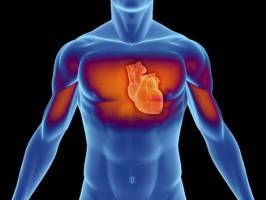
Oxford University researchers have identified a protein that can direct stem cells to become either new heart muscle or blood vessels. The research, which was carried out in zebrafish, offers insight into how it might be possible one day to generate tissues to repair the human heart after damage inflicted by a heart attack.
Life Sciences - Health - 11.07.2011

Adapted from a news release issued by BBSRC 11 July 2011 The genome of the potato has been sequenced in a collaborative international research study involving scientists from Imperial College London, published today in the journal Nature . The potato is the first major UK crop plant to be fully sequenced.
Health - Life Sciences - 11.07.2011
A series of genetic variants associated with the joint disorder ankylosing spondylitis has been identified in a study involving Oxford University researchers. The findings provide new clues as to how the condition may be treated in the future. The study, a collaboration between the Australo-Anglo-American Spondyloarthritis Consortium and the Wellcome Trust Case Control Consortium, also provides one of the first confirmed examples of gene-gene interaction seen in humans.
Health - Life Sciences - 10.07.2011
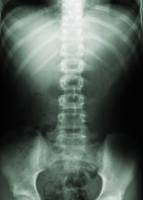
Researchers are one step closer to understanding how an individual's genetic make-up predisposes them to Ankylosing Spondylitis (AS), a common auto-immune arthritis which causes pain and stiffness of the spine, and in serious cases, progressive fusion of the vertebrae and other affected joints. The study is published today.
Life Sciences - Environment - 07.07.2011

An international team of scientists has discovered that the female ancestor of all living polar bears was a brown bear that lived in present-day Britain and Ireland during the last ice age - 20,000 to 50,000 years ago. Changes in climate affecting the North Atlantic ice sheet probably gave rise to periodic overlaps in bear habitats.
Health - Life Sciences - 07.07.2011
Sunburn study could lead to new pain relief
Researchers at King's College London have found a molecule in the body which controls sensitivity to pain from UVB irradiation, identifying it as a new target for medicines to treat pain caused by other common inflammatory conditions such as arthritis. The molecule, called CXCL5, is part of a family of proteins called chemokines, which recruit inflammatory immune cells to the injured tissue, triggering pain and tenderness.
Life Sciences - Health - 06.07.2011

Scientists at the University of Bristol's Musculoskeletal Research Unit are investigating why people with very dense bones are more likely to develop the painful condition of osteoarthritis. Sarah Baker, specialist registrar at Southmead Hospital has been awarded a clinical PhD studentship of £164,000 over three years from Arthritis Research UK.
Life Sciences - Earth Sciences - 06.07.2011

Pterosaurs, flying reptiles from the time of the dinosaurs, were not driven to extinction by the birds, but in fact they continued to diversify and innovate for millions of years afterwards. A new study by Katy Prentice, done as part of her undergraduate degree (MSci in Palaeontology and Evolution) at the University of Bristol, shows that the pterosaurs evolved in a most unusual way, becoming more and more specialised through their 160 million years on Earth.
Chemistry - Life Sciences - 01.07.2011

An international collaboration led by researchers at The University of Manchester has for the first time revealed chemical traces of pigments in bird, fish and squid fossils, some over 100 million years old. Publishing their findings in Science , the researchers have been able to show a remarkable relationship between copper and pigment within exceptionally preserved feathers and other soft tissues.
Health - Life Sciences - 01.07.2011
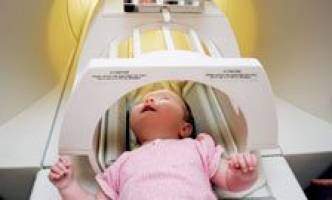
In a study published in the journal Current Biology, researchers from Institute of Psychiatry (IoP) King's College London have found that babies as young as three months are able to tune in to the sound of our voices and perceive different emotions, even when they are asleep. Using functional magnetic resonance imaging (fMRI), researchers took brain images of sleeping babies and discovered that special areas in the brain which process sound are more sensitive than previously thought.
Health - Life Sciences - 29.06.2011
Supplement burns muscle fat, improves exercise performance
A new study has shown for the first time that taking a particular food supplement increases muscle carnitine content and reduces muscle carbohydrate use, while increasing fat used for energy production during exercise. Researchers at The University of Nottingham's School of Biomedical Sciences found that recreational athletes who took a dietary supplement containing L-carnitine — a nutrient found in common food sources — combined with carbohydrates showed several metabolism benefits during low- and high-intensity exercise and improved exercise performance.
Health - Life Sciences - 27.06.2011
Living antibiotic effective against Salmonella
Scientists have tested a predatory bacterium — Bdellovibrio — against Salmonella in the guts of live chickens. They found that it significantly reduced the numbers of Salmonella bacteria and, importantly, showed that Bdellovibrio are safe when ingested. The research, carried out by Professor Liz Sockett's team in the School of Biology at The University of Nottingham together with Robert Atterbury and Professor Paul Barrow in The University of Nottingham's School of Veterinary Medicine and Science was funded by the Biotechnology and Biological Sciences Research Council (BBSRC).
Life Sciences - Health - 24.06.2011
Patients with a range of common inflammatory diseases that also have genetic variations leading to low levels of a particular enzyme in their bodies are at greater risk of suffering side-effects from the widely-used drug azathioprine. Researchers at The University of Manchester and the National Institute for Health Research's Manchester Biomedical Research Centre (BRC) recruited 333 patients and carried out genetic screening tests on half of them to see if they could identify those with variants in the gene that makes the enzyme thiopurine methyltransferase.
Life Sciences - Health - 23.06.2011
Sound, vision & hearing loss
Science | Health Cath Harris | 23 Jun 11 The mechanisms used by the brain to distinguish contrasting sounds may be similar to those used to visually pick out a face in the crowd. Scientists at Oxford University's Department of Physiology, Anatomy and Genetics are studying the ways in which sound is represented in the brain and their latest research, published in the journal Neuron , looks at how the brain's nerve cells respond to sounds heard under different conditions.
Life Sciences - Chemistry - 23.06.2011

Adapted from a press release issued by Diamond Light Source 23 June 2011 An international team of scientists has successfully solved the complex three dimensional structure of the human Histamine H1 receptor protein. This molecule triggers itches, rashes or swelling in the one out of every four people who suffer with hayfever or other allergic reactions to food or pets.
Life Sciences - Health - 21.06.2011
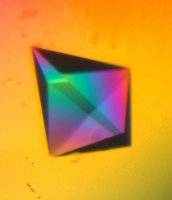
Scientists have developed a new method to make proteins form crystals using 'smart materials' that remember the shape and characteristics of the molecule. The technique, reported today in Proceedings of the National Academy of Science , should assist research into new medicines by helping scientists work out the structure of drug targets.
Life Sciences - Environment - 09.06.2011
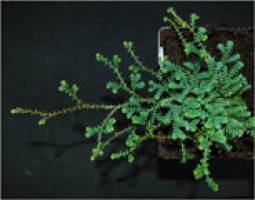
Controlling water loss is an important ability for modern land plants as it helps them thrive in changing environments. New research from the University of Bristol, published today in the journal Current Biology, shows that water conserving innovations occurred very early in plants? evolutionary history.
Health - Life Sciences - 09.06.2011
Protein presence could help diagnose cancer
Cancers of the gut, stomach and pancreas could be detected much sooner with a simple urine test, research suggests. University researchers have identified key proteins in the urine of patients with advanced cancers. The findings could help the detection of these cancers in people who have not yet started to show symptoms of the disease.
Life Sciences - Environment - 09.06.2011
Parrots and crows show their inventive side
A team of researchers from the Universities of Oxford and Vienna have tested the technical skills and innovation abilities of two of the most intelligent birds known, kea parrots and New Caledonian crows. New Caledonian crows regularly use and manufacture complex tools in the wild to extract food, feats that they repeat in the laboratory.


