


news 2011
Categories
Years
2009 | 2010 | 2011 | 2012 | 2013 | 2014 | 2015 | 2016 | 2017 | 2018 | 2019 | 2020 | 2021 | 2022 | 2023 | 2024 | 2025 | 2026 |
2009 | 2010 | 2011 | 2012 | 2013 | 2014 | 2015 | 2016 | 2017 | 2018 | 2019 | 2020 | 2021 | 2022 | 2023 | 2024 | 2025 | 2026 |
Results 281 - 300 of 597.
Environment - 22.06.2011
Gyrfalcons make icebergs home
Science Pete Wilton | 22 Jun 11 Back in World War II there was a clever idea to use icebergs as floating aircraft carriers, but now we know birds of prey got their first. A recent study that tracked the seasonal movements of 48 gyrfalcons with radio transmitters showed that some birds spent most of the winter over the ocean, probably using sea ice and icebergs as floating bases to hunt from.
Linguistics & Literature - Computer Science - 22.06.2011
Database explains strange survival of irregular verbs
An historical study of the development of irregular verbs in the hundreds of Romance languages including French, Spanish, Italian, Portuguese, Romanian and Catalan has revealed how these structures survive. Experts have also examined why they are learned by successive generations despite 'making no sense' or, apparently, having any function in the language.
Environment - 21.06.2011
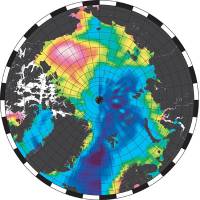
Scientists at UCL have produced the most extensive map of Arctic sea-ice thickness yet using just two months' worth of data from the European Space Agency's ice mission, CryoSat-2. Data from the satellite has also helped them create an updated map of ocean circulation in the Arctic, and a topographical relief map of Antarctica.
Health - Chemistry - 21.06.2011
Breakthrough in the search for new treatments for MS
PA 198/11 Scientists at The University of Nottingham have discovered a molecular mechanism which could bring about the development of new treatments for Multiple Sclerosis (MS) — a chronic inflammatory disease of the central nervous system. Dr Bruno Gran, a Clinical Associate Professor in the Division of Clinical Neurology in the School of Clinical Sciences, working in collaboration with Professor Paul Moynagh from the National University of Ireland, Maynooth, has discovered a synthetic chemical compound which inhibits the pro-inflammatory signals produced by the immune system in MS.
Life Sciences - Health - 21.06.2011
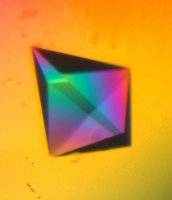
Scientists have developed a new method to make proteins form crystals using 'smart materials' that remember the shape and characteristics of the molecule. The technique, reported today in Proceedings of the National Academy of Science , should assist research into new medicines by helping scientists work out the structure of drug targets.
Environment - 21.06.2011
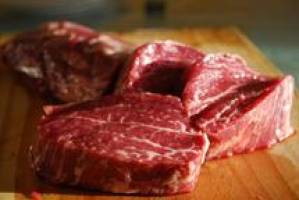
Meat grown using tissue engineering techniques, so-called 'cultured meat', would generate up to 96% lower greenhouse gas emissions than conventionally produced meat, according to a new study. The analysis, carried out by scientists from Oxford University and the University of Amsterdam, also estimates that cultured meat would require 7-45% less energy to produce than the same volume of pork, sheep or beef.
Health - Economics - 21.06.2011
Older people less likely to fall if they pay attention to their feet
Just as grey hair and wrinkles are widely accepted as a natural part of ageing, so is an increased risk of falling, which can happen for many reasons and with devastating consequences, including increased likelihood of injury, hospitalisation and even death. A new research study by human movement scientists at the University of Birmingham is seeking to reduce the risk to older people of falling, by investigating the relationship between gaze direction and walking behaviour.
Physics - 20.06.2011
Most elliptical galaxies are 'like spirals'
The majority of 'elliptical' galaxies are not spherical but disc-shaped, resembling spiral galaxies such as our own Milky Way with the gas and dust removed, new observations suggest. The results come from Atlas3D, a survey of all 260 early-type ('elliptical' and 'lenticular') galaxies in a well-defined volume of the nearby universe.
Mathematics - 19.06.2011
10% of middle-aged Europeans are on antidepressants
New research from the University of Warwick and the IZA Institute in Bonn shows that 10% of middle-aged Europeans took antidepressants in 2010. The researchers looked in detail at the lives of a randomly selected sample of nearly 30,000 Europeans. The study covered 27 countries. Andrew Oswald, an economics professor at the University of Warwick, and co-author of the study, described the results as concerning, he said: "Antidepressants are a relatively new kind of commodity.
Physics - Earth Sciences - 16.06.2011

by Simon Levey 17 June 2011 Research from the UK and Japan indicates that subatomic particles called neutrinos may have a previously unseen form of identity-shifting property. Announced this week, these results could one day help scientists explain why the universe contains matter, but very little antimatter.
Administration - Economics - 16.06.2011

A major study reveals for the first time the number of children being brought up by a relative instead of their mother or father. 'Spotlight on Kinship Care' is the first study to quantify the number of children being looked after by family members in England, Scotland, Wales and Northern Ireland and is based on data from the 2001 Census.
Pedagogy - Law - 16.06.2011

Proposed legislation to introduce and enforce a presumption of shared parenting time for separating couples is not in the interests of children, according to a briefing paper published by the Department of Social Policy and Intervention at the University of Oxford. The term 'shared parenting' has no legal status but generally refers to a child spending an equal amount of time with each parent.
Physics - Earth Sciences - 15.06.2011

A step closer to solving one of the biggest mysteries in fundamental physics? Experts may be on the cusp of an important breakthrough in the study of neutrinos following the exciting results released today (15 June 2011) of an international T2K neutrino experiment in Japan involving the University of Sheffield.
Physics - Earth Sciences - 15.06.2011
A step closer to solving one of the biggest mysteries in fundamental physics?
Where did all the matter in the universe come from? This is one of the biggest mysteries in fundamental physics and exciting results released from the international T2K neutrino experiment in Japan could be an important step towards resolving this puzzle. The T2K neutrino experiment has been conducted by a multinational team and the University of Liverpool's Professor Christos Touramanis from the Department of Physics has project managed the UK team.
Physics - Chemistry - 14.06.2011
Nanotubes pose health risk, study shows
Tiny fibres used to strengthen items such as bike frames and hockey sticks could pose risks to workers who make them. Certain types of carbon nanotubes - cylindrical molecules about one-thousandth of the width of a human hair - could cause cancer in the lining of the lung, University research shows.
Health - Administration - 13.06.2011
Group therapy helps MS sufferers cope with depression, study finds
PA 184/11 Offering Multiple Sclerosis sufferers emotional support through group therapy sessions could improve their quality of life and save the NHS almost £500 per patient, a study at The University of Nottingham has discovered. Researchers are now planning a larger multi-centre study into the issue to establish whether psychological therapy should be incorporated into the MS services currently provided by the NHS.
Psychology - Health - 11.06.2011

University of Manchester researchers have for the first time been able to watch what happens to the brain as it loses consciousness. Using sophisticated imaging equipment they have constructed a 3-D movie of the brain as it changes while an anaesthetic drug takes effect.
Health - 10.06.2011
Heart drug 'safe for kidney patients'
Health Jonathan Wood | 10 Jun 11 The full results of a trial show that people with chronic kidney disease can reduce their heart risk by taking a combination drug that lowers levels of 'bad' cholesterol. Taking cholesterol-lowering drugs such as statins to combat heart disease is pretty standard in people without kidney problems.
Mathematics - Health - 10.06.2011

by Simon Levey 10 June 2011 A recent ranking of university mathematics departments has listed Imperial College London as having the most influential mathematics research of any institution in Europe. Academic publishers Thomson-Reuters created the new chart by establishing how much the research findings of scientists in the world's top 200 institutions influenced research by others outside of that institution.
Life Sciences - Environment - 09.06.2011
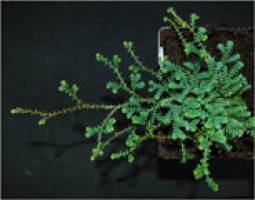
Controlling water loss is an important ability for modern land plants as it helps them thrive in changing environments. New research from the University of Bristol, published today in the journal Current Biology, shows that water conserving innovations occurred very early in plants? evolutionary history.


