


news 2011
Categories
Years
2009 | 2010 | 2011 | 2012 | 2013 | 2014 | 2015 | 2016 | 2017 | 2018 | 2019 | 2020 | 2021 | 2022 | 2023 | 2024 | 2025 | 2026 |
2009 | 2010 | 2011 | 2012 | 2013 | 2014 | 2015 | 2016 | 2017 | 2018 | 2019 | 2020 | 2021 | 2022 | 2023 | 2024 | 2025 | 2026 |
Results 261 - 280 of 597.
Health - Life Sciences - 01.07.2011
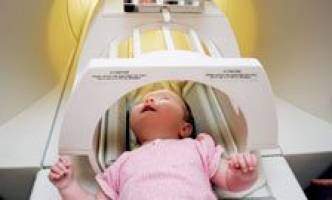
In a study published in the journal Current Biology, researchers from Institute of Psychiatry (IoP) King's College London have found that babies as young as three months are able to tune in to the sound of our voices and perceive different emotions, even when they are asleep. Using functional magnetic resonance imaging (fMRI), researchers took brain images of sleeping babies and discovered that special areas in the brain which process sound are more sensitive than previously thought.
Economics - Health - 30.06.2011
TV food advertising increases children’s preference for unhealthy foods
Researchers at the University of Liverpool have found that children who watch adverts for unhealthy food on television are more likely to want to eat high-fat and high-sugar foods. The study by researchers in the Institute of Psychology, Health and Society examined the food preferences of a group of 281 children aged six to 13 years old from the North West of England.
Health - Environment - 30.06.2011
Farm animal disease to increase with climate change
Scientists at the University of Liverpool have shown that recent climate change could have caused a serious infectious disease in farm animals to spread through Europe. Researchers looked at changes in the behaviour of bluetongue - a viral disease of cattle and sheep - from the 1960s to the present day, as well as what could happen to the transmission of the virus 40 years into the future.
Physics - 30.06.2011
Ancient supermassive black hole found
University scientists have helped discover a supermassive black hole, the furthest away to be seen. The black hole appears to astronomers as a luminous quasar, or swirling disc of gas sitting at the centre of a distant galaxy. As the gas falls into the black hole, it gets hot and emits radiation, in the form of light.
Physics - Chemistry - 30.06.2011

by Simon Levey Thursday 30 June 2011 An international team of astronomers has announced the discovery of the most distant quasar yet seen. The quasar is an extremely bright source of light visible at infrared wavelengths, emitted as gas falls into a very massive black hole. The scientists have named it ULAS J1120+0641.
Physics - History & Archeology - 29.06.2011
Astronomers discover Universe’s most distant quasar
PA 201/11 A scientist at The University of Nottingham is part of a team of astronomers which has discovered the most distant quasar to date — a development that could help further our understanding of a universe still in its infancy following the Big Bang. This brilliant and rare beacon, powered by a black hole with a mass two billion times that of the Sun, is by far the brightest object yet found from a time when the Universe was less than 800 million years old — just a fraction of its current age.
Health - Life Sciences - 29.06.2011
Supplement burns muscle fat, improves exercise performance
A new study has shown for the first time that taking a particular food supplement increases muscle carnitine content and reduces muscle carbohydrate use, while increasing fat used for energy production during exercise. Researchers at The University of Nottingham's School of Biomedical Sciences found that recreational athletes who took a dietary supplement containing L-carnitine — a nutrient found in common food sources — combined with carbohydrates showed several metabolism benefits during low- and high-intensity exercise and improved exercise performance.
Physics - 29.06.2011

An international team of scientists, including Chris Coath from the University of Bristol, have measured oxygen isotopes in solar wind, captured by NASA's Genesis mission, to infer the isotopic composition of the Sun, and, by inference, the solar system as a whole. Their results are published in Science.
Chemistry - Linguistics & Literature - 28.06.2011
Archaeological dig uncovers artefacts
Scientific equipment belonging to an Enlightenment figure has been found in an archaeological dig at the University. The eighteenth-century items, including laboratory apparatus and brightly coloured chemicals, almost certainly were the property of Joseph Black. Black was Professor of Chemistry at Edinburgh and is best known for his discovery of carbon dioxide gas.
Economics - Physics - 28.06.2011
Wars steadily increase for over a century, fed by more borders and cheaper conflict
New research by the University of Warwick and Humboldt University shows that the frequency of wars between states increased steadily from 1870 to 2001 by 2% a year on average. The research argues that conflict is being fed by economic growth and the proliferation of new borders.
Health - Life Sciences - 27.06.2011
Living antibiotic effective against Salmonella
Scientists have tested a predatory bacterium — Bdellovibrio — against Salmonella in the guts of live chickens. They found that it significantly reduced the numbers of Salmonella bacteria and, importantly, showed that Bdellovibrio are safe when ingested. The research, carried out by Professor Liz Sockett's team in the School of Biology at The University of Nottingham together with Robert Atterbury and Professor Paul Barrow in The University of Nottingham's School of Veterinary Medicine and Science was funded by the Biotechnology and Biological Sciences Research Council (BBSRC).
Physics - 27.06.2011

Scientists involved in the MINOS experiment, including six members from UCL Physics and Astronmy, have announced the results from a search for a rare phenomenon: the transformation of muon neutrinos into electron neutrinos. The results of these two experiments could have implications for our understanding of the role that neutrinos may have played in the evolution of the universe.
Health - Psychology - 27.06.2011
Premature babies risk mental health problems, say experts
Premature or low birthweight babies are more than three times more likely to suffer from anxiety and mood disorders in adolescence than full-term infants, according to psychologists at the University of Birmingham. Professor Stephen Wood, working with co-investigators at the University of Melbourne in Australia, conducted a meta-analysis of ten studies into mental health outcomes in children born prematurely.
Health - 26.06.2011
350 million adults have diabetes: study reveals the scale of global epidemic
A major international study collating and analysing worldwide data on diabetes since 1980 has found that the number of adults with the disease reached 347 million in 2008, more than double the number in 1980. The research, published today in The Lancet , reveals that the prevalence of diabetes has risen or at best remained unchanged in virtually every part of the world over the last three decades.
Physics - Computer Science - 24.06.2011

An international research group led by scientists from the University of Bristol, UK, and the Universities of Osaka and Hokkaido, Japan, has demonstrated a fundamental building block for quantum computing that could soon be employed in a range of quantum technologies. Professor Jeremy O'Brien, Director of the University of Bristol's Centre for Quantum Photonics , and his Japanese colleagues have demonstrated a quantum logic gate acting on four particles of light - photons.
Physics - 24.06.2011
Galaxy clash sheds light on Universe
Edinburgh astronomers are unpicking the debris of a massive intergalactic collision. Scientists hope the study will enable fresh understanding of our Universe. Researchers are using very powerful telescopes, including the Hubble, to study the aftermath of the collision, which took place over the past 350 million years.
Life Sciences - Health - 24.06.2011
Patients with a range of common inflammatory diseases that also have genetic variations leading to low levels of a particular enzyme in their bodies are at greater risk of suffering side-effects from the widely-used drug azathioprine. Researchers at The University of Manchester and the National Institute for Health Research's Manchester Biomedical Research Centre (BRC) recruited 333 patients and carried out genetic screening tests on half of them to see if they could identify those with variants in the gene that makes the enzyme thiopurine methyltransferase.
Life Sciences - Health - 23.06.2011
Sound, vision & hearing loss
Science | Health Cath Harris | 23 Jun 11 The mechanisms used by the brain to distinguish contrasting sounds may be similar to those used to visually pick out a face in the crowd. Scientists at Oxford University's Department of Physiology, Anatomy and Genetics are studying the ways in which sound is represented in the brain and their latest research, published in the journal Neuron , looks at how the brain's nerve cells respond to sounds heard under different conditions.
Life Sciences - Chemistry - 23.06.2011

Adapted from a press release issued by Diamond Light Source 23 June 2011 An international team of scientists has successfully solved the complex three dimensional structure of the human Histamine H1 receptor protein. This molecule triggers itches, rashes or swelling in the one out of every four people who suffer with hayfever or other allergic reactions to food or pets.
Health - 23.06.2011
High sugar and fat diet ’may increase cell damage during sleep’
Continuing sleepless nights can increase the risk of heart disease, stroke and even death for sufferers of Obstructive Sleep Apnoea (OSA) who regularly stop breathing during the night for brief periods of time. A new research study by scientists at the University of Birmingham is seeking to establish the effects of a high sugar and fat intake on OSA and its consequences.


