


news 2011
Categories
Years
2009 | 2010 | 2011 | 2012 | 2013 | 2014 | 2015 | 2016 | 2017 | 2018 | 2019 | 2020 | 2021 | 2022 | 2023 | 2024 | 2025 | 2026 |
2009 | 2010 | 2011 | 2012 | 2013 | 2014 | 2015 | 2016 | 2017 | 2018 | 2019 | 2020 | 2021 | 2022 | 2023 | 2024 | 2025 | 2026 |
Results 181 - 200 of 597.
Physics - Electroengineering - 31.08.2011

Internet connection speeds could be tens of times faster than they currently are, thanks to research by University of Manchester scientists using wonder material graphene. A collaboration between the Universities of Manchester and Cambridge, which includes scientists Andre Geim and Kostya Novoselov, has discovered a crucial recipe for improving characteristics of graphene devices for use as photodetectors in future high-speed optical.
Health - Life Sciences - 30.08.2011

An international team of researchers has identified six new genetic variants associated with type-2 diabetes in South Asians. The findings, published , give scientists new leads in the search for diagnostic markers and drug targets to prevent and treat this major disease. People of South Asian ancestry are up to four times more likely than Europeans to develop type 2 diabetes, which is a major risk factor for heart disease and stroke.
Life Sciences - Health - 30.08.2011
Scientists uncover gene network responsible for repair of the central nervous system of the fruit fly
Glia that enwrap axons in the Drosophila larval ventral nerve cord. Credit: Kentaro Kato, University of Birmingham A gene network that controls repair to the central nervous system (CNS) after injury has been discovered in the fruit fly, Drosophila, by scientists at the University of Birmingham. This breakthrough may help to aid understanding of cell manipulation techniques necessary to repair damage to the human CNS, according to research published today (30 August) in the journal PLoS Biology.
Health - History & Archeology - 30.08.2011
Lack of comparative research into acne treatments could limit their effectiveness
Acne is a chronic disease which can be painful and disfiguring. Many treatments are publicised as cures for acne, often at considerable expense to the sufferer and the healthcare system. A new clinical review by experts at The University of Nottingham says there is very little research evidence to show which treatments work best and whether expensive treatments are any better than traditional ones.
Physics - 26.08.2011

Research has resolved a 40 year old problem with observations of turbulence in the solar wind first made by the probe Mariner Five. The research resolves an issue with what is by far the largest and most interesting natural turbulence lab accessible to researchers today. Our current understanding tells us that turbulence in the solar wind should not be affected by the speed and direction of travel of that solar wind.
Physics - 26.08.2011

A once-massive star that's been transformed into a small planet made of diamond: that is what astronomers think they've found in the Milky Way. The researchers first detected an unusual star called a pulsar using the Parkes radio telescope of the Australian Commonwealth Scientific and Industrial Research Organisation (CSIRO) and followed up their discovery with the Lovell radio telescope, based at Jodrell Bank Observatory in Cheshire, and one of the Keck telescopes in Hawaii.
Health - 24.08.2011
University research shapes new NICE guidelines on blood pressure
High blood pressure should be diagnosed using ambulatory blood pressure monitoring (repeated measurements throughout a 24-hour period)), which is not only more clinically accurate than clinic-based measurements but is better value for money, according to University of Birmingham research published online today in the Lancet .
Health - Life Sciences - 24.08.2011
Breastfeeding and eczema research
A worldwide study led by King's researchers has found no clear evidence that exclusive breastfeeding for four months or longer protects against childhood eczema. The findings, published today in the British Journal of Dermatology , have prompted the researchers to call for a review of the current UK breastfeeding guidelines with regards to eczema.
Physics - Health - 23.08.2011
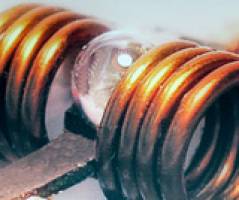
New research offers breakthrough in nanotechnology Experts from the University of Sheffield have shed new light on the application of Nuclear Magnetic Resonance (NMR) on a nano scale, paving the way for improved medical imaging techniques, computing, tele, data storage and photovoltaics.
Environment - History & Archeology - 23.08.2011

Two ancient types of harvestmen, or 'daddy long legs,' which skittered around forests more than 300 million years ago, are revealed in new three-dimensional virtual fossil models published today . An international team, led by researchers from Imperial College London, have created 3D models of two fossilised species of harvestmen, from the Dyspnoi and Eupnoi suborders.
Health - 22.08.2011
Research set to improve processes for NHS drug approvals
Research set to improve processes for NHS drug approvals Researchers from the University of Sheffield and the University of Liverpool have identified ways in which the process of approving drugs for use on the NHS can be improved. The study, entitled The NICE Single Technology Appraisal Process: Lessons from the first four years , was co-authored by Eva Kaltenthaler and Diana Papaioannou from the University of Sheffield and Angela Boland and Rumona Dickson of the University of Liverpool.
Environment - Economics - 22.08.2011
Shell Shock! Damage to marine ecosystems revealed as CO2 emissions continue to rise
A team of marine experts is helping predict the future of coastal ecosystems after discovering that warming temperatures may exacerbate ocean acidification. In a paper published in full by Nature Climate Change magazine this month, the scientists warn that rapidly deteriorating Mediterranean coastal ecosystems are further threatened by increasing CO2 levels.
Health - 19.08.2011

Babies of mothers with a higher pre-pregnancy body mass index (BMI) are fatter and have more fat in their liver, a study published in September's issue of the journal Pediatric Research has found. The researchers from Imperial College London say that the effect of a mother's BMI on her child's development in the womb might put them on a trajectory towards lifelong metabolic health problems.
Health - Life Sciences - 19.08.2011
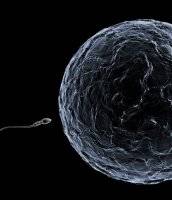
Researchers have uncovered exactly how a human egg captures an incoming sperm to begin the fertilisation process, in a new study published this week in the journal Science . The research identifies the sugar molecule that makes the outer coat of the egg 'sticky', which is vital for enabling the sperm and egg to bind together.
Health - 19.08.2011
Modified Ectsasy holds promise as potent blood cancer treatment
Scientists at the University of Birmingham have discovered a modified form of the drug MDMA - commonly known as Ecstasy - which has 100 times more cancer-busting properties than the popular recreational drug itself and which they hope may be able to be produced in a safe form to treat patients. Research results published online today (18 August 2011) in the journal Investigational New Drugs show significant success in 'redesigning the designer drug' for potential use as a cancer-killing agent in the treatment of leukaemia, lymphoma and myeloma.
Psychology - 17.08.2011
Seeing eye to eye is key to copying
Imitation may be the sincerest form of flattery but how do our brains decide when and who we should copy? Researchers from The University of Nottingham have found that the key may lie in an unspoken invitation communicated through eye. In a study published this week in the Journal of Neuroscience, a team of scientists from the University's School of Psychology show that eye seems to act as an invitation for mimicry, triggering mechanisms in the frontal region of the brain that control imitation.
Life Sciences - 17.08.2011
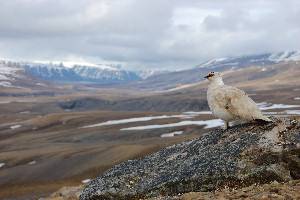
While the early bird might catch the worm, it's the quick bird that lands the ladies, according to new research into the running performance of an Arctic cousin of the grouse. Scientists studying rock ptarmigan on the Norwegian archipelago of Svalbard discovered a large difference in the running capabilities between the sexes, with the larger males able to run more efficiently and up to 50% faster than females.
Earth Sciences - 16.08.2011

Research finds Greenland glacier melting faster than expected A key glacier in Greenland is melting faster than previously expected, according to findings by a team of academics, including Edward Hanna from University of Sheffield. Hanna, from the University of Sheffield's Department of Geography, was part of a team of researchers that also included Sebastian Mernild from the Los Alamos Laboratory, USA, and Professor Niels Tvis Knudsen from the University of Aarhus, Denmark.
Life Sciences - Psychology - 16.08.2011
Speaking and listening share large part of brain infrastructure
When it comes to speech, the human brain has two main tasks: to articulate it and to understand it. For many years psychologists have debated whether these two functions use the same regions of the brain. Now scientists at the University of Glasgow, Radboud University and the Max Planck Institute for Psycholinguistics have found the answer.
Chemistry - Physics - 16.08.2011
Carbon nanotube structures changed by ’attack’ from within, researchers discover
A team of researchers has shown for the first time that chemical reactions at the nano-level which change the structure of carbon nanotubes can be sparked by an 'attack' from within. The discovery challenges previous scientific thinking that the internal surface of the hollow nanostructures is chemically unreactive, largely restricting their use to that of an inert container or a 'nano-reactor' inside which other chemical reactions can take place.


