


wire
Astronomy & Space
Results 751 - 800 of 1015.
Astronomy & Space - Physics - 20.08.2015
Analysis: How did Jupiter and Saturn form? The answer may lie with the humble pebble
Analysis: How did Jupiter and Saturn form? The answer may lie with the humble pebble By Dr Jillian Scudder , Postdoctoral Research Fellow in Astrophysics at the University of Sussex After many decades of exploring the solar system, we still have much to learn about our closest celestial neighbours.
Astronomy & Space - Physics - 17.08.2015
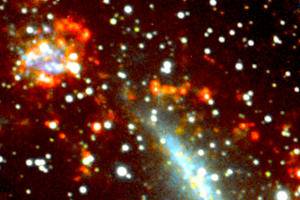
A spectacular collision between galaxies has been spotted near the Milky Way. Two small star systems are slamming into each other, producing a colourful firework display. Discovered by academics from the University of Manchester and the University of Hong Kong, the so-called 'bull's-eye' collision is happening just 30 million light years away from Earth, in a relatively nearby galaxy.
Physics - Astronomy & Space - 10.08.2015
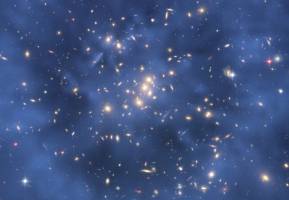
For decades Imperial scientists have been at the forefront of the hunt for dark matter - which continues apace with a series of bold new experiments.
Astronomy & Space - Physics - 30.07.2015
Researchers from Glasgow and Pune share a place in the Sun
Astronomers from Glasgow in Scotland and Pune in India are working together to study eruptions on the Sun, following the renewal of the partnership agreement between the University of Glasgow and the Indian Institute of Science Education and Research in Pune (IISER-Pune).
Astronomy & Space - Mechanical Engineering - 29.07.2015
University alumna preserves Neil Armstrong’s spacesuit
Environment - Astronomy & Space - 20.07.2015
Cool summer of 2013 boosted Arctic sea ice
The volume of Arctic sea ice increased by a third after the summer of 2013 as unusually cool air temperatures prevented the ice from melting, according to University of Leeds and UCL scientists. This suggests that the ice pack in the Northern Hemisphere is more sensitive to changes in summer melting than it is to winter cooling, a finding which will help researchers predict future changes in its volume.
Astronomy & Space - Physics - 16.07.2015
Gaia satellite and amateur astronomers spot one in a billion star
The Gaia satellite has discovered a unique binary system where one star is 'eating' the other, but neither star has any hydrogen, the most common element in the Universe. The system could be an important tool for understanding how binary stars might explode at the end of their lives. It's a fascinating system - there's a lot to be learned from it Heather Campbell An international team of researchers, with the assistance of amateur astronomers, have discovered a unique binary star system: the first known such system where one star completely eclipses the other.
Astronomy & Space - Physics - 08.07.2015
Telescope could reveal atmospheres of Earth-like exoplanets
NASA's next orbiting telescope could tell us whether any exoplanets are habitable, according to a study by an Oxford University researcher. Exoplanets orbit a star other than the Sun, a stellar remnant, or a brown dwarf. Nearly 2000 have been discovered to date but we currently have very little information about what they are like.
Astronomy & Space - Physics - 08.07.2015
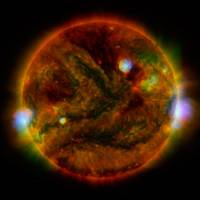
X-rays light up the surface of our Sun in a bouquet of colours in this new image containing data from NASA's Nuclear Spectroscopic Telescope Array, or NuSTAR.
Astronomy & Space - Life Sciences - 06.07.2015
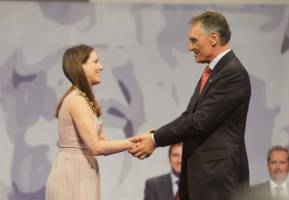
An Imperial engineer has received one of Portugal's highest honours in recognition of her contribution to science. Dr Zita Martins, from Imperial's Department of Earth Science and Engineering, was appointed an Officer of the Order of Saint James of the Sword (Oficial da Ordem Militar de Sant'Iago da Espada, OSE) for exceptional and outstanding merits in science.
Astronomy & Space - Life Sciences - 01.07.2015
"Map Of Life" predicts ET. (So where is he?)
The author of a new study of evolutionary convergence argues that the development of life on Earth is predictable, meaning that similar organisms should therefore have appeared on other, Earth-like planets by now.
Astronomy & Space - Health - 30.06.2015
Metaphor Map to give bird’s eye view on metaphorical usage over the centuries
English language metaphors are "as old as the hills" - or 13 centuries old at the very least - researchers at the School of Critical Studies at the University of Glasgow have found. They have just completed a three-year-long project which traces metaphor over the entire history of the English language, creating the first ever Metaphor Map resource which contains the thousands of metaphorical connections that the researchers have identified.
Astronomy & Space - Physics - 25.06.2015
Geordies get a taste of Soapbox Science
Geordies get a taste of Soapbox Science Geordie shoppers in Newcastle upon Tyne's city centre on Saturday (27 June) will hear Dr Kathy Romer , Reader in Astrophysics at the University of Sussex, tell them all about Dark Energy and why it might eventually tear them to pieces.
Astronomy & Space - Physics - 24.06.2015
Red dwarf burns off planet’s hydrogen giving it massive comet-like tail
A giant cloud escaping from a warm, Neptune-mass exoplanet is reported in this week's Nature. Depicted in an image by Mark Garlick and issued by the University of Warwick, it has been suggested that low-mass exoplanets orbiting close to their parent stars could have had some fraction of their atmospheres 'burnt off' by extreme irradiation from the star, but confident measures of such losses have been lacking until now.
Physics - Astronomy & Space - 05.06.2015
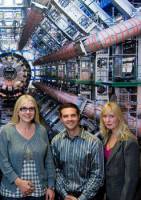
Sussex physicists restart particle-smashing with LHC Physicists from the University of Sussex are hoping to discover "new physics phenomena" after CERN's Large Hadron Collider (LHC) began smashing particles on Wednesday (3 June) with roughly twice the energy that was achieved during its first run. Professor Antonella De Santo is leading a team of Sussex particle physicists working on the ATLAS experiment , which involves powerful beams of particles called protons being accelerated around the LHC's 27km-long underground tunnel, then smashed together head-on at very high energies.
Astronomy & Space - Earth Sciences - 04.06.2015
SMILE space mission passes first hurdle
A space mission called SMILE (Solar Wind Magnetosphere Ionosphere Link Explorer) which is jointly led by UCL and the Chinese National Space Science Center has received the go-ahead for an initial study phase this summer by the European Space Agency (ESA) and the Chinese Academy of Sciences (CAS).
Astronomy & Space - Linguistics & Literature - 03.06.2015
Scientists reach for the Moon at GFT screening
University of Glasgow researchers have teamed up with the Glasgow Science Festival for a screening and discussion of the 2009 sci-fi movie Moon on Tuesday June 9.
Astronomy & Space - 31.05.2015
New tool could predict large solar storms more than 24 hours in advance
Large magnetic storms from the Sun, which affect technologies such as GPS and utility grids, could soon be predicted more than 24 hours in advance.
Astronomy & Space - Environment - 21.05.2015
Sudden onset of ice loss in Antarctica detected
A group of scientists, led by a team from the University of Bristol, has observed a sudden increase of ice loss in a previously stable region of Antarctica. Using measurements of the elevation of the Antarctic ice sheet made by a suite of satellites, the researchers found that the Southern Antarctic Peninsula showed no signs of change up to 2009.
Astronomy & Space - Physics - 19.05.2015
University plays key role in gravitational wave detector launch
A major research project to find evidence of the existence of gravitational waves is being officially launched today (Tuesday 19 May). The Advanced Laser Interferometer Gravitational-wave Observatories (aLIGO) project, based at the LIGO Hanford facility in Richland, Washington, USA, is an upgrade to an existing detector, which University of Glasgow researchers have played a major role in developing.
Astronomy & Space - Physics - 19.05.2015
Major research project to detect gravitational waves is underway
A research project to detect gravitational waves, minute ripples in the fabric of space and that were predicted by Einstein, was officially launched on May 19, 2015. The Advanced LIGO Project, a major upgrade in equipment that will increase the sensitivity of the Laser Interferometer Gravitational-wave Observatories instruments was opened at a ceremony on Tuesday, May 19, at the LIGO Hanford facility in Washington.
Astronomy & Space - 13.05.2015
Cause of galactic death: strangulation
Astronomers have partially solved an epic whodunit: what kills galaxies so that they can no longer produce new stars? This is the first conclusive evidence that galaxies are being strangled to death Yingjie Peng As murder mysteries go which occurs after galaxies are cut off from the raw materials needed to make new stars.
Event - Astronomy & Space - 12.05.2015
Raise a pint to science with the University of Glasgow
Astronomy & Space - Health - 07.05.2015
1950s 'maser’ technology making a comeback, say researchers
Exploring the galaxy and catching drug cheats in sports are some applications for a magnetic form of laser called a maser, say Imperial researchers.
Astronomy & Space - Physics - 05.05.2015
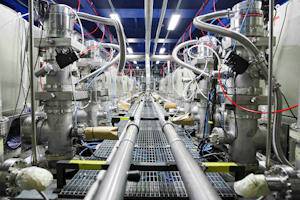
The University of Manchester is at the heart of a major world project to build an experiment which could detect neutrinos and help explain more about the origins of the Universe.
Health - Astronomy & Space - 01.05.2015
Two University of Birmingham scientists elected Royal Society Fellows
Two University of Birmingham professors have been elected Fellows of the Royal Society, a fellowship of many of the world's most distinguished scientists drawn from all areas of science, engineering and medicine.
Astronomy & Space - 30.04.2015
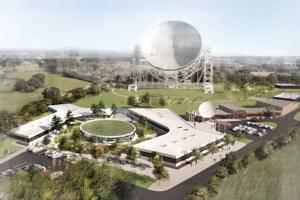
The headquarters of the world's biggest telescope will be at The University of Manchester's Jodrell Bank, it has been announced.
Astronomy & Space - Social Sciences - 13.04.2015
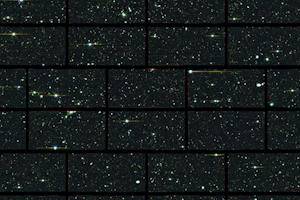
The largest single high definition map of mysterious dark matter has been produced, with the help of UK scientists. And it could reveal more about how galaxies formed in our Universe. Researchers at the Dark Energy Survey (DES), including several from the University of Manchester, have released the first in a series of dark matter maps of the cosmos.
Astronomy & Space - 02.04.2015
Citizen scientists sought for project to age the surface of Mars
A new web-based citizen science initiative is offering members of the public the chance to take part in research that could help to transform our understanding of the planet Mars.
Astronomy & Space - Earth Sciences - 26.03.2015

Observations of Jupiter made by Nasa's Hubble Space Telescope are being analysed by Dr Sarah Badman at Lancaster University.
Astronomy & Space - Physics - 26.03.2015
Huge cosmic collisions could help identify dark matter
We use cookies to ensure that we give you the best experience on our website. You can change your cookie settings at any time. Otherwise, we'll assume you're OK to continue. Huge cosmic collisions could help identify dark matter Dark matter interacts with itself even less than previously thought, narrowing down the options for what this mysterious substance might be, according to new research involving Durham University.
Astronomy & Space - 20.03.2015
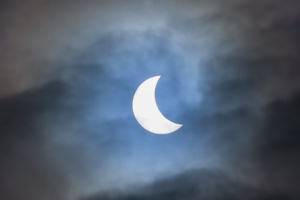
A spectacular eclipse was witnessed by millions of people in the UK as Stargazing LIVE broadcast a special edition of the show from Jodrell Bank.
Astronomy & Space - 19.03.2015
How to watch Friday’s eclipse
Astronomy & Space - 17.03.2015
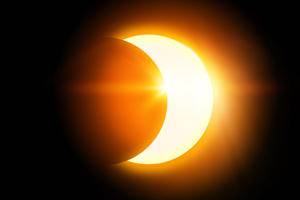
Star gazing LIVE comes to Jodrell Bank for the fifth time and this year is extra special as there will be a live broadcast of the solar eclipse. The programmes will be broadcast live from the Observatory Control Room and the Jodrell Bank Discovery Centre as usual, with Professor Brian Cox and comedian Dara O Briain presenting.
Astronomy & Space - 16.03.2015
Eclipse education event at University of Glasgow
Astronomy & Space - 11.03.2015
Explore galaxies far, far away at University of Sussex
Astronomy & Space - 06.03.2015
‘Habitable’ planet GJ 581d previously dismissed as noise probably does exist
A report published in Science has dismissed claims made last year that the first super-Earth planet discovered in the habitable zone of a distant star was 'stellar activity masquerading as planets'. Researchers are confident the planet named GJ 581d, identified in 2009 orbiting the star Gliese 581, does exist, and that last year's claim was triggered by inadequate analyses of the data.
Religions - Astronomy & Space - 04.03.2015

The Bishop of Manchester is set to open The Playing God Film Series on Thursday 5 March. This unique film series, which is the first of its kind, will focus on the roles of science and religion in movies.
Physics - Astronomy & Space - 03.03.2015
Astronomy & Space - 24.02.2015
World’s oldest printed books soon available for your viewing pleasure
A new exhibition, opening at the University of Glasgow's Hunterian Art Gallery this Friday will mark the end of a project to create a unique publicly accessible digital catalogue of over 1,000 of the world's oldest books.
Astronomy & Space - Electroengineering - 20.02.2015
Team are gearing up for their mission to the sun
A NASA rocket is expected to blast off from Cape Canaveral in October 2018, carrying a spacecraft that will fly closer to the sun than ever before. The spacecraft, known as Solar Orbiter, is aiming to answer questions about the heliosphere - a bubble of gas that fills the entire solar system. The gas is made of very hot plasma that comes off the upper atmosphere of the sun, known as the solar wind.
Religions - Astronomy & Space - 19.02.2015

A unique film series which is the first of its kind opens in Manchester next month focusing on the roles of science and religion in movies.
Astronomy & Space - 11.02.2015
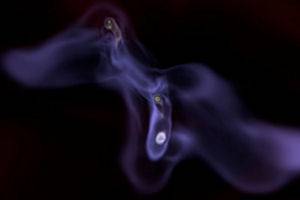
For the first time astronomers have caught a multiple-star system as it is created, and their observations are providing new insight into how such systems, and possibly the solar system, are formed. Amazing images taken from a series of telescopes on Earth show clouds of gas which are in the process of developing into stars.
Astronomy & Space - Physics - 10.02.2015
University of Glasgow lends support to solar super-telescope initiative
The University of Glasgow has joined a consortium of eight UK universities and associated businesses to build the cameras for a $344 million super-telescope in Hawaii.
Astronomy & Space - Computer Science - 09.02.2015
Bristol Is Open to hit the ground running
The city's first joint venture between Bristol City Council and the University of Bristol can begin thanks to approval at the city council's cabinet last week [Tuesday 3 February].
Astronomy & Space - Physics - 09.02.2015
World’s biggest solar telescope to be built with Sheffield expertise
o New telescope will provide unprecedented insight into physics of the surface and atmosphere of the Sun o A consortium of universities, including Sheffield, are building cameras for the 'super telescope' based in Hawaii o Sheffield scientists will help UK solar physics community access facility o Telescope will improve the forecasting of space weather hazards The world's biggest and most revolutionary solar telescope is being built with the help of researchers from the University of Sheffield.
Astronomy & Space - Physics - 05.02.2015
Planck reveals first stars were born late
New maps from the Planck satellite uncover the 'polarised' light from the early Universe across the entire sky, revealing that the first stars formed much later than previously thought. We would have needed additional, more exotic sources of energy to explain the history of reionisation George Efstathiou New maps of 'polarised' light in the young Universe have revealed that the first stars formed 100 million years later than earlier estimates.
Astronomy & Space - Health - 04.02.2015
Celestial bodies
Astronomy and oncology do not make obvious bedfellows, but the search for new stars and galaxies has surprising similarities with the search for cancerous cells.
Astronomy & Space - Physics - 21.01.2015
Death of a dynamo - a hard drive from space
Hidden magnetic messages contained within ancient meteorites are providing a unique window into the processes that shaped our solar system, and may give a sneak preview of the fate of the Earth's core as it continues to freeze.
Astronomy & Space - Physics - 21.01.2015
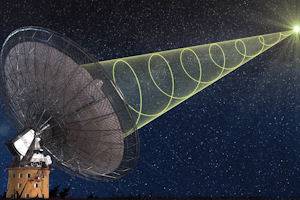
A team of astronomers using twelve telescopes from around the world, and in space, have for the first time captured a 'fast radio burst' happening live. The achievement will help scientists trap more bursts in the future, which could offer insight into the evolution of the universe. University of Manchester academics working from Jodrell Bank were members of the team, led by Emily Petroff from the Swinburne University of Technology in Melbourne, Australia, that captured the burst using the Parkes radio telescope located in eastern Australia.


