


wire
Astronomy & Space
Results 651 - 700 of 1015.
Earth Sciences - Astronomy & Space - 23.09.2016
Link between Texas earthquakes and wastewater injection
A study by the University of Liverpool and Arizona State University has found strong evidence of a link between wastewater disposal and earthquakes in Texas. Researchers studied four high-volume wells used for disposing wastewater, located near the epicentre of an earthquake, which occurred in 2012 in the city of Timpson, Texas.
Physics - Astronomy & Space - 22.09.2016
Celebrating 10 years of Hinode in space
Hinode, a satellite which observes the Sun's activity in high resolution, today marks ten years of success since its launch.
Astronomy & Space - 14.09.2016
Gaia sizes up 1.1 billion stars
Gaia, a European Space Agency satellite designed to unlock the secrets of the birth and evolution of the Milky Way, has released its first wave of data on the positions and brightness for about one billion stars.
Health - Astronomy & Space - 06.09.2016
Medicine meets astrophysics to help early dementia diagnosis University of Sussex astrophysicists will swap galaxies for general practice in an innovative new study that aims to improve the early diagnosis of dementia.
Astronomy & Space - 30.08.2016
Planet Nine could spell doom for solar system
The solar system could be thrown into disaster when the sun dies if the mysterious 'Planet Nine' exists, according to research from the University of Warwick.
Astronomy & Space - Chemistry - 21.08.2016
Astronomers identify a young heavyweight star in the Milky Way
A young star over 30 times more massive than the Sun could help us understand how the most extreme stars in the Universe are born. These massive stars have shorter overall lifespans, making them harder to catch when they are infants. John Ilee Astronomers have identified a young star, located almost 11,000 light years away, which could help us understand how the most massive stars in the Universe are formed.
Astronomy & Space - Career - 29.07.2016
Imperial professor set to steer the UK Space Agency
Professor David Southwood is appointed Chair of the Steering Board for the UK Space Agency as it navigates Brexit and celebrates Tim Peake's success.
Astronomy & Space - Physics - 28.07.2016
Star’s intense radiation beams whip neighbouring red dwarf
'Stellar lighthouse' lashes its neighbour with a beam of particles and radiation every two minutes - Never before observed behaviour researched by team led by the University of Warwick - Research published in the journal Nature . New research from the University of Warwick finds a new type of exotic binary star, in which a rapidly-spinning burnt-out stellar remnant called a white dwarf sweeps powerful beams of particles and radiation over its nearby companion star, causing it to pulse across almost the entire electromagnetic spectrum from the ultraviolet to radio.
Astronomy & Space - 21.07.2016
Dark matter particle remains elusive
The Large Underground Xenon (LUX) dark matter experiment has yielded no trace of a dark matter particle after completing its final 20-month long search of the universe, according to LUX collaboration scientists including UCL researchers. LUX's sensitivity far exceeded the goals for the project and the team are confident that if dark matter particles had interacted with the LUX's Xenon target, the detector would almost certainly have seen it.
Astronomy & Space - Mechanical Engineering - 21.07.2016
GPS jamming: keeping ships on the 'strait' and narrow
The University of Nottingham and Royal Norwegian Naval Academy (RNoNA) are investigating how to prevent shipping Global Positioning Signals (GPS) being jammed in potential cyberattacks that may cause vessels to go off course and collide or run aground. Big, modern ships are highly automated with networked navigational systems, including differential GPS (DGPS) which offers more accurate positioning (to one metre) than conventional GPS.
Astronomy & Space - Physics - 20.07.2016
First atmospheric study of Earth-sized exoplanets excites researchers
Two Earth-sized exoplanets have become the first rocky worlds to have their atmospheres studied using the Hubble Space Telescope. Humanity's remote exploration of alien environments has truly started. Amaury Triaud Embarking on the first attempt at detecting the atmospheres of planets outside our solar system, a team of Cambridge and international researchers discovered that the exoplanets TRAPPIST-1b and TRAPPIST-1c, approximately 40 light-years away, are unlikely to have puffy, hydrogen-dominated atmospheres such as those usually found on gaseous worlds like Jupiter or Saturn.
Astronomy & Space - Physics - 20.07.2016
Nature’s weirdest particles in the spotlight at Neutrino 2016 conference
More than 700 scientists gathered in London to discuss particles whose strange behaviour could provide clues as to why the universe exists.
Astronomy & Space - Physics - 20.07.2016
First atmospheric study of Earth-sized exoplanets using Hubble telescope
Two Earth-sized exoplanets have become the first rocky worlds to have their atmospheres studied using the Hubble Space Telescope. Humanity's remote exploration of alien environments has truly started. Amaury Triaud Embarking on the first attempt at detecting the atmospheres of planets outside our solar system, a team of Cambridge and international researchers discovered that the exoplanets TRAPPIST-1b and TRAPPIST-1c, approximately 40 light-years away, are unlikely to have puffy, hydrogen-dominated atmospheres such as those usually found on gaseous worlds like Jupiter or Saturn.
Astronomy & Space - 15.07.2016
Planets similar to Jupiter are likely able to form on orbits shorter than the Earth s
After analyzing four years of Kepler space telescope observations, astronomers from the University of Toronto, and of the University of Cambridge have given us our clearest understanding yet of a class of exoplanets called 'warm Jupiters', showing that many have unexpected planetary companions. We had not anticipated this remarkable result.
Astronomy & Space - Physics - 12.07.2016
Gravitational vortex provides new way to study matter close to a black hole
An international team of astronomers has proved the existence of a 'gravitational vortex? around a black hole, solving a mystery that has eluded astronomers for more than 30 years. The discovery will allow astronomers to map the behaviour of matter very close to black holes. It could also open the door to future investigation of Albert Einstein's general relativity.
Philosophy - Astronomy & Space - 11.07.2016
Opinion: Brexistentialism: Britain, the drop out nation in crisis, meets Jean-Paul Sartre
Andy Martin (Faculty of Modern and Medieval Languages) discusses existentialism and the EU referendum.
Astronomy & Space - 06.07.2016
Dead satellite finds a calm centre at the heart of brightest galaxy cluster in the sky
With its very first - and last - observation, the Hitomi x-ray observatory has discovered that the gas in the Perseus cluster of galaxies is much less turbulent than expected, despite being home to NGC 1275, a highly energetic active galaxy. This result is telling us that in terms of how cluster cores work, we have to think very carefully about what is going on.
Astronomy & Space - Physics - 04.07.2016
Galaxy Makers: How to make a galaxy
We use cookies to ensure that we give you the best experience on our website. You can change your cookie settings at any time.
Astronomy & Space - Environment - 01.07.2016
Researchers join the best of UK science on show at the Royal Society
Imperial returns to the Royal Society's 2016 Summer Science Exhibition, where some of the UK's most exciting science and technology will be on show.
Astronomy & Space - Earth Sciences - 01.07.2016

NASA discovers more about Mars' ancient atmosphere by studying a dune system, which is named in honour of an Imperial Fellow. The Mars Science Laboratory (MSL) mission is a long-term effort by NASA to robotically explore Mars. As part of the mission a car-sized roving laboratory called Curiosity is travelling across Mars' Gale Crater and steadily climbing up the side of Mount Sharp, located at its centre.
Astronomy & Space - Physics - 29.06.2016
A cosmic clean-up
The Universe is becoming gradually cleaner as more and more cosmic dust is being mopped up by the formation of stars within galaxies, an international team of astronomers has revealed. Peering back 12 billion years using the Herschel space telescope to produce far-infrared images of the sky, the team led by researchers in the School of Physics and Astronomy has been able to observe the very early formation of galaxies and compare them to galaxies that have formed much more recently.
Astronomy & Space - Physics - 28.06.2016
Astronomers release spectacular survey of the distant Universe
Astronomers at The University of Nottingham have released spectacular new infrared images of the distant Universe, providing the deepest view ever obtained over a large area of sky. The team, led by Omar Almaini , Professor of Astrophysics in the School of Physics and Astronomy, is presenting their results at the National Astronomy Meeting taking place this week at the University's Jubilee Campus.
Astronomy & Space - Event - 27.06.2016
Lord Martin Rees awarded Erasmus Medal by European academy
Astronomy & Space - Environment - 23.06.2016
Markus Borner wins Blue Planet Prize
Astronomy & Space - 23.06.2016
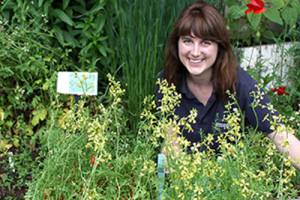
The countdown is over for staff at the University of Bristol Botanic Garden to find out which collection of seeds they have been growing spent time in space.
Astronomy & Space - 22.06.2016
Caribbean Sea acts like a whistle which can be `heard’ from space
A study of the Caribbean Sea by University of Liverpool ocean scientists has revealed that, in the midst of all the noise of the ocean, this region behaves like a whistle, which blows so loudly that it can be 'heard' from space in the form of oscillations of the Earth's gravity field. The Caribbean Sea is a part of the Atlantic Ocean, southeast of the Gulf of Mexico.
Astronomy & Space - 16.06.2016
LGBTQ+ rainbow flag flying at half-mast
UCL's LGBTQ+ rainbow flag has been flying at half-mast above the UCL portico as a gesture of condolence and solidarity with those affected by mass shooting in Pulse, the LGBTQ nightclub in Orlando.
Health - Astronomy & Space - 11.06.2016
Queen’s Birthday Honours for University academics
Astronomy & Space - 09.06.2016
Satellite navigation expert is most decorated by Royal Institute of Navigation
Event - Astronomy & Space - 06.06.2016
Tenth Annual Glasgow Science Festival Ready to Launch
Glasgow Science Festival launches across the city on Thursday, with a host of events to inspire all ages about science, from the ever popular Science Sunday day at the Univeristy of Glasgow to exhibitions, stand-up comedy to family fun days.
Astronomy & Space - Event - 03.06.2016
Professor Mark Lythgoe appointed Chair of the Times Cheltenham Science Festival
Professor Mark Lythgoe (UCL Centre for Advanced Biomedical Imaging) has been announced as the new Chair of the Times Cheltenham Science Festival.
Astronomy & Space - 23.05.2016

The World's first motion picture of our Universe, being dubbed the 'greatest movie ever made', is to be produced by international astronomers.
Astronomy & Space - 20.05.2016
Britain’s first astronaut celebrates 25 years since her pioneering mission
Astronomy & Space - 18.05.2016
Supermassive black holes keep galaxies turned off
An artist's rendition of the galaxies Akira (right) and Tetsuo (left) in action. Akira's gravity pulls Tetsuo's gas into its central supermassive black hole, fueling winds that have the power to heat Akira's gas. Because of the action of the black hole winds, Tetsuo's donated gas is rendered inert, preventing a new cycle of star formation in Akira.
Astronomy & Space - 06.05.2016
Surprising origin of Milky Way’s ancient core
The central parts of our Galaxy, the Milky Way, as observed in the near-infrared with the NACO instrument on ESO's Very Large Telescope. Credit: ESO/S. Gillessen et al. An international team of astronomers has discovered that the central region of our Milky Way Galaxy hosts an ancient population of stars more than 10 billion years old.
Astronomy & Space - Physics - 04.05.2016
Opinion: Inside Big Ben: why the world’s most famous clock will soon lose its bong
Hugh Hunt (Department of Engineering) discusses the mechanism that makes Big Ben chime, and why it needs repairing.
Astronomy & Space - Event - 04.05.2016
University scientists win gravitational waves prize
Just months after being involved in one of the biggest scientific breakthroughs of the decade, University of Glasgow scientists involved in the Gravitational Waves discovery have won a share of a top international prize.
Astronomy & Space - Physics - 27.04.2016
Winds a quarter the speed of light spotted leaving mysterious binary systems
Astronomers have observed two black holes in nearby galaxies devouring their companion stars at an extremely high rate, and spitting out matter at a quarter the speed of light. This is the first time we've seen winds streaming away from ultra-luminous x-ray sources. Ciro Pinto Two black holes in nearby galaxies have been observed devouring their companion stars at a rate exceeding classically understood limits, and in the process, kicking out matter into surrounding space at astonishing speeds of around a quarter the speed of light.
Astronomy & Space - Environment - 27.04.2016
Podcast: Ice giants, climate diplomacy and Earth’s flipping magnetic fields
Astronomy & Space - Health - 21.04.2016
Menstruation in spaceflight: Options for astronauts
A new paper in the journal npj Microgravity explores the options for astronauts who want to prevent menstrual bleeding during their space missions. The paper, written by authors at King's College London and Baylor College of Medicine, reviews contraceptive devices available including those already used by military and aviation personnel, and calls for more research into the effect of hormone treatments on bone mineral loss in space.
Astronomy & Space - 13.04.2016
Opinion: How to launch a rocket into space ... and then land it on a ship at sea
On Friday 8 April 2016, SpaceX's Falcon 9 rocket launched a mission to deliver a spacecraft called Dragon with its payload of supplies and experiments into a trajectory towards the International Space Station (ISS).
Astronomy & Space - Economics - 07.04.2016
Alumni launch Gravity Sketch, the app aiming to make 3D design for everyone
A team of Imperial alumni have launched a new app to simplify the process of 3D printing and design.
Astronomy & Space - 06.04.2016
Scientists nominated as names for polar research ship
Dr Katharine Giles and Professor Seymour Laxon, both of UCL Earth Sciences, have been proposed as names for a new polar research ship in a public competition run by the Natural Environment Research Council (NERC), which closes on 16 April.
Astronomy & Space - 06.04.2016
Opinion: The remarkable accuracy of the Trinity College clock - and what makes it tick
Hugh Hunt (Department of Engineering) discusses the history of the Trinity College clock and how it keeps time.
Astronomy & Space - Physics - 31.03.2016
MEMS technology adapted into super-sensitive gravity detector
Scientists have found a way to adapt a system often found in smartphones to create a super-sensitive detector capable of measuring minute changes in gravity. Richard Middlemiss and Giles Hammond discuss Wee-g In a paper published today in Nature, researchers from the University of Glasgow describe how they have adapted cheap, widely-available technology to make a small but powerful gravimeter for the first time.
Astronomy & Space - 30.03.2016
Map of rocky exoplanet reveals a lava world
The most detailed map of a small, rocky 'super Earth' to date reveals a planet almost completely covered by lava, with a molten 'hot' side and solid 'cool' side. We still don't know exactly what this planet is made of - it's still a riddle. These results are like adding another brick to the wall, but the exact nature of this planet is still not completely understood.
Astronomy & Space - Physics - 23.03.2016
Jupiter’s X-ray aurora is sparked by the solar wind
The solar wind around Jupiter is causing intense X-ray bursts over the planet's polar regions, according to research.
Astronomy & Space - Physics - 22.03.2016

The solar wind around Jupiter is causing the intense X-ray bursts over the planet's polar regions, according to new research. Auroras are caused by charged particles hitting a planet's atmosphere at high speed. On Earth, we see this as the Northern and Southern Lights over the polar regions. Other planets in the solar system, like Jupiter, also have auroras over their polar regions, but these are not just seen in the visible part of the spectrum.
Physics - Astronomy & Space - 21.03.2016
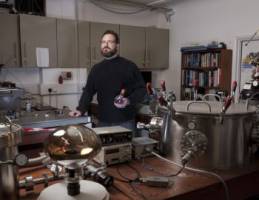
Why I care about neutrinos To coincide with Sussex hosting the Institute of Physics' J oint HEPP and APP conference, 21-23 March 2016, Dr Simon Peeters , reader in experimental particle physics, explains how he became hooked on tiny sub-atomic particles that could hold the key to some of the mysteries of the Universe To me, the neutrino is the most amazing fundamental particle in particle physics .
Physics - Astronomy & Space - 21.03.2016

Why I care about gravitational waves To coincide with Sussex hosting the Institute of Physics' J oint HEPP and APP conference, 21-23 March 2016, Professor Mark Hindmarsh head of the Theoretical Particle Physics group at Sussex,looks ahead to looking back in time.


