


Campus - GLASGOW - Mar 16
Evidence from five decades of graduates confirms Humanities skills power careers and lifelong impact
Evidence from five decades of graduates confirms Humanities skills power careers and lifelong impact
Health - Mar 13
Oxford and Serum Institute of India sign IP license agreement to advance NipahB vaccine candidate
Oxford and Serum Institute of India sign IP license agreement to advance NipahB vaccine candidate
Career - Mar 13
Faye Holland joins pioneering Cambridge x Manchester collaboration as Partnership Director
Faye Holland joins pioneering Cambridge x Manchester collaboration as Partnership Director
news
DURHAM
Results 41 - 60 of 227.
Health - Astronomy & Space - 06.06.2021

You might not think that studying the universe could benefit research into serious illnesses like cancer, but Durham's astronomers have joined forces with cancer researchers to improve the diagnosis and treatment of patients. We're working with the NHS, healthcare researchers and biotech experts on the £1million CUP-COMP project to improve outcomes for people with cancer of unknown primary (CUP).
Health - 24.05.2021
Meet the dogs that can sniff out Covid-19
Asher may just look like a cute cuddly dog but he is much more than that. He, along with some of his canine friends, have been trained to sniff out Covid-19 in people and the initial results show they can do it very reliably. This is because a research team, involving Durham, has found that Covid-19 has a very distinct odour - which we as humans can't smell - but the dogs' super sniffing powers can detect it with up to 94 per cent accuracy.
Astronomy & Space - 12.05.2021

Durham's researchers are helping to build some of the world's most powerful new telescopes to further our exploration of space. Our astronomers and cosmologists are also involved major international projects that will hunt two of the universe's most mysterious ingredients - dark matter and dark energy - and investigate how the universe formed.
Astronomy & Space - Computer Science - 11.05.2021

You can't physically crash a planet into another planet in a lab to see what happens or look quite far enough back in time to see how the universe might have formed. So what do you do? At Durham we use supercomputer technology to simulate the universe as we seek to unravel its mysteries. How do galaxies form? What are dark matter and dark energy? And what will be the ultimate fate of the universe? COSMA supercomputer The COSMA supercomputer - with the memory of about 25,000 high-powered laptops - allows researchers to answer these big cosmological questions.
Health - Astronomy & Space - 11.05.2021

Our Astronomy and Cosmology research is having an impact on life here on Earth. Our researchers are using their skills to help newborn babies, stop the spread of Covid-19 and protect coffee plants. Newborn babies Drawing on their experience of dealing with huge amounts of astronomical data, our researchers have worked with the NHS to establish the standard for recognising vital signs in healthy newborn babies.
Astronomy & Space - 10.05.2021

We're at the forefront of research that is furthering our understanding of the universe and the exploration of space. Durham's research spans from black holes to dark matter, planet formation to galaxy evolution and the Cosmic Web that binds the universe together. We also work on building some the biggest and best new telescopes.
Astronomy & Space - 23.04.2021

From supermassive black holes to the hunt for dark matter, Durham's scientists are at the forefront of investigations into the evolution of the universe. Our astronomers and cosmologists are world-leaders working with fellow researchers across the planet to further our understanding of the cosmos and our place in it.
Astronomy & Space - Physics - 19.04.2021

Durham's astronomers are playing a key role in the biggest scientific programme to be carried out on the new successor to the Hubble Space Telescope. Our scientists will use NASA's James Webb Space Telescope (JWST) to hunt for dark matter and investigate early galaxy formation. The JWST is the largest, most powerful space telescope ever built and is scheduled for launch in October 2021 before beginning operations in 2022.
Social Sciences - 18.03.2021
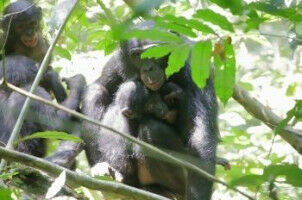
We're part of an international team that has seen the first evidence of wild bonobo apes adopting infants who were born outside of their social group. Adoptive mothers in the wild are usually related to orphaned infants or sometimes young females will adopt orphans to improve their own maternal skills.
Social Sciences - 11.03.2021

What was your favourite childhood toy? A car? A teddy bear? A doll? Many of us have fond memories of playing with dolls: dressing them up, combing their hair or doing some kind of role play with other toys. But new research shows that playing with ultra-thin dolls could make young girls want a thinner body.
Mathematics - 24.02.2021
Solving a 100 year-old maths puzzle
For 100 years mathematicians have been trying to solve the question of whether it is possible to fit all four points of a rectangle into any given closed curve shape. Or, more bluntly, can you fit a square peg into a round hole? Research so far had found that it was only possible to fit the proverbial square peg into a round hole if the peg in question was of certain proportions, until now.
Career - Economics - 16.02.2021
How has the pandemic impacted our wellbeing?
New research from Professor Roger Gill, helps us to understand the impact of ongoing Covid-19 restrictions on mental health and wellbeing. The study, delivered in partnership with Professor Matt Grawitch and colleagues at St Louis University in Missouri, surveyed people living and working across the UK, France, Germany, Canada and the US.
Psychology - 21.01.2021
Why some people report ’hearing the dead’
Spiritualist mediums might be more prone to immersive mental activities and unusual auditory experiences early in life, our researchers have found. Their findings could explain why some people and not others say they receive communications from 'the dead' and eventually adopt spiritualist beliefs. Spiritualism is a religious movement based on the idea that human souls continue to exist after death and communicate with the living through a medium or psychic.
Life Sciences - 13.01.2021
Ancient DNA reveals secrets of Game of Thrones wolves
For fans of the TV show Game of Thrones, dire wolves are often seen as mysterious iconic legends. Now, for the first time, an international team led by Durham University and colleagues in Australia, Germany and the US, have analysed ancient DNA from dire wolves to reveal a complex history of these ice age predators.
Astronomy & Space - 11.01.2021
Galaxy mergers could limit star formation
Our astronomers have looked nine billion years into the past to find evidence that galaxy mergers in the early universe could shut down star formation and affect galaxy growth. Using a powerful Earth-based telescope they saw that a huge amount of star-forming gas was ejected into the universe by the coming together of two galaxies.
Life Sciences - Health - 21.12.2020
How our brains help us find misplaced objects
Have you ever wondered how we remember the last place we saw our car keys or other objects like mobile phones and glasses? This new research shows we have a type of brain cell that's sensitive to the distance and direction of objects, they call these Vector Trace cells. These are in addition to GPS-like brain cells, which can store maps of places we have been, like our kitchen or a holiday destination.
Chemistry - 04.11.2020
Easier way to create biodiesel developed
Our researchers have developed a new way to turn the rubbish we throw away into chemicals that can help make fuel, medicines, fertilisers and biodegradable packaging. The low-cost, powerful method can turn old cooking oil and agricultural waste into biodiesel, and turn food scraps and plastic rubbish in to high-value chemical precursors, which are used make every day products.
Astronomy & Space - 30.09.2020
Investigating the impact of planet collisions
Our astronomers ran hundreds of simulations to see the effect of different impacts on rocky planets with thin atmospheres. Credit: Jacob Kegerreis. Did you know that Earth could have lost anywhere between 10 and 60 per cent of its atmosphere in the collision that is thought to have formed the Moon? New research led by our astronomers shows how the extent of atmospheric loss depends upon the type of giant impact with Earth.
Health - Administration - 18.09.2020
Five things we’re doing to help prevent the spread of Covid-19
Our ground breaking research has never been so critical during the Covid-19 pandemic. Amongst other things, we're helping to detect the virus, support people suffering from the effects of lockdown and understand how we could be better prepared if there was another pandemic. Here are five things our researchers have done to help prevent the spread of Covid-19.
Astronomy & Space - 02.09.2020
Zooming in on dark matter
Our cosmologists have zoomed in on the smallest clumps of dark matter in a virtual universe - which could help us find the real thing in space. Using a supercomputer simulation of the universe they achieved a zoom equivalent to being able to see a flea on the surface of the Moon. This meant they could make detailed pictures and analyses of hundreds of virtual dark matter haloes from the very largest (galaxy clusters) to the tiniest (about the same as Earth's mass).


Campus - GLASGOW - Mar 16
Evidence from five decades of graduates confirms Humanities skills power careers and lifelong impact
Evidence from five decades of graduates confirms Humanities skills power careers and lifelong impact
Health - Mar 13
Oxford and Serum Institute of India sign IP license agreement to advance NipahB vaccine candidate
Oxford and Serum Institute of India sign IP license agreement to advance NipahB vaccine candidate
Career - Mar 13
Faye Holland joins pioneering Cambridge x Manchester collaboration as Partnership Director
Faye Holland joins pioneering Cambridge x Manchester collaboration as Partnership Director