


Health - Mar 13
Oxford and Serum Institute of India sign IP license agreement to advance NipahB vaccine candidate
Oxford and Serum Institute of India sign IP license agreement to advance NipahB vaccine candidate
Career - Mar 13
Faye Holland joins pioneering Cambridge x Manchester collaboration as Partnership Director
Faye Holland joins pioneering Cambridge x Manchester collaboration as Partnership Director
Economics - Mar 13
£9.6M SATURN-2 programme launched to deliver the UK's next generation of nuclear experts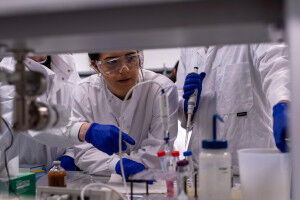
£9.6M SATURN-2 programme launched to deliver the UK's next generation of nuclear experts
Health - Mar 12
Nuffield Department of Primary Care Health Sciences designated as the WHO Collaborating Centre on Primary Health Care
Nuffield Department of Primary Care Health Sciences designated as the WHO Collaborating Centre on Primary Health Care
news
DURHAM
Results 1 - 20 of 227.
History & Archeology - Social Sciences - 07.10.2025
Ancient teeth provide new insight into the lives of the world’s first farming villagers
Archaeologists have revealed new insights into how the world's first farming villagers formed communities, moved across the land and responded to outsiders. Researchers analysed the chemical signatures in teeth from 71 people, spanning the entire Neolithic period from 11,600 to 7,500 years ago. The teeth were found at five archaeological sites in what is now modern Syria.
Psychology - 29.09.2025
Identity distress drives poor mental health in autistic people
A new study from our Department of Psychology has found that identity distress (difficulty forming a cohesive identity) could be a behind the higher rates of poor mental health experienced by autistic people. Understanding the roots of poor mental health Until now it had been thought that masking, where autistic people hide certain stigmatised autistic traits of theirs as a survival strategy, was behind the elevated incidence of poor mental health.
Psychology - 05.09.2025
Study highlights cultural differences in parenting and reveals that how babies are soothed matters more than how fast
The way in which babies are soothed could be more important than how quickly mothers respond, according to new research revealing cultural differences in how babies are comforted. Researchers including Professor Zanna Clay of our Psychology Department observed mother-infant interactions in urban UK and rural Ugandan communities.
Life Sciences - 26.08.2025
Primate thumbs and brains evolved together
Scientists have shed fresh light on how human hands and minds evolved together, finding that longer thumbs in primates means bigger brains. Researchers studied 94 different primate species, including fossils and living animals, to understand how our ancestors developed their abilities. They found that species with relatively longer thumbs, which help with gripping small objects precisely, consistently had larger brains.
Astronomy & Space - Computer Science - 22.08.2025

Supercomputer simulations carried out by researchers in our top-rated Physics department cast doubt on a proposed explanation for the structure of Jupiter's core. They found no evidence to support the idea that a massive collision with another planet could have created Jupiter's remarkable dilute core.
Astronomy & Space - Physics - 21.08.2025
Black holes may be the engines driving the universe’s dark energy
Researchers at Durham and collaborators in the Dark Energy Spectroscopic Instrument (DESI) mission have proposed a bold new theory that black holes could be converting matter into dark energy. The international team of researchers have combined DESI data with observations of the cosmic microwave background (CMB) to provide a new way of understanding the components of our universe.
Astronomy & Space - Physics - 27.06.2025
New ’mini halo’ discovery deepens our understanding of how the early Universe was formed
Astronomers have uncovered a vast cloud of energetic particles surrounding one of the most distant galaxy clusters ever observed, marking a major step forward in understanding the hidden forces that shape the cosmos. It shows that entire galaxy clusters, among the largest structures in the Universe, have been immersed in high-energy particles for most of their existence.
Life Sciences - 19.06.2025
Understanding the impact of human persecution on baboons
Human persecution leads to anxiety and physiological stress amongst baboons. That's according to the findings of new research by our Department of Anthropology. The study looked at how a group of baboons living in Alldays, South Africa, responded following two fatal shootings by humans. The findings showed prolonged increases in behavioural anxiety and physiological stress amongst the baboons.
Life Sciences - 05.06.2025
New study unlocks pathway to treat chronic pain
A new study involving our Biosciences department has revealed a previously unknown pain pathway in the human nervous system, reshaping our understanding of how chronic pain functions. Traditionally, chronic pain has been seen as simply a longer-lasting version of acute pain. However, new research shows it is a fundamentally different process involving separate biological mechanisms.
Health - Environment - 05.06.2025
Climate change driving rise in soil’s antibiotic resistance
A multinational research team, including Professor David W Graham from our top-rated Biosciences Department, have helped uncover a worrying new effect of climate change - the rise of antibiotic resistance in soil bacteria. The study, published in Nature Ecology & Evolution, has shown that as global temperatures rise, bacteria in soil are becoming more likely to carry genes that make them resistant to antibiotics.
Astronomy & Space - Mathematics - 02.06.2025
New study casts doubt on the likelihood of Milky Way collision with Andromeda
New research has cast doubt on the long-held theory that our galaxy, the Milky Way, will collide with its largest neighbour, the Andromeda galaxy, in 4.5 billion years-time. Scientists used data from NASA's Hubble and the European Space Agency's Gaia space telescopes to simulate how the Milky Way, Andromeda and their most massive satellite galaxies could evolve over the next 10 billion years.
Paleontology - 09.05.2025
500-million-year-old ancient fossil mystery solved by scientists
A new study led by our Earth Sciences department has made a surprising discovery about a mysterious fossil from the Cambrian period - over 500 million years ago. The fossil, Shishania aculeata , was originally thought to be an early mollusc, a group that includes snails and clams. But new research shows that it is actually a sponge-like animal known as a chancelloriid.
History & Archeology - 24.04.2025

A groundbreaking study involving our Department of Archaeology has uncovered the first physical evidence of human-animal gladiatorial combat in the Roman period. The study conducted by an international team of archaeologists and osteologists centres on a skeleton discovered in a Roman-period cemetery outside York, UK.
Health - Life Sciences - 17.04.2025
Socio-economic influences on how the body regulates eating
A new study from our Department of Psychology has uncovered evidence that the body's internal regulation of eating may be influenced by an individual's socio-economic background. Published in the journal Food Quality and Preference , the research highlights how physiological signals, particularly those transmitted via the vagus nerve, interact with socio-economic factors to shape dietary behaviour.
Environment - History & Archeology - 15.04.2025
New study links wealth inequality and human sustainability across millennia
Wealth inequality has been linked to human sustainability for over 10,000 years. That's according to a new study led by Professor Dan Lawrence from our Archaeology department.
Computer Science - 09.04.2025
Researchers collaborate on new app to improve support for hate incident victims
Researchers at Durham and Northumbria Universities have helped develop an app to better equip frontline practitioners to identify hate incidents and ensure victims get the right support. The Hate ID app will help practitioners in the UK Northumbria Police and Crime Commissioner region signpost victims of hate incidents to the most appropriate support service.
Astronomy & Space - 26.03.2025
Final findings from Kilo-Degree survey confirm cosmology model
A major international research effort has confirmed the standard model of cosmology using data from 41 million galaxies. The Kilo-Degree Survey (KiDS), which has been mapping the distribution of matter in the universe for over a decade, released its final dataset, known as 'KiDS-Legacy', on 18 March 2025.
Astronomy & Space - Physics - 20.03.2025
Scientists help create biggest 3D map of the universe and it’s changing what we know about Dark Energy
Our scientists have played a leading role in creating the largest-ever 3D map of the universe, using data from 15 million galaxies and quasars. The map was produced by the Dark Energy Spectroscopic Instrument (DESI), an international project involving over 900 researchers from 70 institutions worldwide.
Life Sciences - 13.02.2025
Bacteria evolved to help neighbouring cells after death, new research reveals
Researchers have made the surprising discovery that a type of gut bacteria has evolved to use one of their enzymes to perform an important function after death. Darwin's theory of natural selection provides an explanation for why organisms develop traits that help them survive and reproduce. Because of this, death is often seen as a failure rather than a process shaped by evolution.
Astronomy & Space - 07.02.2025
Researchers help discover largest radio jet ever seen in early Universe
A team of astronomers, including researchers from our top-rated Physics department, have discovered the largest radio jet ever seen in the early Universe. This discovery sheds new light on how supermassive black holes evolve in the early Universe. Breakthrough in astronomy Stretching at least 200,000 light-years (twice the size of the Milky Way) this enormous jet was spotted using the International Low Frequency Array (LOFAR) Telescope.


Health - Mar 13
Oxford and Serum Institute of India sign IP license agreement to advance NipahB vaccine candidate
Oxford and Serum Institute of India sign IP license agreement to advance NipahB vaccine candidate
Career - Mar 13
Faye Holland joins pioneering Cambridge x Manchester collaboration as Partnership Director
Faye Holland joins pioneering Cambridge x Manchester collaboration as Partnership Director
Economics - Mar 13
£9.6M SATURN-2 programme launched to deliver the UK's next generation of nuclear experts
£9.6M SATURN-2 programme launched to deliver the UK's next generation of nuclear experts
Health - Mar 12
Nuffield Department of Primary Care Health Sciences designated as the WHO Collaborating Centre on Primary Health Care
Nuffield Department of Primary Care Health Sciences designated as the WHO Collaborating Centre on Primary Health Care