


news
CAMBRIDGE
Results 1641 - 1660 of 1682.
Life Sciences - 19.10.2010
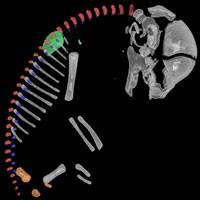
New research gives insight into one of the few mammals with more than seven neck vertebrae. By examining the development of bones in the vertebral column, limbs, and ribcage, scientists at the University of Cambridge have discovered how sloths evolved their unique neck skeleton. From mice to giraffes, mammals are remarkable in that all but a handful of their 5000 species have exactly seven vertebrae in the neck.
Health - Life Sciences - 07.10.2010

Scientists have discovered a mechanism which raises blood pressure in pre-eclampsia, a potentially deadly condition which occurs during pregnancy. After 20 years of research, scientists from the University of Cambridge have now cracked the first step in the main process that controls blood pressure.
Life Sciences - 06.10.2010

Thoroughbred racehorses have typically been associated with the highly-prized breeds of the Arabian Peninsula; but according to new research, their origins may be far more cosmopolitan than previously thought. In a new set of findings published today, a University of Cambridge-led team of academics reveal how modern racehorses, as well as the Thoroughbreds used for other sports such as show jumping and polo, are perhaps as closely linked to British, Irish and European breeds as they are to the Middle East.
- 01.10.2010
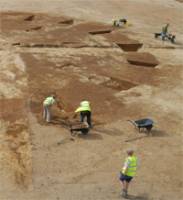
Neolithic burial monuments discovered in Trumpington, Cambridge, are open to the public this weekend. Ancient graves and Iron-Age remains at Trumpington Meadows will be available to tour on Sunday 3 October between 11 am and 4pm. The event is an opportunity for members of the public to view the results of the ongoing excavation.
Health - Life Sciences - 28.09.2010

The most common type of antidepressants, serotonin enhancers, alters peoples' moral judgement and leads to a reduction in aggressive behaviour, a study published today in the journal Proceedings of the National Academy of Sciences (PNAS) has found. The new research, by scientists at the University of Cambridge's Behavioural and Clinical Neuroscience Institute, discovered that healthy volunteers given drugs which increase their serotonin, selective serotonin reuptake inhibitors (SSRI), have an increased aversion to harming others, viewing such actions as morally forbidden.
History & Archeology - 22.09.2010

It may look peaceful today, but Newnham College, Cambridge was once the site of a sprawling Roman settlement. The discovery was made last week during an archaeological excavation of the college's gardens, which also unearthed evidence of a 16th or 17th century farmhouse that could date back to the reign of Henry VIII.
Environment - Life Sciences - 14.09.2010

Researchers have discovered key plant enzymes that normally make the energy stored in wood, straw, and other non-edible parts of plants difficult to extract. The findings can be used to improve the viability of sustainable biofuels that do not adversely affect the food chain.
Environment - 08.09.2010

A project to make conservation science accessible and relevant to conservationists and policymakers launches its first major synopsis of evidence, on bee conservation. For the first time, scientific knowledge and experience about how to conserve wild bees around the world has been brought together by conservation scientists led by Professor William J. Sutherland and Dr Lynn Dicks at the University of Cambridge.
Health - Life Sciences - 25.08.2010
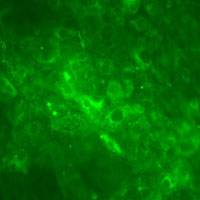
Research paves way for new liver disease research and possibly cell-based therapy. By creating diseased liver cells from a small sample of human skin, scientists have for the first time shown that stem cells can be used to model a diverse range of inherited disorders. The University of Cambridge researchers' findings, which will hopefully lead to new treatments for those suffering from liver diseases, were published today in The Journal of Clinical Investigation.
Health - Life Sciences - 25.08.2010

Cambridge researchers have received a major grant from The Freemasons' Grand Charity totalling £100,000. The Provincial Grand Master of Cambridgeshire, Rodney Wolverson, presented a cheque for the first instalment of £50,000 to Professor Alistair Compston and Dr. Alasdair Coles of the University of Cambridge's Department of Clinical Neurosciences today, Wednesday 25 August at Freemasons' Hall, Bateman Street, Cambridge.
Environment - Life Sciences - 24.08.2010

The University of Cambridge's "Naked Scientists" are launching a new series of podcasts this week entitled "Naked Oceans". These monthly, half-hour podcasts, funded by the Save Our Seas Foundation (SOSF), investigate various topics of ocean science and conservation. They are presented by Helen Scales and Sarah Castor-Perry, both members of the Naked Scientists team and alumni of the University of Cambridge's Department of Zoology.
Psychology - Pedagogy - 09.08.2010

The testimony of a University of Cambridge researcher has played a key role in the decision to overturn California's ban on same-sex marriages. Professor Michael Lamb, from the University's Department of Social Psychology, provided information that played a crucial role in the decision of a Federal Judge to overturn "Proposition 8" last week.
Life Sciences - Chemistry - 04.08.2010
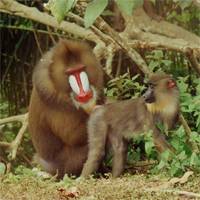
Mandrills can use body odour to identify potential mates, researchers have found, in a study which lends new support to the theory that humans also have the ability to "sniff out" suitable partners. The findings, which are reported by an international team of scientists in a paper today (Wednesday, 4 August), suggest that scent and smell play a far more pivotal role in primates' mate selection than previously thought.
Psychology - Pedagogy - 31.07.2010

A major new investigation which aims to solve two of the biggest unanswered questions in psychology is being launched by researchers at the University of Cambridge in partnership with the BBC. The project, which will form the next phase of the BBC's successful online experiment, the "Big Personality Test", will attempt to explain whether people with similar tastes have more successful relationships, or if opposites attract?
Mathematics - 26.07.2010

Having devoted his career to using statistical analysis to make accurate predictions, Professor David Spiegelhalter will this week attempt to explain how Paul the "psychic" octopus appears to be beating him at his own game. Professor Spiegelhalter, who is Winton Professor for the Public Understanding of Risk at the University of Cambridge, will be giving a free talk about his work organised by the discussion group, "Sceptics in the Pub".
Physics - 26.07.2010
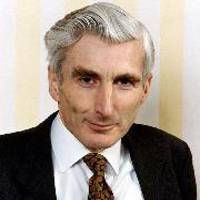
Astronomer Royal Martin Rees believes that planets resembling Earth may be discovered in the next two to three years - although it may take a further 20 years before we are able to capture an image of them. Rees, Professor of Cosmology and Astrophysics at Cambridge University, also said the need for manned space exploration is rapidly diminishing in the face of new technologies and advances in robotics.
Health - Life Sciences - 26.07.2010
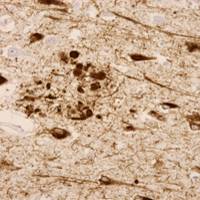
A team of researchers from the UK and Finland has discovered why people who stay in education longer have a lower risk of developing dementia - a question that has puzzled scientists for the past decade. Examining the brains of 872 people who had been part of three large ageing studies, and who before their deaths had completed questionnaires about their education, the researchers found that more education makes people better able to cope with changes in the brain associated with dementia.
Life Sciences - 13.07.2010
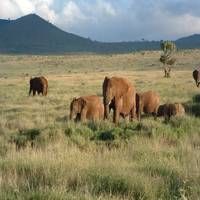
African national parks such as Masai Mara and the Serengeti have seen populations of large mammals decline by up to 59 per cent, Cambridge researchers have warned. Thousands of tourists visit these parks each year hoping to spot Africa's 'Big Five' - lion, elephant, buffalo, leopard and rhino - but the research shows that urgent efforts are needed to secure the parks' future and their role in tourism.
Physics - 11.07.2010

An international team of researchers used geochemical information taken from the Earth's mantle, and compared it with similar data from meteorites to create a new set of models showing how the planet might have been born. The results suggest that the length of time between the date at which the solar system was formed, about 4.567 billion years ago, and the point at which the Earth reached its present size, may have been far longer than traditionally presumed.
Environment - 07.07.2010

Just as afternoon tea is traditional in England but not in France, different groups of meerkats have different ways of doing things, Cambridge zoologists have found. After studying meerkats in the Kalahari for the past 10 years, Dr Alex Thornton and colleagues from the Department of Zoology found that some groups of meerkats always got up later out of their sleeping burrows than their neighbours.


