


news 2026
« BACK
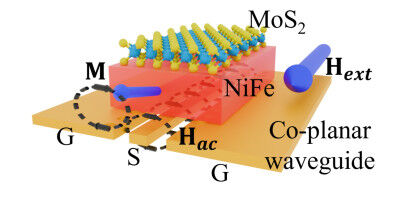 Large area MoS2 reduces energy loss in magnetic memory films
Materials Science
Results 1 - 3 of 3.
Physics - Materials Science - 06.03.2026
Scientists at the University of Manchester have discovered that placing magnetic films on atomically thin molybdenum disulfide (MoS2) fundamentally changes how they lose energy, a finding that could bring 2D-material spintronics a step closer to real devices. The team found that growing a widely used magnetic alloy, permalloy, on ultra-thin MoS2 alters the film's internal crystal structure, changing how and where energy is lost as magnetic spins move.
Materials Science - Chemistry - 05.03.2026
New research could help lithium-ion batteries reach their full potential
New research into why lithium-ion batteries tend to lose power over cycles of charge and discharge could help unlock the next generation of more durable, fast-charging power cells. An international team of chemists and engineers from the UK, China, and Germany have published a paper which challenges the conventional assumptions about how batteries should be optimised to maximise performance, highlighting the importance of electrical, rather than ionic, conductivity.
Microtechnics - Materials Science - 05.03.2026
Graphene-based ’artificial skin’ brings human-like touch closer to robots
Robots are becoming increasingly capable in vision and movement, yet touch remains one of their major weaknesses. Now, researchers have developed a miniature tactile sensor that could give robots something much closer to a human sense of touch. The technology, developed by researchers at the University of Cambridge, is based on liquid metal composites and graphene - a two-dimensional form of carbon.


