


news 2026
« BACK
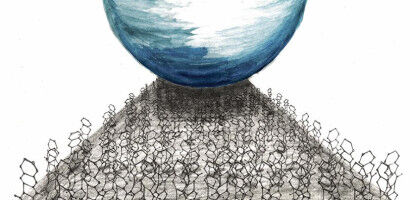 What does ’flexibility’ actually look like?
Chemistry
Results 1 - 3 of 3.
Materials Science - Chemistry - 05.03.2026
New research could help lithium-ion batteries reach their full potential
New research into why lithium-ion batteries tend to lose power over cycles of charge and discharge could help unlock the next generation of more durable, fast-charging power cells. An international team of chemists and engineers from the UK, China, and Germany have published a paper which challenges the conventional assumptions about how batteries should be optimised to maximise performance, highlighting the importance of electrical, rather than ionic, conductivity.
Chemistry - Physics - 19.02.2026
Flexible electronics are often sold on a simple promise: bendable screens, lightweight solar cells or wearable devices that can bend and flex without breaking. But what does that 'flexibility' actually look like at the molecular scale, and how does it affect performance? Researchers led by the University of Cambridge say they have taken a first step towards answering this question.
Health - Chemistry - 13.01.2026
New test could help pinpoint IBD diagnosis
A test that rapidly detects signs of inflammatory bowel disease (IBD) in stool samples could improve future diagnosis and monitoring of the condition. An international team of scientists, including researchers from the University of Glasgow, has developed a tool to measure the activity of a molecule linked to gut inflammation within faecal samples.


