


news 2016
Chemistry
Results 41 - 46 of 46.
Life Sciences - Chemistry - 11.02.2016
Could the food we eat affect our genes? Study in yeast suggests this may be the case
Almost all of our genes may be influenced by the food we eat, according to new research published today Microbiology. The study, carried out in yeast - which can be used to model some of the body's fundamental processes - shows that while the activity of our genes influences our metabolism, the opposite is also true and the nutrients available to cells influence our genes.
Health - Chemistry - 08.02.2016
Novel gene implicated in deafness
Researchers from King's College London and the Wellcome Trust Sanger Institute have for the first time demonstrated a direct link between the Wbp2 gene and progressive hearing loss. The scientists found that loss of Wbp2 expression led to progressive high-frequency hearing loss in mice as well as in two clinical cases of children with deafness with no other obvious features.
Chemistry - Physics - 02.02.2016
Solvent-free way of preserving tissues and cells with a new gel
New technique will make blood transfusions easier At the moment blood can only be stored for up to 42 days without freezing techniques Current freezing techniques can damage red blood cells Scientists have developed a new approach for the long-term storage of biological tissue and blood samples making blood transfusions easier.
Chemistry - Earth Sciences - 13.01.2016
High ozone levels in tropical Pacific caused by fires burning in Africa and Asia
Study indicates 'biomass burning' may play a larger role in climate change than previously realised. The measurements are now starting to produce insight into how the composition of the remote tropical atmosphere is affected by human activities occurring nearly halfway around the world. Neil Harris While efforts to limit emissions of greenhouse gases, including ozone, tend to focus on industrial activities and the burning of fossil fuels, a new study suggests that future regulations may need to address the burning of forests and vegetation.
Chemistry - 06.01.2016
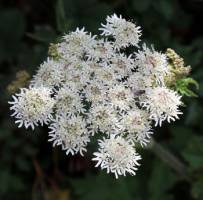
Sussex research exposes secret cocktail of toxic pesticides in hedgerows and wildflowers Scientists at the University of Sussex have discovered that bees are exposed to a chemical cocktail when feeding from wildflowers growing next to neonicotinoid-treated crops in UK farmland. These chemical cocktails could make the impact of neonicotinoids up to 1,000 times more potent than previously realised.
Chemistry - Physics - 06.01.2016
Detection of molecules important for healthcare could soon be 1000 times faster
Scientists should soon be able to capture biological molecules a thousand times faster, allowing better detection of important health issues. DNA mutations, which can lead to cancers and other problems, can be difficult to detect in biological samples as they are relatively rare. In order to analyse all DNA molecules for signs of mutation, it is important to gather as many as possible, but this is often time-consuming.


